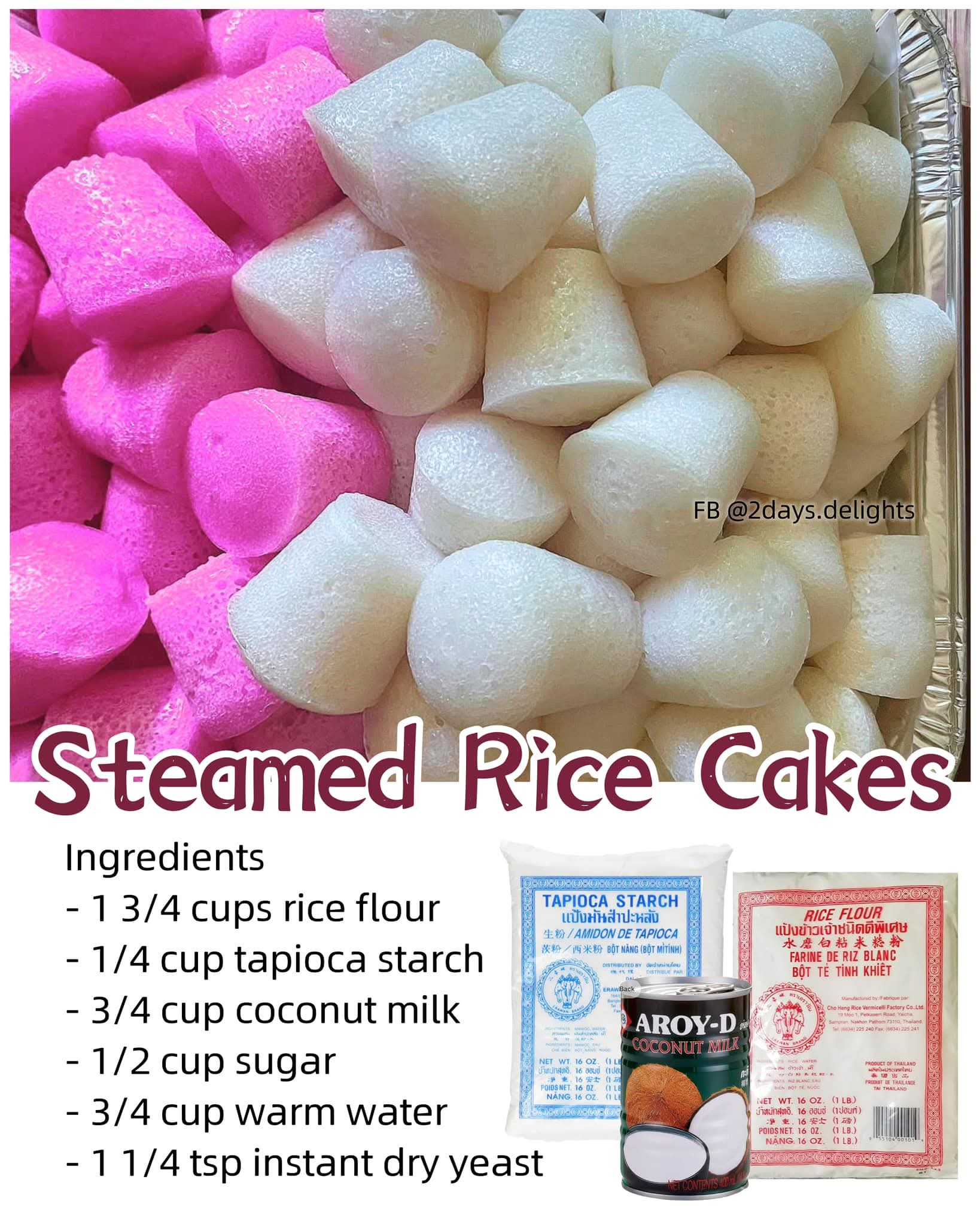
Absolutely! Here’s a full, detailed, story-filled version of your Delicious Steamed Rice Cakes recipe, complete with introduction, history, formation, methods, and even some “lovers” flair for fun:
🍚 Delicious Steamed Rice Cakes (Soft & Fluffy Delight)
Introduction
Steamed rice cakes are a beloved treat across many Asian cultures, from the soft, airy puto of the Philippines to the subtly sweet fa gao of China. These little cakes are cherished not just for their light and fluffy texture, but also for their delicate coconut flavor that melts in your mouth. Perfect for breakfast, afternoon snacks, or festive occasions, this recipe brings traditional charm to your kitchen with a simple, modern twist.
History & Formation
Rice cakes have been enjoyed for centuries in various Asian countries, often tied to celebrations and rituals. In China, the steamed rice cake symbolizes prosperity and good luck, especially during Lunar New Year. In Southeast Asia, coconut milk versions became popular due to the tropical abundance of coconuts. The method of fermentation, using yeast or natural starters, gives the cake its characteristic airy and bubbly texture—a gentle dance between tradition and science.
The formation of these cakes relies on three key elements:
- Rice Flour & Tapioca Starch – provides structure and a chewy softness.
- Coconut Milk & Sugar – gives flavor and tenderness.
- Yeast Fermentation – ensures the airy, bubbly lift that defines a perfect steamed rice cake.
Ingredients
- 220g rice flour (1 & 3/4 cups)
- 40g tapioca starch (1/4 cup)
- 200ml coconut milk (1/2 can)
- 100g sugar (1/2 cup)
- 180ml warm water (3/4 cup)
- 3.5g instant dry yeast (1 & 1/4 tsp)
Optional toppings: grated coconut, sesame seeds, or edible flower petals for decoration.
Instructions & Methods
1️⃣ Prepare the Batter
- In a large mixing bowl, combine rice flour, tapioca starch, sugar, and yeast.
- Gradually add warm water and coconut milk while stirring, ensuring a smooth, lump-free batter.
- Cover the bowl with a clean kitchen towel and leave it in a warm area for 1–2 hours, or until bubbly and slightly risen. This is the fermentation stage—essential for that airy texture.
2️⃣ Steam the Rice Cakes
- Fill a steamer with water and bring it to a boil. Place silicone molds or small heatproof cups inside the steamer to preheat.
- Stir the fermented batter gently, then pour it into the warmed molds.
- Cover the steamer with a lid wrapped in a kitchen towel to prevent condensation from dripping onto the cakes.
- Steam over medium heat for 10–15 minutes, until the tops are firm and a toothpick comes out clean.
Tip: Avoid opening the lid mid-steaming, or the delicate cakes may deflate.
3️⃣ Serve & Enjoy
- Let the steamed cakes cool for 5 minutes before carefully removing them from the molds.
- Serve warm or at room temperature, garnished with a sprinkle of grated coconut or seeds if desired.
- These cakes are soft, fluffy, and slightly sweet—perfect with tea or coffee, or simply on their own.
Lovers of Rice Cakes
Rice cakes have a dedicated following among sweet lovers and those who adore soft, fluffy textures. They’re celebrated in festive gatherings, gifted as symbols of luck, or made simply for the joy of a wholesome snack. Many find a sense of nostalgia and comfort in every bite, making these steamed cakes not just a treat, but an experience of cultural warmth.
Conclusion
From humble rice flour and coconut milk, a magical transformation occurs through fermentation and steaming. These soft, airy, subtly sweet rice cakes bring a taste of tradition to your table and are a simple way to impress friends, family, or even yourself. Whether eaten as a snack, breakfast, or festive dessert, they’re a timeless delight that bridges generations and cultures.
If you want, I can also create a fun “rice cake lovers’ version” with flavored layers—like pandan green, ube purple, and chocolate swirl to make it extra special visually and flavor-wise.
Do you want me to do that?