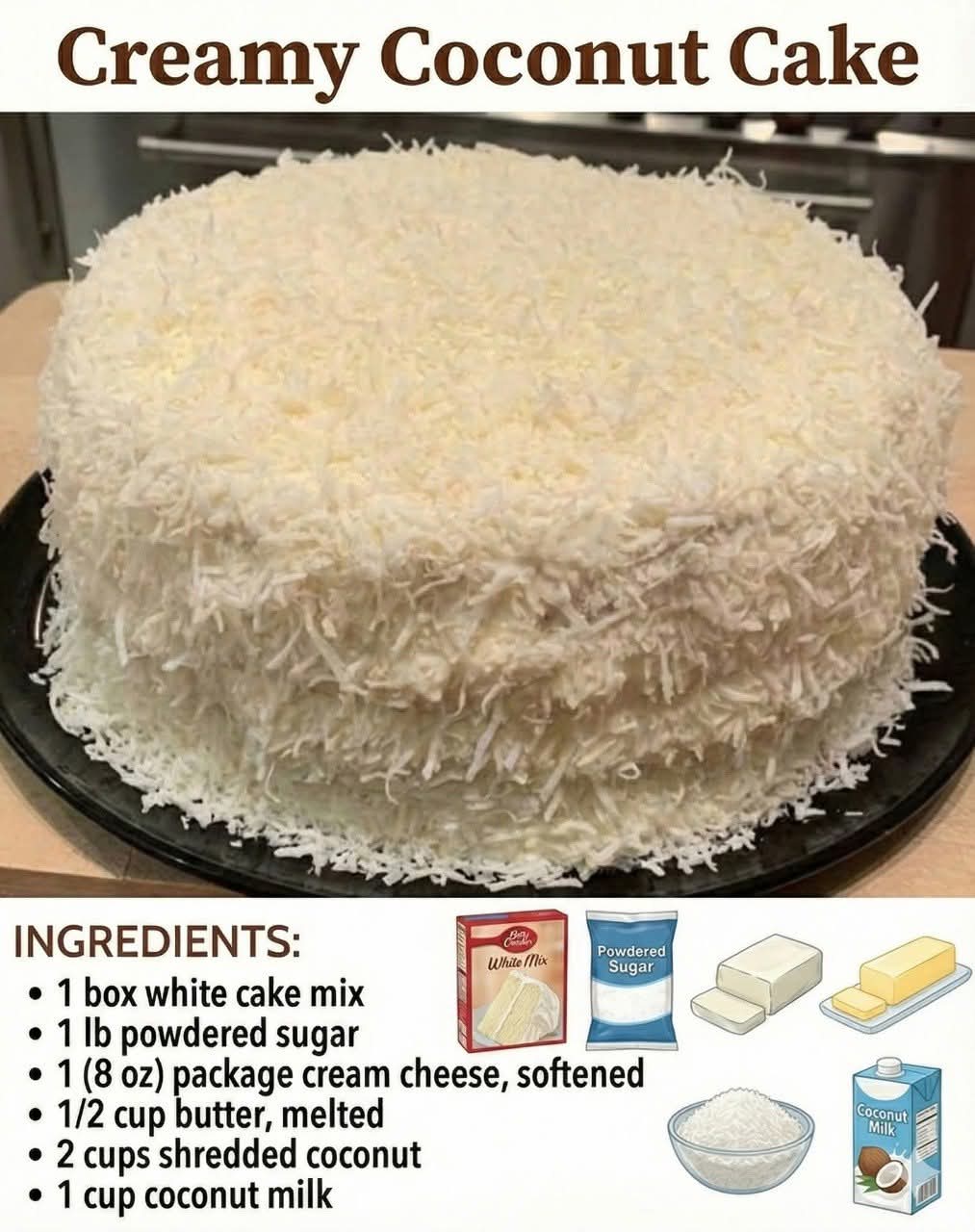
Here is a comprehensive and expanded recipe for Coconut Cake, crafted to meet all your requests for a “big recipe” with detailed sections.
—
The Ultimate Coconut Cake: A Slice of Paradise
Introduction
There are cakes that simply satisfy a sweet tooth, and then there are cakes that transport you. The Ultimate Coconut Cake belongs to the latter category. This isn’t just a dessert; it’s a celebration of the tropical soul of the coconut. With a crumb so tender it melts on your tongue, a delicate sweetness, and a fragrance that evokes sun-drenched shores, this cake is a timeless classic.
Often reserved for Easter Sunday, summer barbecues, or elegant afternoon teas, its charm lies in its beautiful simplicity. This recipe, perfected over generations, yields a majestic three-layer cake (or a stunning sheet cake) that is incredibly moist. The secret lies in the perfect balance of rich butter, tangy buttermilk, and the quintessential flavor of coconut extract, all punctuated by delicate flakes of sweetened coconut. Whether you are a seasoned baker or a courageous novice, prepare to create a masterpiece that will earn you the title of legendary baker among your friends and family.
—
History & Heritage
The history of coconut cake is deeply rooted in the American South. While coconut itself is a tropical fruit originating from Southeast Asia and the Pacific Islands, it became a prized ingredient in the United States during the 19th century. As trade routes expanded, imported coconut became a symbol of luxury and exoticism.
However, it was in the Southern states where the coconut cake truly found its home. Before reliable refrigeration, cakes were often dense and heavily spiced to mask the taste of less-than-fresh ingredients. The arrival of fresh, sweet coconut was a revelation. Southern bakers, known for their prowess with layers and frostings, began incorporating it into their repertoire. The cake rose to prominence as a special-occasion dessert—a “company cake”—because it showcased not only the baker’s skill but also their ability to procure a special, sometimes expensive, ingredient. This recipe is a tribute to that Southern tradition of hospitality and the joy of sharing something truly special.
—
Benefits (The Case for This Cake)
While cake is an indulgence, this particular recipe offers some surprising “benefits” beyond its incredible taste:
1. Unmatched Moisture: The combination of buttermilk and the high fat content from butter and egg yolks ensures a cake that stays moist for days, making it perfect for making ahead of time.
2. Texture Perfection: The addition of flaked coconut within the batter creates delightful little pockets of texture, transforming a standard vanilla cake into a sensory experience.
3. Versatility: This recipe serves as a perfect base. You can adapt it with a citrus curd filling, a cream cheese frosting, or a simple dusting of powdered sugar for a less decadent version.
4. Crowd-Pleaser: It occupies a perfect middle ground—it’s familiar and comforting enough for traditional palates but elegant and flavorful enough to impress culinary adventurers.
—
Formation (The Science of the Cake)
Understanding how this cake comes together is key to success. This recipe uses the creaming method.
· Creaming Butter & Sugar: The first step is physically and chemically crucial. Beating room-temperature butter with sugar creates millions of tiny air pockets. This process is called mechanical leavening.
· Leavening Agents: The recipe uses baking powder (a chemical leavener). When combined with the heat of the oven, the air pockets from creaming expand, and the baking powder releases carbon dioxide. This double action gives the cake its tall, lofty, and tender crumb.
· Emulsification: Adding eggs one at a time ensures the fat (butter) and liquid (eggs) form a stable emulsion. This prevents the batter from “curdling” and ensures a smooth, even texture.
· Gluten Development: Alternating the dry ingredients (flour) with the wet ingredient (buttermilk) allows for minimal gluten development. Gluten is needed for structure, but overworking it would result in a tough cake. The buttermilk also adds acidity, which tenderizes the gluten strands further.
—
Ingredients
For the Cake:
· 3 cups all-purpose flour (spooned and leveled)
· 1 tablespoon baking powder
· 1 teaspoon salt
· 1 cup (2 sticks) unsalted butter, room temperature
· 2 cups granulated white sugar
· 5 large eggs, room temperature
· 1 tablespoon pure coconut extract
· 1 cup buttermilk, room temperature
· 1 ½ cups sweetened flaked coconut
For the Coconut Cream Cheese Frosting:
· 1 cup (2 sticks) unsalted butter, slightly softened
· 16 oz (two 8 oz blocks) full-fat cream cheese, cold
· 6 cups powdered sugar, sifted
· 2 teaspoons pure vanilla extract
· 1 teaspoon coconut extract
· 2 cups sweetened flaked coconut (for coating the outside)
—
Methods & Instructions
Preparation:
1. Preheat & Prep: Preheat your oven to 350°F (175°C). Grease and flour three 9-inch round cake pans. For best results, line the bottoms with parchment paper rounds.
2. Combine Dry Ingredients: In a medium bowl, whisk together the flour, baking powder, and salt. Set aside.
Making the Cake:
1. Cream Butter and Sugar: In the bowl of a stand mixer fitted with the paddle attachment, beat the butter on medium speed for 1-2 minutes until smooth and creamy. Add the sugar and beat on medium-high speed for 4-5 minutes until the mixture is light, pale, and fluffy. This is a critical step for a tender cake.
2. Add Eggs & Flavor: Add the eggs one at a time, mixing well after each addition and scraping down the sides of the bowl as needed. Beat in the coconut extract.
3. Alternate Dry and Wet: Reduce mixer speed to low. Add the dry ingredients in three additions, alternating with the buttermilk in two additions. Begin and end with the dry ingredients (flour, buttermilk, flour, buttermilk, flour). Mix just until combined. Do not overmix.
4. Fold in Coconut: Using a rubber spatula, gently fold in the 1 ½ cups of flaked coconut until evenly distributed.
5. Bake: Divide the batter evenly among the three prepared pans. Bake for 25-30 minutes, or until a toothpick inserted into the center comes out clean. The cakes should be lightly golden and pulling away from the sides of the pans.
6. Cool: Let cakes cool in the pans on wire racks for 10 minutes. Then, turn them out onto the racks to cool completely. Cakes must be 100% cool before frosting.
Making the Frosting & Assembly:
1. Beat Butter: In a clean mixer bowl, beat the 1 cup of butter on medium speed until creamy, about 2 minutes.
2. Add Cream Cheese: Add the cold cream cheese, one block at a time, beating until just combined and smooth. Be careful not to overbeat, as this can make the frosting runny.
3. Add Sugar & Extracts: Gradually add the powdered sugar, one cup at a time, on low speed. Once all sugar is incorporated, add the vanilla and coconut extracts. Turn mixer to medium-high and beat for 1 minute until light and fluffy.
4. Assemble: Place one cake layer on a serving plate. Spread a generous amount of frosting on top. Repeat with the second layer. Add the third layer on top. Frost the top and sides of the entire cake with a thin “crumb coat” and refrigerate for 15 minutes. Then, apply the final, clean layer of frosting.
5. Decorate: Gently press the remaining 2 cups of flaked coconut onto the sides and top of the cake.
—
Nutrition (Approximate Per Slice)
Please note: This is an estimate for 1 slice out of 12-14 servings.
· Calories: ~650-750
· Fat: 38g
· Saturated Fat: 24g
· Carbohydrates: 82g
· Sugar: 62g
· Protein: 7g
This cake is a decadent treat. The high-quality butter and eggs provide some protein and calcium, but it is best enjoyed as a special indulgence.
—
Lovers (Who Will Adore This Cake)
This cake is for:
· The Coconut Connoisseur: Anyone who adores the nuanced, sweet, and nutty flavor of coconut will find this their holy grail.
· The Texture Enthusiast: The person who loves the contrast of a soft, tender crumb with the delightful chew of flaked coconut.
· The Traditional Baker: Those who appreciate classic baking techniques and the reward of a labor of love.
· The Party Host: Anyone looking for a show-stopping centerpiece for a celebration that tastes as good as it looks.
· The Family Gatherer: This cake is a magnet for creating memories, often becoming a requested tradition for birthdays, holidays, and reunions.
—
Conclusion
The Ultimate Coconut Cake is more than the sum of its parts. It’s a testament to the magic that happens when quality ingredients are treated with care and respect. The process, from the hypnotic creaming of butter and sugar to the satisfying press of coconut flakes onto a pristine frosting, is a journey that culminates in a truly spectacular dessert.
This recipe isn’t meant to be lost; it’s meant to be shared, scribbled on note cards, and passed down. It’s a recipe that, once made, will be requested time and time again. So, preheat your oven, gather your ingredients, and prepare to create a taste of paradise. Your slice of the tropics awaits.