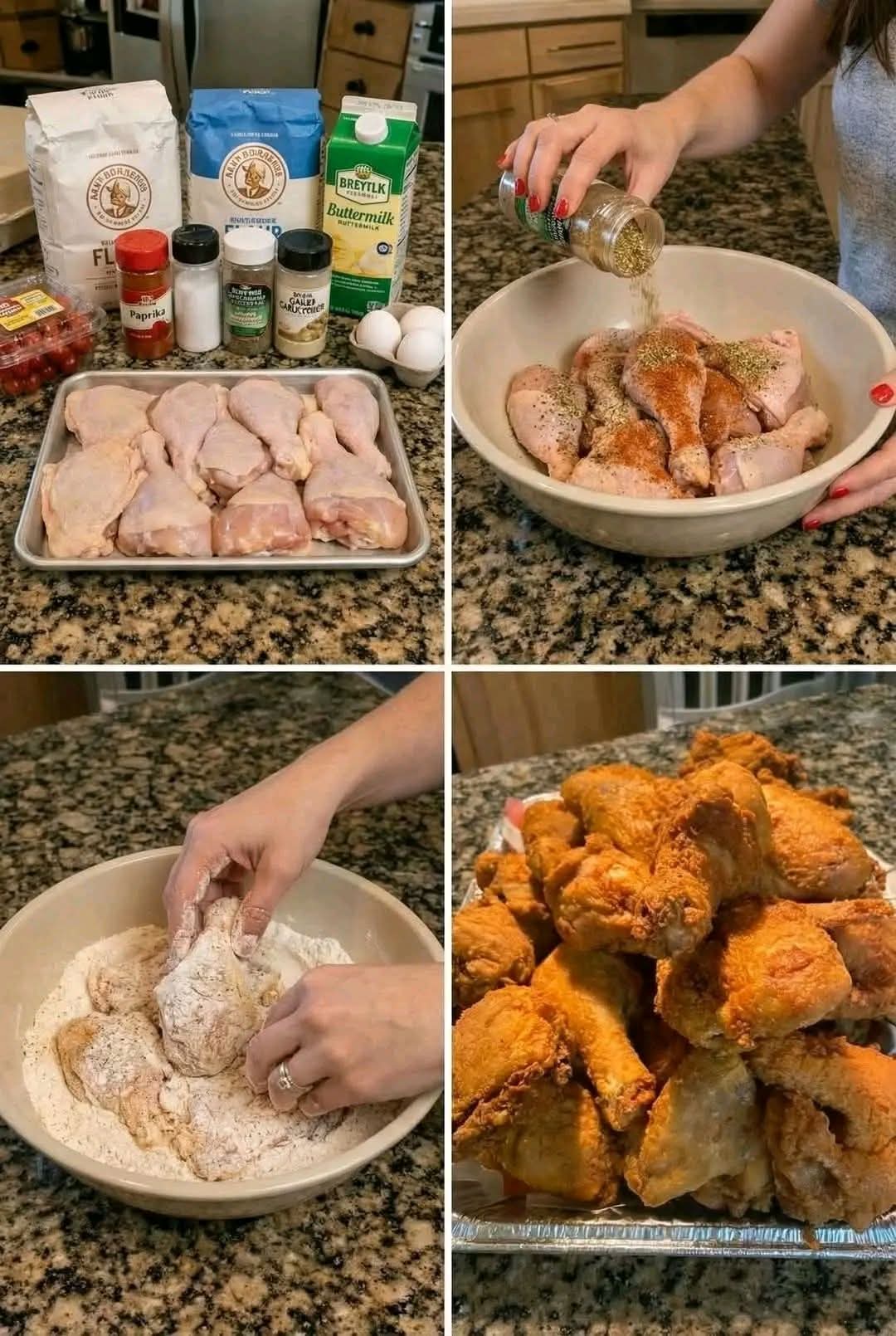
Here is a comprehensive and detailed guide to Southern Fried Chicken, crafted from the recipe you provided, complete with all the elements you requested.
—
Southern Fried Chicken: A Crispy, Golden Legacy 🍗🔥🤎
Introduction
There is a dish that resonates with the soul of the American South, a culinary cornerstone that evokes feelings of family gatherings, Sunday suppers, and pure, unadulterated comfort. That dish is Southern Fried Chicken. More than just a meal, it’s a tradition—a perfect alchemy of a crackling, spiced crust and impossibly juicy, tender meat. The aroma alone, a symphony of hot oil and savory seasonings, can transport you to a porch swing on a warm summer evening. This recipe is a tribute to that legacy, a guide to achieving the quintessential fried chicken: golden, crunchy, and brimming with flavor. Don’t just make it; savor the process and the rich history behind every bite. Let’s ensure this treasured recipe lives on.
—
History
The story of Southern Fried Chicken is a complex tapestry woven from Scottish and West African culinary traditions. Scottish immigrants brought with them a tradition of deep-frying chicken in fat. However, it was the enslaved West African people in the American South who elevated it to an art form. They introduced profound techniques like seasoning the meat deeply and perfecting the art of frying in oil or lard. For many African American families, fried chicken became a dish of celebration and resilience, often prepared for special occasions and community gatherings after emancipation. It traveled from the rural South to become a global icon, representing resourcefulness, flavor, and the powerful legacy of Southern culture. The version we cherish today is a direct descendant of this rich, shared history.
—
Benefits
While often considered a comfort food, preparing Southern Fried Chicken at home offers several benefits:
· Quality Control: You choose the quality of the chicken, the purity of the oil, and the freshness of the spices, avoiding preservatives and additives found in some fast-food versions.
· Customization: You have complete freedom to tailor the flavor profile—from the heat of cayenne to the aromatic blend of herbs in the dredge.
· Connection: The process itself is a form of connection—to tradition, to family, and to the act of creating something truly satisfying from scratch. It’s a skill that can be shared and passed down through generations.
· Nutritional Control: By using fresh ingredients and controlling the frying process, you can manage sodium levels and ensure the oil used is of high quality.
—
Ingredients
For the Chicken & Brine:
· 2 lbs chicken pieces (legs, thighs, or wings are ideal for their juiciness and flavor)
· 2 cups buttermilk (The key to tenderness; its acidity helps break down proteins for a moist result)
For the Seasoned Flour:
· 2 cups all-purpose flour (The base for that signature crunchy crust)
· 1 teaspoon garlic powder
· 1 teaspoon onion powder
· 1 teaspoon paprika (For color and a subtle sweetness)
· 1 teaspoon salt (Kosher or sea salt is best)
· 1/2 teaspoon black pepper (Freshly ground for the best flavor)
For Frying:
· Oil for frying (Peanut oil, vegetable oil, or canola oil; peanut oil is traditional for its high smoke point and neutral flavor)
—
Instructions & Method
This method combines brining and double-dredging for the ultimate crust.
Step 1: Marinate (The Secret to Tenderness)
In a large bowl, combine the chicken pieces with the 2 cups of buttermilk. Ensure all pieces are fully submerged. Cover and refrigerate for at least 4 hours, but ideally 8-24 hours. This buttermilk soak is crucial for tenderizing the meat and infusing it with moisture.
Step 2: Prepare the Seasoned Flour
In a separate large, shallow dish (like a pie plate or a brown paper bag), whisk together the all-purpose flour, garlic powder, onion powder, paprika, salt, and black pepper.
Step 3: The Dredging Process (The Double Coat)
Remove a piece of chicken from the buttermilk, allowing any excess to drip off. Dredge it in the seasoned flour, pressing firmly to ensure a thick, even coating. Shake off the excess flour. For an extra-craggy crust, this is the key: dip the floured piece back into the buttermilk for a few seconds, then dredge it in the flour mixture again. This double-dip method creates those iconic crunchy bits and a superbly sturdy crust. Place the coated pieces on a wire rack while you finish the rest.
Step 4: Frying to Golden Perfection
Pour about 1 to 1.5 inches of oil into a heavy-bottomed skillet (cast iron is the traditional and best choice for its heat retention). Heat the oil to 325°F (165°C) . A deep-fry or candy thermometer is essential.
Carefully place the chicken pieces in the hot oil, making sure not to overcrowd the pan (fry in batches). Cook dark meat (legs, thighs) for 12-14 minutes, turning occasionally, until the crust is a deep golden brown and the internal temperature reaches 175°F (80°C) . Cook white meat (wings, breast) for 8-10 minutes, until the internal temperature reaches 165°F (74°C) . Maintaining a consistent oil temperature is critical; if it drops too low, the chicken will be greasy; if too high, the outside will burn before the inside cooks.
Step 5: Drain and Rest
Remove the cooked chicken and place it on a wire rack set over a baking sheet. Do not drain on paper towels, as this can trap steam and make the crust soggy. Let it rest for at least 5-10 minutes. This resting period allows the juices to redistribute, ensuring every bite is succulent.
—
Nutrition (Approximate per serving, based on 4 servings)
· Calories: 550-700
· Protein: 35g
· Fat: 35-45g
· Carbohydrates: 30g
· Sodium: 800mg
Note: Nutritional values will vary based on the size of the chicken pieces, the type of oil used, and the amount of flour coating absorbed.
—
Formation (The Perfect Crust)
The iconic formation of the Southern fried chicken crust is a marvel of food science. The buttermilk serves a dual purpose: it tenderizes the meat with its lactic acid and provides an acidic, sticky surface for the flour to adhere to. The double-dredge creates layers. When the coated chicken hits the hot oil, the moisture in the buttermilk rapidly turns to steam, expanding outward. This expansion forces the flour coating to separate and solidify into a network of crispy, craggy peaks and valleys, sealing in the chicken’s natural juices. The result is a crust that is not just a covering, but an integral, texturally complex part of the dish itself.
—
Lovers of Southern Fried Chicken
This dish is beloved by:
· Families: As the centerpiece of Sunday dinners, reunions, and cherished celebrations.
· Chefs & Foodies: Who revere its technique, history, and the art of perfecting its simplicity.
· Comfort Food Enthusiasts: Anyone seeking the profound satisfaction of a warm, flavorful, and nostalgic meal.
· Travelers: Who seek out authentic Southern cuisine as a cultural experience.
· Home Cooks: Who find pride and joy in mastering a classic and sharing it with loved ones.
—
Conclusion
This Southern Fried Chicken recipe is more than a list of ingredients; it is a passport to a rich cultural tradition and a guaranteed path to a memorable meal. By following the method—from the patient buttermilk marinade to the crucial double-dredge and careful frying—you are not just cooking; you are upholding a culinary legacy. The reward is a plate of chicken that is impossibly juicy beneath a shatteringly crisp, golden crust, seasoned to perfection. Whether served with creamy mashed potatoes, tangy coleslaw, or buttery biscuits, this is a dish designed to bring people together, create smiles, and earn a permanent, cherished place in your recipe collection.
—
Thank you for letting me share this recipe! I hope it becomes a treasured favorite in your kitchen. Be sure to share your creations and keep the tradition alive! 🍗🤎