🇩🇪🍑 German Plum Cake (Zwetschgenkuchen) – A Classic European Delight
✨ Introduction
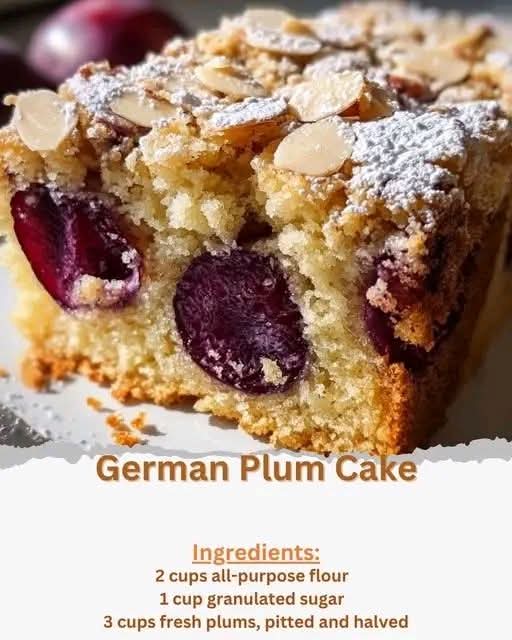
German Plum Cake, traditionally known as Zwetschgenkuchen, is a beloved dessert across Germany and Central Europe. This rustic yet elegant cake features juicy, slightly tart plums nestled into a soft, buttery base, often finished with a delicate crumb topping. It’s the kind of cake that fills your kitchen with irresistible aromas and brings a sense of warmth and tradition to every bite.
Perfect for late summer and early autumn, this cake pairs beautifully with coffee or tea and is often enjoyed during family gatherings or cozy afternoons.
🛒 Ingredients
🍰 For the Cake Base:
- 2 cups all-purpose flour
- 1 cup granulated sugar
- 1 teaspoon baking powder
- 1/4 teaspoon salt
- 1/2 cup unsalted butter, softened
- 2 large eggs
- 1/2 cup milk
- 1 teaspoon vanilla extract
🍑 For the Topping:
- 1 ½ to 2 pounds fresh plums (Italian or European), pitted and halved
- 2 tablespoons sugar
- 1 teaspoon cinnamon (optional but recommended)
🍪 Optional Crumb (Streusel) Topping:
- 1/2 cup all-purpose flour
- 1/4 cup sugar
- 1/4 cup cold butter, cubed
- Pinch of cinnamon
👩🍳 Instructions
1. Prepare the Oven & Pan
- Preheat your oven to 180°C (350°F)
- Grease a 9×13-inch baking pan or line with parchment paper
2. Make the Cake Batter
- In a bowl, whisk together flour, baking powder, and salt
- In another bowl, cream the butter and sugar until light and fluffy
- Add eggs one at a time, mixing well
- Stir in vanilla extract
- Gradually add dry ingredients alternating with milk until smooth
3. Assemble the Cake
- Spread the batter evenly into the prepared pan
- Arrange plum halves on top, cut side up, pressing them slightly into the batter
- Sprinkle with sugar and cinnamon
4. Add Streusel (Optional)
- Mix flour, sugar, and butter with your fingers until crumbly
- Sprinkle over the plums
5. Bake
- Bake for 40–50 minutes, or until golden brown and a toothpick comes out clean
6. Cool & Serve
- Let cool slightly before slicing
- Serve warm or at room temperature
🍽️ Methods & Tips
- Choose the right plums: Italian prune plums work best because they’re less watery
- Don’t overcrowd: Arrange plums tightly but not stacked
- Balance flavors: The tartness of plums complements the sweet cake beautifully
- Texture tip: For a softer cake, don’t overmix the batter
📜 History & Origin
German Plum Cake has deep roots in traditional European baking, especially in southern regions like Bavaria. It dates back centuries when seasonal fruits were baked into simple yeast or butter cakes. Plums, being abundant in late summer, became a staple ingredient.
The cake is often associated with harvest season celebrations and is commonly found in German bakeries during plum season. Over time, variations developed—some using yeast dough, others a buttery sponge base like this version.
🧁 Formation & Texture
- Base: Soft, moist, and slightly dense
- Fruit Layer: Juicy and tangy, creating a natural syrup while baking
- Top (optional streusel): Crunchy and buttery contrast
The magic of this cake lies in its layers—each bite offers a balance of sweetness, tartness, and texture.
❤️ Lovers of This Cake
This cake is adored by:
- Fruit dessert lovers 🍑
- Fans of traditional European baking 🇩🇪
- Coffee and tea enthusiasts ☕
- Families who enjoy comforting homemade treats
It’s especially loved by those who appreciate desserts that are not overly sweet, letting natural fruit flavors shine.
🎉 Conclusion
German Plum Cake is more than just a dessert—it’s a celebration of seasonal fruit, tradition, and simple baking done right. Whether you’re making it for a gathering or a quiet afternoon treat, this cake delivers comfort, flavor, and a touch of European charm.
One bite, and you’ll understand why it has remained a favorite for generations 💛