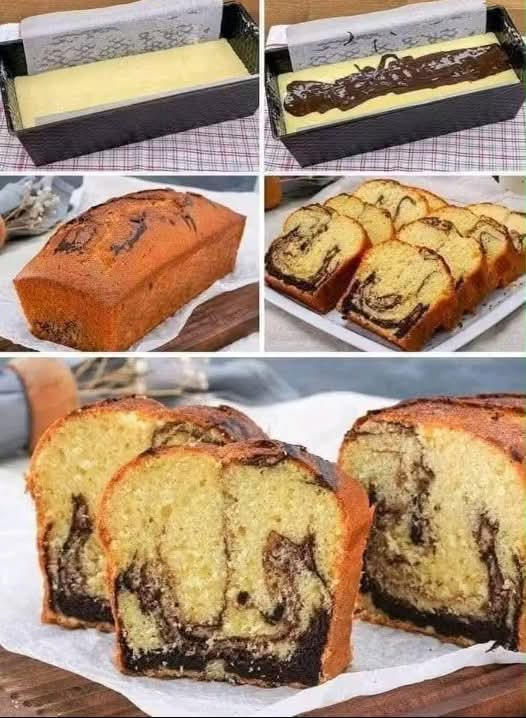
🍰 Marble Cake Masterclass: Symmetry & Scent
🌟 Introduction
Marble cake is where simplicity meets artistry. With its beautiful swirls of vanilla and chocolate, this cake is not just a dessert—it’s a visual and sensory experience. Each slice tells a different story, with patterns that feel almost like edible art. Soft, buttery, and delicately scented with vanilla and cocoa, marble cake is perfect for tea time, celebrations, or whenever you crave something comforting yet elegant.
🧾 Ingredients
Base Batter
- 2 ½ cups all-purpose flour
- 1 ½ cups granulated sugar
- 4 large eggs (room temperature)
- 1 cup butter (or ¾ cup oil for a lighter texture)
- 1 cup milk (room temperature)
- 2 tsp baking powder
- 1 tsp vanilla extract
- ½ tsp salt
Chocolate Batter
- 3 tbsp cocoa powder
- 2–3 tbsp milk (extra, to loosen batter)
🥣 Instructions
Step 1: Prepare
- Preheat oven to 180°C (350°F)
- Grease and flour a loaf pan or round cake pan
Step 2: Make the Batter
- Cream butter and sugar until light and fluffy
- Add eggs one at a time, mixing well after each
- Stir in vanilla extract
- In another bowl, whisk flour, baking powder, and salt
- Alternate adding dry ingredients and milk into the wet mixture
Step 3: Divide & Flavor
- Split batter into two equal parts
- Leave one part vanilla
- Mix cocoa powder and extra milk into the other half
Step 4: Create the Marble Effect
- Spoon alternating layers of vanilla and chocolate batter into the pan
- Use a knife or skewer to gently swirl (don’t overmix!)
Step 5: Bake
- Bake for 45–55 minutes or until a toothpick comes out clean
- Cool in pan for 10 minutes, then transfer to a rack
🔬 Methods (The Science Behind It)
1. Creaming Method
Beating butter and sugar creates tiny air pockets → gives a soft, fluffy crumb
2. Swirling Technique
Controlled swirling ensures distinct patterns instead of muddy blending
3. Moisture Balance
Milk and fat (butter/oil) create tenderness and prevent dryness
4. Cocoa Integration
Adding extra milk to cocoa batter keeps both batters equal in texture
📜 History of Marble Cake
Marble cake traces its roots back to 19th-century Europe, especially Germany, where it was called Marmorkuchen. Early versions used molasses and spices before chocolate became widely available. The signature marbling technique symbolized elegance and craftsmanship, eventually spreading across the world and becoming a beloved household classic.
🎨 Formation (The Art of the Swirl)
Creating a marble cake is like painting:
- Layering batters = building contrast
- Swirling = creating movement
- Baking = setting the masterpiece
Each cake is unique—no two patterns are ever the same, making every bake special.
❤️ Lovers of Marble Cake
Marble cake is adored by:
- Chocolate lovers who want richness
- Vanilla lovers who enjoy subtle sweetness
- Families who can’t decide between the two
- Bakers who appreciate visual beauty
It’s the perfect compromise cake—everyone wins.
🍴 Serving Suggestions
- Dust with powdered sugar for a simple finish
- Serve with whipped cream or ice cream
- Pair with tea or coffee for a cozy treat
- Add chocolate glaze for extra indulgence
🏁 Conclusion
Marble cake is more than just a mix of two flavors—it’s a balance of contrast, texture, and aroma. With its soft crumb and mesmerizing swirls, it brings both comfort and elegance to the table. Whether you bake it for a celebration or a quiet afternoon, it never fails to impress.
If you want, I can give you a super moist bakery-style marble cake or a quick one-bowl version next 🍫✨