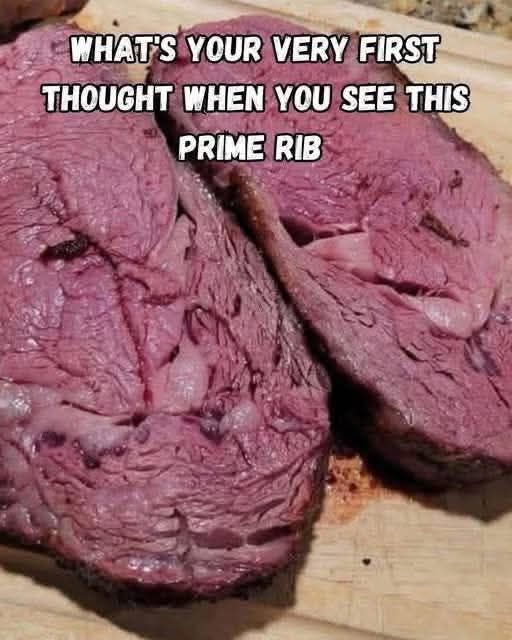
My first thought? 😍
That prime rib looks like pure perfection—juicy, tender, beautifully crusted on the outside, and blushing pink in the center. The kind of centerpiece dish that instantly makes any meal feel like a celebration!
🥩 Ultimate Prime Rib Roast Recipe
✨ Introduction
Prime rib, also known as a standing rib roast, is one of the most luxurious and flavorful cuts of beef. Known for its rich marbling and melt-in-your-mouth texture, it’s a classic for holidays, family feasts, and special occasions. When cooked properly, it delivers a perfect balance of a crispy herb crust and a juicy, tender interior.
🛒 Ingredients
For the Prime Rib:
- 1 (4–6 lb) prime rib roast (bone-in preferred)
- 2 tbsp olive oil or softened butter
- 4 cloves garlic, minced
- 1 tbsp fresh rosemary (or 1 tsp dried)
- 1 tbsp fresh thyme (or 1 tsp dried)
- 1 tbsp salt
- 1½ tsp black pepper
Optional Au Jus:
- Beef drippings from the roast
- 1 cup beef broth
- 1 tbsp flour (optional, for thickening)
🔪 Preparation Method
1. Bring to Room Temperature
Remove the prime rib from the fridge at least 1–2 hours before cooking. This ensures even roasting.
2. Season Generously
Mix olive oil, garlic, herbs, salt, and pepper. Rub all over the roast, coating every side.
3. Preheat Oven
Preheat your oven to 230°C (450°F) for an initial high-heat sear.
🔥 Cooking Instructions
Step 1: High-Heat Sear
Place the roast in a roasting pan (fat side up). Roast at 230°C (450°F) for 20 minutes to develop a crust.
Step 2: Slow Roast
Reduce temperature to 160°C (325°F) and continue cooking:
- Rare: 50–55°C (120–130°F)
- Medium-rare: 55–57°C (130–135°F)
- Medium: 60–63°C (140–145°F)
(Use a meat thermometer for best results!)
Step 3: Resting
Remove from oven and let rest for 20–30 minutes. This keeps it juicy.
🍲 Optional Au Jus Method
- Place roasting pan on stovetop.
- Add beef broth to drippings.
- Simmer and scrape browned bits.
- Add flour if you want it slightly thicker.
🧠 Cooking Methods Explained
- High-heat + low-heat method: Locks in juices while building a flavorful crust.
- Reverse sear method (alternative): Slow cook first, then blast with high heat at the end for crust.
- Resting phase: Essential for redistributing juices inside the meat.
📜 History of Prime Rib
Prime rib originates from traditional British roasting techniques, where large cuts of beef were slow-roasted over open fires. It became a symbol of luxury dining and is still a centerpiece in many Western holiday meals today.
🍽️ Presentation (Formation)
Slice into thick, even cuts and serve with:
- Roasted potatoes
- Yorkshire pudding
- Steamed vegetables
- Horseradish or mustard sauce
❤️ Why People Love It
- Rich, beefy flavor
- Tender, juicy texture
- Impressive presentation
- Perfect for gatherings and celebrations
💡 Pro Tips (Extra Methods)
- Always use a thermometer—guessing leads to overcooking
- Let it rest uncovered for a crispier crust
- Bone-in adds extra flavor
- Season the night before for deeper taste
🎉 Conclusion
Prime rib isn’t just a meal—it’s an experience. From the sizzling crust to the tender slices, every bite feels indulgent and satisfying. Whether it’s your first time or your hundredth, mastering prime rib will always impress and bring people together around the table.
If you want, I can give you a restaurant-style garlic butter crust version or a slow cooker prime rib method too 😋