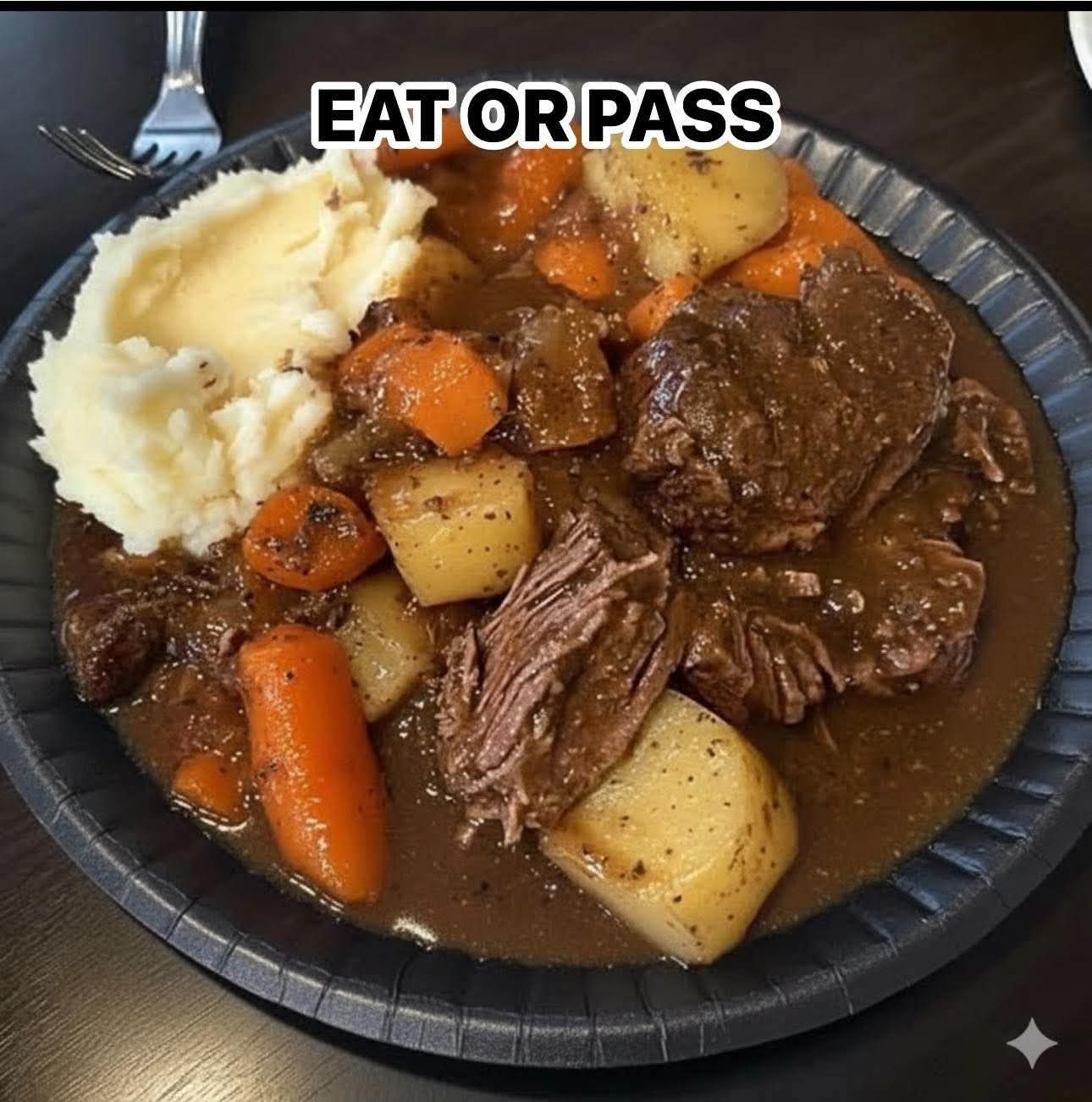
Here is a comprehensive, restaurant-quality recipe for Beef Pot Roast with Potatoes, Carrots & Mashed Potatoes. This guide includes everything you asked for: a full introduction, a detailed ingredient list, step-by-step instructions, cooking methods, history, nutritional benefits, and more.
—
The Ultimate Comfort Food: Classic Beef Pot Roast
Introduction
There are few dishes that evoke the feeling of home and warmth quite like a classic Beef Pot Roast. This isn’t just a meal; it’s a tradition. It represents the pinnacle of “slow food”—transforming a tough, inexpensive cut of beef into a fork-tender, melt-in-your-mouth masterpiece through the patient alchemy of low heat and time.
This recipe elevates the classic by serving the roast with two forms of potato: rustic carrots and potatoes braised in the savory broth for texture, alongside a side of luxuriously creamy mashed potatoes to soak up every last drop of the rich gravy. It is the perfect centerpiece for a Sunday family dinner, a holiday gathering, or any day that calls for deep, soul-satisfying comfort.
—
🥩 Ingredients
For the Pot Roast:
· 3–4 lbs beef chuck roast – The ideal cut, thanks to its perfect marbling.
· 2 tbsp olive oil – For searing.
· 1 large onion, chopped
· 4 cloves garlic, minced
· 2 lbs Yukon Gold or Russet potatoes – For mashing.
· 1.5 lbs baby carrots or large carrots, peeled and cut into 2-inch chunks
· 1 lb small Yukon Gold potatoes or fingerling potatoes – For roasting in the pot (optional, but classic).
· 2 cups beef broth – Low-sodium preferred.
· 1 cup red wine (e.g., Cabernet or Merlot) – Adds depth; can substitute with more broth.
· 2 tbsp tomato paste
· 3 sprigs fresh rosemary
· 4 sprigs fresh thyme
· 2 bay leaves
· Salt and freshly ground black pepper – To taste.
For the Mashed Potatoes (Served on the side):
· 2 lbs Yukon Gold potatoes, peeled and quartered
· ½ cup unsalted butter
· ½ cup heavy cream or whole milk, warmed
· Salt, to taste
—
👨🍳 Instructions & Methods
Method: Braising
Braising is a combination-cooking method that uses both wet and dry heat. It starts with searing the meat to develop a deep, caramelized crust (the Maillard reaction) and finishes by slowly cooking it in a covered pot with liquid until the collagen in the meat breaks down into gelatin, resulting in unparalleled tenderness.
Step 1: Preparation
Preheat your oven to 325°F (165°C) . Remove the beef chuck roast from the refrigerator 45 minutes before cooking to allow it to come to room temperature. Pat the roast completely dry with paper towels. This is crucial for a good sear. Season generously with salt and pepper on all sides.
Step 2: The Sear
In a large Dutch oven (heavy-bottomed pot), heat the olive oil over medium-high heat until it shimmers. Carefully place the roast in the pot and sear for 4-5 minutes per side, until a deep, dark brown crust forms. Do not move the meat while it sears. Use tongs to sear the edges as well. Remove the roast to a plate.
Step 3: Building Flavor
Reduce heat to medium. Add the chopped onion to the pot and cook until softened, about 5 minutes. Add the minced garlic and tomato paste, cooking for 1 minute until fragrant. Pour in the red wine, scraping the bottom of the pot with a wooden spoon to deglaze and lift up all the browned bits (this is called “fond,” and it’s pure flavor). Let the wine reduce by half, about 3-4 minutes.
Step 4: The Braise
Return the roast to the pot. Add the beef broth, rosemary, thyme, and bay leaves. The liquid should come about halfway up the sides of the roast. Bring the liquid to a simmer, then cover the Dutch oven with a tight-fitting lid.
Step 5: Slow Cooking
Transfer the covered pot to the preheated oven. Cook for 2.5 hours.
Step 6: Add Vegetables
After 2.5 hours, remove the pot from the oven. Add the carrot chunks and the small potatoes (the ones that will braise) around the roast. Cover and return to the oven for another 45 minutes to 1 hour, or until the meat is fall-apart tender and the vegetables are easily pierced with a fork.
Step 7: Make the Mashed Potatoes
While the roast finishes, prepare the side of mashed potatoes. Place the 2 lbs of peeled, quartered Yukon Gold potatoes in a large pot and cover with cold, salted water. Bring to a boil and cook until fork-tender, about 15-20 minutes. Drain well. Return the potatoes to the hot pot to steam off excess moisture. Add the butter and mash until smooth. Gently stir in the warm heavy cream until light and fluffy. Season with salt.
Step 8: Rest and Serve
Carefully remove the roast and vegetables to a serving platter, tenting them loosely with foil. Discard the herb sprigs and bay leaves. For the gravy, you can either serve the juices as is, or skim off excess fat and simmer on the stovetop to reduce and thicken slightly. Serve the roast alongside the braised vegetables and a generous scoop of the creamy mashed potatoes, spooning the rich gravy over everything.
—
📜 History & Origins
The pot roast, known in French as boeuf à la mode, is a classic dish born from necessity. Before modern farming, cuts like chuck and brisket came from well-exercised muscles, making them tough. Early cooks discovered that slow-cooking these cuts in a covered pot with liquid (braising) could break down the tough connective tissue.
European immigrants brought this technique to America, where it evolved into the quintessential “Sunday dinner.” It became a symbol of thriftiness and patience, a meal that could feed a large family affordably while filling the home with an inviting aroma. The addition of root vegetables like potatoes and carrots became standard, as they could be cooked in the same pot, making it a complete one-pot meal.
—
💪 Nutritional Benefits
This dish is not only comforting but also offers significant nutritional value:
· High-Quality Protein: Beef chuck is an excellent source of complete protein, essential for muscle repair and growth.
· Collagen & Gelatin: The slow braising breaks down collagen into gelatin, which is beneficial for joint health, skin elasticity, and gut health.
· Rich in Vitamins & Minerals: This meal is packed with iron (from the beef, crucial for oxygen transport), Vitamin A (from the carrots, great for vision and immunity), and Vitamin C and potassium (from the potatoes).
· Balanced Meal: It provides a balanced macro-nutrient profile of protein, fats, and complex carbohydrates, making for a satiating and energy-sustaining meal.
—
💡 Formation & Key Techniques
The formation of this dish’s incredible flavor relies on three key culinary techniques:
1. Maillard Reaction: The aggressive searing at the beginning is non-negotiable. The deep brown crust is not just color; it is a complex layer of caramelized proteins and sugars that forms the savory backbone of the entire dish.
2. Deglazing: Adding wine or broth to the hot pan after searing dissolves the fond (the browned bits stuck to the bottom). This process captures all the concentrated flavor that would otherwise be lost.
3. Low-and-Slow Braising: Cooking at a low temperature (325°F) for a long duration allows the connective tissues within the chuck roast to break down without the muscle fibers seizing up and becoming tough. The result is a texture that is both tender and succulent.
—
🏆 Conclusion
A classic Beef Pot Roast is more than just a recipe; it is a culinary embrace. It is the culmination of patience and simple, high-quality ingredients coming together to create something truly extraordinary. The fork-tender beef, the sweet braised carrots, the hearty potatoes, and the creamy mashed potatoes all united under a blanket of rich, savory gravy—it is a symphony of textures and flavors. Mastering this dish is a rite of passage for any home cook, promising to deliver warmth, comfort, and a sense of accomplishment with every single bite.
—
🥂 For the Lovers
This dish is for the lovers of slow food—those who appreciate that the best things in life are worth waiting for. It’s for the families who gather around a Sunday table, for the hosts who want to serve a meal that feels like a warm hug, and for the home cooks who find joy in the rhythmic process of searing, simmering, and savoring. It is for anyone who understands that a simple pot, filled with humble ingredients and placed in a slow oven, can create the most profound culinary magic. This is a dish made for sharing, and it is loved best when enjoyed with the people who matter most.