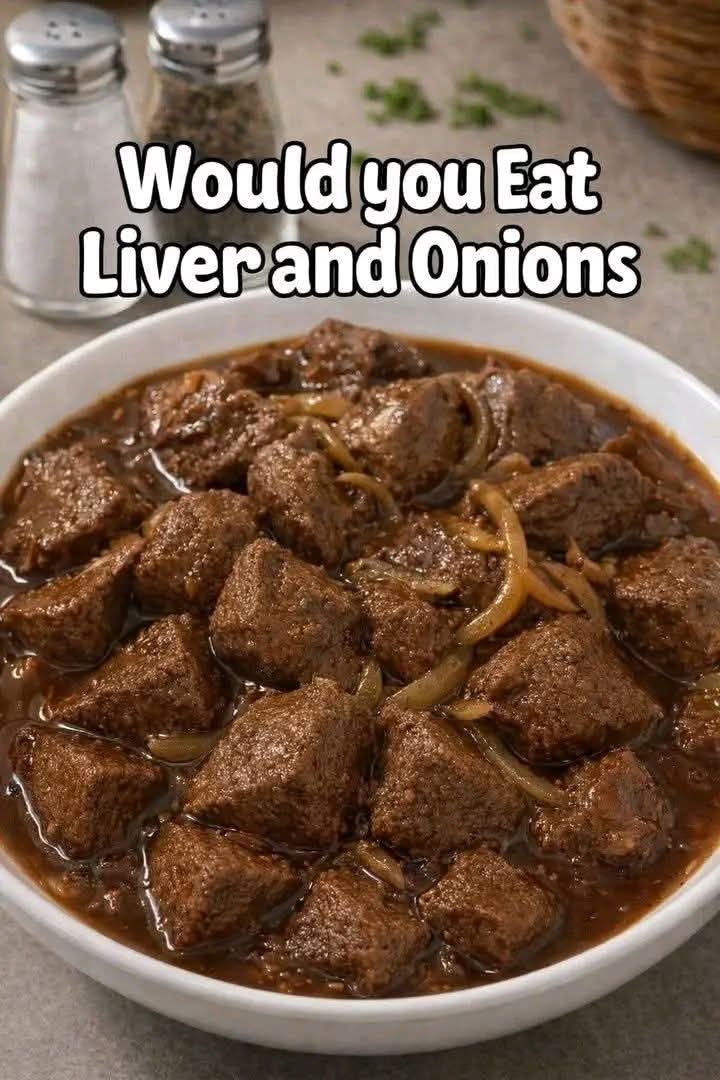
Here is a complete and comprehensive guide to Liver and Onions, transformed from a simple list into a rich, detailed recipe.
—
A Classic Revisited: The Art of Liver and Onions
Liver and onions is a dish that evokes strong opinions—people either revere it as a nostalgic comfort food or shy away from memories of overcooked, bitter liver. When prepared correctly, this humble dish is a revelation. The secret lies in a simple milk soak that removes any bitterness, a quick sear that creates a flavorful crust, and a luscious onion gravy that brings everything together. This is a meal of economy and nutrition, a staple of diners and home kitchens alike, and when done right, it is a truly sublime combination of savory, rich, and sweet flavors.
—
The History
The consumption of liver dates back to our earliest ancestors, who prized organ meats for their dense nutrition. “Liver and onions” as a combined dish gained immense popularity in the 19th and 20th centuries, particularly in European and American cooking. It was a quintessential “working-class” meal—liver was one of the most affordable cuts of meat available, and onions were a cheap, long-storing vegetable that added moisture and sweetness. It became a staple in school cafeterias, diners, and home kitchens, especially during the Great Depression and World War II, when resourcefulness and nutrition were paramount. Today, it remains a beloved classic for those who appreciate its deep, savory flavor and incredible health benefits.
—
Benefits
Liver is one of the most nutrient-dense foods on the planet. It is:
· A powerhouse of iron: Crucial for preventing anemia and transporting oxygen in the blood.
· Extremely high in Vitamin A: Essential for vision, immune function, and skin health.
· Rich in B vitamins: Especially B12, which is vital for nerve function and energy production.
· Packed with high-quality protein: For muscle repair and satiety.
· A great source of copper, zinc, and folate.
Paired with onions, which are rich in antioxidants and prebiotics, this dish is a nutritional powerhouse disguised as a simple comfort meal.
—
Nutrition (per serving, based on 4 servings)
· Calories: ~320
· Protein: 28g
· Fat: 14g
· Carbohydrates: 18g
· Iron: 30% of daily value (approx.)
—
Ingredients
· 1 lb beef liver, cut into bite-sized pieces or thin slices (calf liver is the most tender and mild)
· 1 large onion, thinly sliced (yellow or sweet onion work best)
· 1 cup beef broth
· 1/2 cup milk (for soaking the liver)
· 1/3 cup all-purpose flour
· 2 tablespoons oil or butter (or a combination for high-heat cooking)
· 1 teaspoon salt
· 1/2 teaspoon black pepper
· 1/2 teaspoon garlic powder
· 1/2 teaspoon paprika (optional, for a hint of smokiness)
· Optional: 1 tablespoon fresh parsley, chopped, for garnish
—
Instructions
1. Prepare the Liver:
Rinse the liver under cold water and pat dry with paper towels. Place the pieces in a bowl and cover with the 1/2 cup of milk. Let it soak for at least 30 minutes, or up to 2 hours in the refrigerator. This crucial step draws out any metallic or bitter taste, ensuring a mild, sweet flavor.
2. Prepare for Searing:
While the liver soaks, slice the onion. After soaking, discard the milk. In a shallow dish, combine the flour, salt, pepper, garlic powder, and paprika. Dredge the liver pieces in the seasoned flour, shaking off any excess.
3. Cook the Liver:
Heat 1 tablespoon of oil/butter in a large skillet over medium-high heat. Once hot, add the liver in a single layer (do not overcrowd). Cook for 1-2 minutes per side until golden brown and just cooked through. Be careful not to overcook, as liver becomes tough and grainy if overdone. Remove the liver from the skillet and set aside on a plate.
4. Make the Onion Gravy:
Reduce the heat to medium. Add the remaining 1 tablespoon of oil/butter to the same skillet. Add the sliced onions and a pinch of salt. Cook for 8-10 minutes, stirring occasionally, until the onions are soft, golden, and caramelized. Sprinkle the remaining seasoned flour from the dredging dish (about 1-2 tablespoons) over the onions and stir to cook for 1 minute.
5. Finish the Dish:
Slowly pour in the beef broth, scraping the bottom of the pan to release all the browned bits (this is where the flavor is!). Bring to a simmer and cook for 2-3 minutes until the gravy has thickened. Return the cooked liver to the skillet, nestling it into the gravy. Simmer for just 1-2 minutes to heat through.
6. Serve:
Garnish with fresh parsley if desired. Serve immediately.
—
Methods & Formation of the Dish
· Soaking (The Foundation): This is the foundational step that transforms the flavor profile from bitter to sweet.
· Dredging & Searing (The Crust): Coating the liver in flour and searing it in a hot pan creates a Maillard reaction, forming a flavorful, crispy crust that locks in moisture.
· Deglazing & Building the Sauce: After cooking the onions, adding liquid to the hot pan dissolves the fond (the browned bits), creating a rich, savory gravy that binds the liver and onions together into a cohesive, saucy dish.
—
How to Serve (Formation)
This dish is classically served with creamy mashed potatoes, which are perfect for soaking up the rich onion gravy. Buttered egg noodles, steamed rice, or a side of roasted vegetables like green beans or carrots also make excellent accompaniments. For a complete plate, imagine a mound of fluffy mashed potatoes, the liver and onions nestled on top, all generously coated in the savory gravy.
—
Conclusion
Liver and onions is more than just a recipe; it is a testament to the beauty of simple, honest cooking. With a few key techniques—a milk soak, a hot pan, and a vow to never overcook the liver—you can elevate this humble dish into a deeply satisfying, flavorful, and incredibly nutritious meal. It’s a classic for a reason, ready to be rediscovered.
—
For the Lovers
This dish is for the lovers of deep, savory flavors. It’s for those who appreciate the history of a meal and the value of nutrient-dense foods. It’s for the home cook who takes pride in transforming affordable ingredients into a meal that feels both nostalgic and luxurious. It’s for the families looking to connect with traditional cooking, and for anyone willing to give this underrated classic a second chance. If you love bold flavors, rich textures, and a meal that truly satisfies, this one is for you.
YES — if you’re ready to embrace this classic and want to keep receiving more cherished recipes