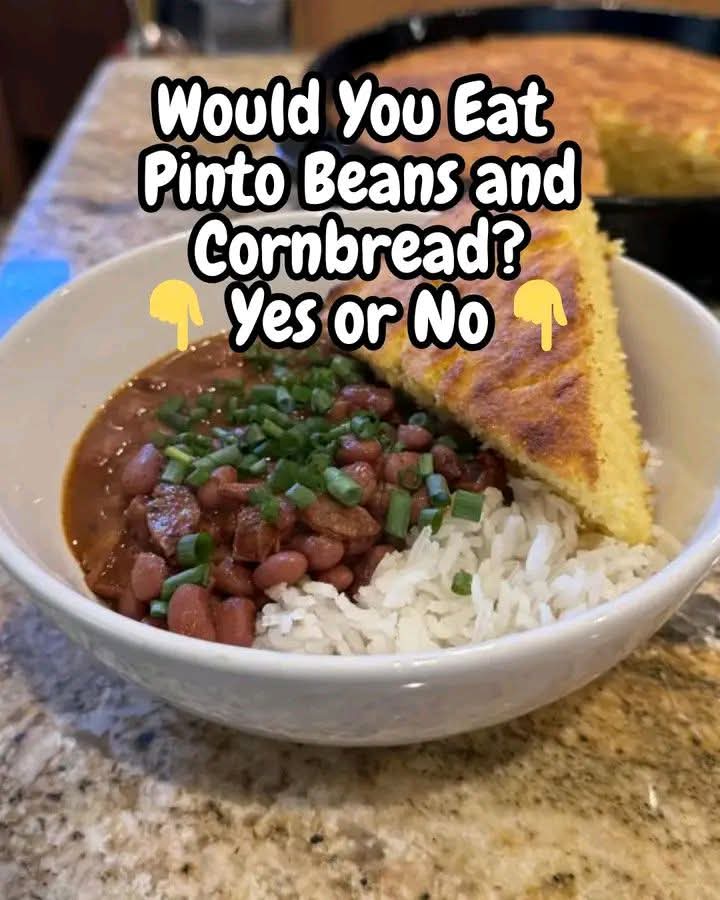
Here is a comprehensive guide to Pinto Beans and Cornbread, structured as you requested.
—
The Humble Classic: Pinto Beans and Cornbread
Introduction
There are few culinary duos as deeply rooted in American culture as pinto beans and cornbread. This is not merely a meal; it is a tradition, a taste of history, and a symbol of comfort and resilience. Originating from the resourceful cooking traditions of the American South and the Native American heritage, this combination represents the perfect marriage of humble ingredients. The creamy, smoky, slowly simmered beans find their ideal counterpart in a slice of golden, buttery cornbread—a textural contrast that creates a deeply satisfying and nourishing meal. This recipe honors that legacy, guiding you to create a pot of beans so flavorful they taste like they’ve been tended all day, alongside a skillet of cornbread with a perfectly crisp edge and a tender crumb.
—
Ingredients
For the Pinto Beans
· 1 lb (about 2 cups) dried pinto beans, picked over and rinsed
· 6 cups water (plus more for soaking and as needed)
· 1 smoked ham hock (or a 4-6 oz chunk of salt pork, or 2 smoked ham shanks)
· 1 small yellow onion, finely chopped
· 2 cloves garlic, minced
· 1 tsp salt (plus more to taste, added near the end of cooking)
· Optional: ½ tsp black pepper, 1 small dried chili pod (for heat), or a bay leaf
For the Cornbread
· 1 tbsp bacon drippings, butter, or vegetable oil (for the skillet)
· 1 ½ cups yellow cornmeal (preferably stone-ground)
· ½ cup all-purpose flour
· 1 tbsp baking powder
· ½ tsp baking soda
· ½ tsp salt
· 1 ¾ cups buttermilk
· 2 large eggs
· ¼ cup honey or maple syrup (optional, for a hint of sweetness)
· 4 tbsp unsalted butter, melted and slightly cooled
—
History
The story of pinto beans and cornbread is a story of cultural convergence. Corn (maize) was the foundational crop of Native American civilizations across the Americas. They taught European settlers how to cultivate it and grind it into meal for breads. Pinto beans, native to Mexico and Central America, became a staple in the American Southwest and spread north and east due to their hardiness, nutritional value, and low cost.
For generations, particularly across the Southern United States and the Appalachians, this dish was a cornerstone of sustenance for working families, sharecroppers, and those enduring economic hardship. A pot of beans with a ham hock could be stretched for days, with cornbread providing a filling, cheap accompaniment. The smoked pork was a luxury born of preservation, adding depth to the simplest ingredients. Over time, what was once a meal of necessity evolved into a cherished comfort food, celebrated for its rich flavor and the sense of home it evokes. It remains a staple at Sunday dinners, community gatherings, and family tables, representing resilience, resourcefulness, and regional pride.
—
Benefits
This humble dish offers remarkable nutritional value:
· High in Fiber: Pinto beans are an excellent source of dietary fiber, which promotes digestive health, helps regulate blood sugar, and contributes to a feeling of fullness.
· Plant-Based Protein: Combined, the beans and cornbread provide a significant amount of protein. Beans offer a complete protein profile when paired with the corn in the bread, making this a powerful meatless (or meat-reduced) meal.
· Rich in Vitamins and Minerals: Pinto beans are packed with folate, iron, magnesium, and potassium. Cornbread, particularly when made with buttermilk and cornmeal, contributes calcium, phosphorus, and B vitamins.
· Sustained Energy: This is a meal of complex carbohydrates and protein, providing a slow release of energy that keeps you satiated for hours.
· Economical and Accessible: The core ingredients are affordable, non-perishable (dried beans, cornmeal), and readily available, making this a practical and nutritious foundation for any kitchen.
—
Methods
There are two primary methods for the beans: the traditional stovetop method, which builds flavor slowly, and the modern pressure cooker method for speed.
Method 1: Traditional Stovetop Beans
1. Soak: The night before, pick over the beans to remove any stones or debris. Rinse them. Place in a large bowl and cover with several inches of cold water. Let soak for at least 8 hours or overnight. Drain and rinse before cooking.
2. Sauté: In a large, heavy-bottomed Dutch oven or stockpot, sauté the chopped onion over medium heat until softened, about 5 minutes. Add the minced garlic and cook for one minute more.
3. Simmer: Add the drained beans, 6 cups of water, and the ham hock (or salt pork). Bring to a boil, then reduce the heat to a low, gentle simmer. Cover with the lid slightly ajar to allow steam to escape.
4. Cook Low and Slow: Let the beans simmer for 2 to 3 hours, stirring occasionally. Check the water level every hour, adding more hot water as needed to keep the beans just covered. The beans are done when they are completely tender and creamy.
5. Season: Once the beans are tender, remove the ham hock. If using, shred any meat from the bone and return it to the pot. Stir in the 1 teaspoon of salt (adding salt too early can toughen the beans). Let the beans simmer uncovered for another 15–20 minutes to thicken the broth to your liking. Taste and adjust seasoning.
Method 2: Instant Pot/Pressure Cooker
1. No Soak Option: Pick over and rinse the beans.
2. Sauté: Use the sauté function to cook the onion and garlic in a little oil. Add the beans, 6 cups of water, and the ham hock.
3. Pressure Cook: Seal the lid, set the valve to sealing, and cook on Manual/High Pressure for 45–55 minutes (45 for firmer beans, 55 for very creamy beans).
4. Natural Release: Allow the pressure to release naturally for at least 20 minutes. This is crucial for the beans to absorb the smoky flavor and achieve a creamy texture. Open the lid, remove the ham hock, shred the meat, and return it to the pot. Stir in salt and simmer on sauté for a few minutes to adjust the broth consistency.
Method: Classic Cast Iron Cornbread
1. Preheat: Place a 10-inch cast-iron skillet in the oven and preheat to 425°F (220°C) . Add the 1 tbsp of bacon drippings or butter to the skillet while it preheats.
2. Mix Dry Ingredients: In a large bowl, whisk together the cornmeal, flour, baking powder, baking soda, and salt.
3. Mix Wet Ingredients: In a separate bowl, whisk together the buttermilk, eggs, honey (if using), and melted butter.
4. Combine: Pour the wet ingredients into the dry ingredients and stir with a spatula just until combined. The batter will be slightly lumpy. Do not overmix.
5. Assemble: Carefully remove the hot skillet from the oven. Swirl the hot fat to coat the bottom and sides. Pour the batter into the skillet—it should sizzle immediately. Spread evenly.
6. Bake: Return the skillet to the oven and bake for 18–22 minutes, or until the top is golden brown and a toothpick inserted in the center comes out clean. Let cool in the skillet for 5-10 minutes before slicing.
—
Formation
The true magic of this meal lies in how it is formed on the plate. While delicious separately, the formation is an intentional act.
1. The Base: A generous, deep bowl of beans is the foundation. The broth should be rich, slightly thickened, and stained a deep brown from the smoked pork.
2. The Integration: A slice of warm cornbread is placed directly on top of the beans in the bowl. The classic way to eat this is to use a fork to crumble a piece of the cornbread and push it down into the bean broth, letting it soak up the liquid like a savory, textured sponge.
3. The Accompaniments: For a true “Southern plate,” this is often served alongside a handful of thinly sliced raw onion, a few pickled jalapeños, or a side of creamy coleslaw. The sharp, acidic, or crisp elements cut through the richness of the beans and cornbread, creating a perfectly balanced forkful.
—
Nutrition
Approximate values per serving (based on 6 servings of beans and 8 servings of cornbread)
Pinto Beans (per 1.5 cup serving):
· Calories: 280-320
· Protein: 16-18g
· Fiber: 12-15g
· Fat: 4-8g (depending on pork)
· Carbohydrates: 45-50g
Cornbread (per slice, 1/8 of skillet):
· Calories: 220-260
· Protein: 5-7g
· Fat: 10-14g
· Carbohydrates: 28-32g
Combined Meal:
This is a calorically dense but highly nutritious meal. The high fiber and protein content ensure excellent satiety. To lighten the meal, you can use a leaner smoked turkey leg instead of ham hock and reduce the butter in the cornbread.
—
Lovers
This dish is beloved by a diverse and passionate group. It is cherished by:
· Southerners and Appalachians: For whom this is a cultural birthright, evoking memories of grandparents’ kitchens and Sunday dinners.
· Home Cooks of All Kinds: Anyone who appreciates the meditative, rewarding process of slow cooking and the deep, developed flavor that only time can create.
· Those Seeking Comfort Food: It is the ultimate in soul-warming food, providing a sense of security, nostalgia, and simple, honest satisfaction.
· Budget-Conscious and Sustainable Eaters: Its low cost and reliance on pantry staples make it a favorite for those who want to eat well without spending a lot.
· Legion of Bean Enthusiasts: There is a dedicated community of bean lovers who celebrate the versatility, flavor, and nutritional power of legumes, and they hold pinto beans in the highest regard, especially when paired with the perfect skillet of cornbread.
—
Conclusion
Pinto beans and cornbread represent far more than the sum of their humble parts. They are a testament to the beauty of simplicity, the importance of patience, and the deep connection between food, family, and history. The process of cooking this meal—the long, aromatic simmer of the beans, the sizzle of cornbread batter hitting a hot skillet—is a form of meditation. The result is a dish that offers profound comfort, robust flavor, and genuine nourishment. Whether you are cooking for a crowd or for yourself, a bowl of creamy, smoky beans with a wedge of buttery cornbread is a timeless, soulful experience that connects you to generations of cooks who found warmth and sustenance in this perfect pair.