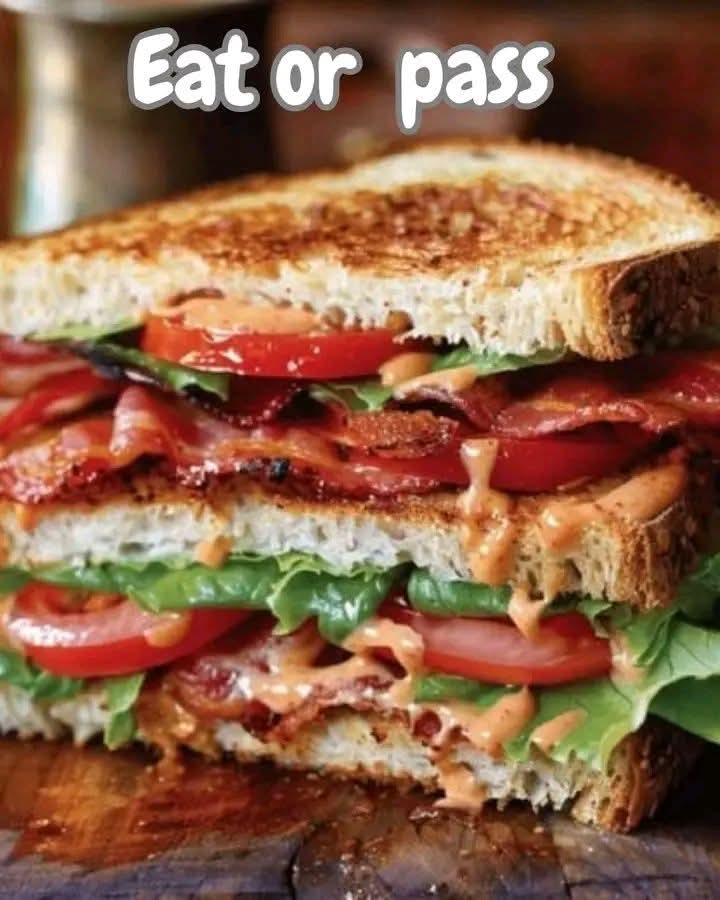
Here is a deep dive into the “Tremendous BLT” – a recipe, a history lesson, and a love letter to the perfect sandwich.
—
The Gospel of the BLT: A Recipe for Sandwich Perfection
Introduction
There are sandwiches, and then there is the BLT. It is a monument to simplicity, a culinary palindrome where the sum is not just greater than the parts, but transcendent. When the words “Tremendous” and “BLT” collide, we aren’t just talking about a quick lunch; we are talking about a ritual. This is the sandwich that ends debates, cures midday slumps, and represents the pinnacle of texture contrast: the salty crunch of cured pork, the juicy acidity of ripe tomatoes, the cool snap of lettuce, all bound by a slather of mayonnaise between two slices of perfectly toasted bread.
To eat this tremendous BLT is to understand that perfection doesn’t require complexity—it requires respect for ingredients.
—
The History
The BLT’s origins are a story of technological and culinary evolution. While the combination of bacon, lettuce, and tomato likely existed in Victorian-era tea sandwiches, the BLT as we know it didn’t become a cultural icon until the 20th century.
Before the 1900s, fresh tomatoes were seasonal luxuries. However, with the rise of refrigeration and industrial farming in the early 1900s, tomatoes became available year-round. Simultaneously, sliced bread was commercialized in 1928, and the convenience of pre-packaged bacon grew. The BLT began as a “club sandwich” variant (originally a turkey and bacon sandwich for gentlemen’s clubs) but eventually shed the turkey and the third slice of bread. By World War II, the BLT had earned its own identity, appearing in cookbooks as a simple, affordable luxury. It became the ultimate summer sandwich—a celebration of the garden harvest wrapped around the ultimate comfort food.
—
The Ingredients (The Trinity + The Binder)
To achieve the “Tremendous” status, ingredient selection is non-negotiable.
For the Sandwich:
· 4 slices of thick-cut bacon: Do not use thin, shriveled diner bacon. You need thickness for a meaty bite and a substantial chew.
· 2 slices of bread (toasted): Sourdough, Texas toast, or a sturdy artisan white loaf. Flimsy bread collapses under the weight of greatness.
· 4-6 slices of ripe tomato: Heirloom, Beefsteak, or vine-ripened. The tomato is the “juice” of the sandwich; it must be red, fragrant, and at room temperature.
· 4-5 leaves of crisp lettuce: Romaine (for the crunch) or Iceberg (for the cool, shattering crispness).
The Non-Negotiables:
· Mayonnaise: Duke’s, Hellmann’s, or homemade. Butter is not invited to this party.
· Salt & Freshly ground black pepper: Essential for seasoning the tomatoes.
—
Methods & Formation (The Architecture)
Method 1: The Bacon
1. The Oven Method (Preferred): Arrange bacon on a wire rack set over a baking sheet. Bake at 400°F (200°C) for 15-20 minutes until deep brown and crispy but still with a slight give. This renders the fat evenly without curling.
2. The Pan Method: Cook in a cast-iron skillet over medium heat, flipping occasionally, until crisp. Drain on paper towels.
Method 2: The Assembly (The Architecture)
A BLT is structurally engineered to prevent sogginess and blowouts.
1. Toast the Bread: Achieve a golden-brown toast. Let it cool for 60 seconds to prevent the mayo from melting into a grease slick.
2. Slather: Spread a generous layer of mayonnaise on both sides of each slice of toast. The mayo is the waterproof barrier against the tomato juice.
3. The Base Layer: On the bottom slice, place the lettuce. The lettuce protects the bottom toast from the heat of the bacon and the juice of the tomato.
4. The Core: Lay the bacon slices flat over the lettuce, weaving them slightly to ensure every bite gets pork.
5. The Top: Season the tomato slices aggressively with salt and pepper. Place them on top of the bacon. Crucial: Salt draws out moisture; putting the tomato on top allows the juice to flow into the sandwich, not out the bottom.
6. The Cap: Place the second slice of toast, mayo-side down, onto the tomatoes.
7. The Press: Press down gently with the palm of your hand to set the layers. Slice diagonally (triangles taste better than rectangles; this is culinary law).
—
Nutrition (Per Serving)
Given the “Tremendous” nature of this specific recipe (using 4 slices of thick-cut bacon):
· Calories: ~550-650
· Fat: 40-45g (primarily from bacon and mayo)
· Saturated Fat: 12g
· Sodium: 1,200-1,500mg
· Carbohydrates: 30g
· Protein: 18-22g
· Vitamins: High in Vitamin C (from tomato), Vitamin A (from lettuce), and B vitamins (from bacon).
—
Benefits
Why should you eat this sandwich beyond sheer pleasure?
1. Mental Health: The combination of fat, salt, and crunch triggers a primal satisfaction response that lowers cortisol.
2. Lycopene Absorption: Cooking tomatoes (or pairing them with fat) increases the bioavailability of lycopene, a powerful antioxidant. The fat in the bacon and mayo helps your body absorb it.
3. Muscle Maintenance: Bacon provides a solid protein punch to aid in muscle repair.
4. Hydration: Lettuce and tomatoes have a high water content, contributing to hydration.
—
The Lovers
The BLT is unique because it has no haters, only lovers.
· The Purist: Demands only bread, mayo, lettuce, tomato, bacon. They argue that avocado, fried eggs, or cheese are “gateway drugs” that ruin the sanctity of the original.
· The Seasonalist: Only eats BLTs in August when tomatoes are picked that morning. They view a winter BLT as a tragic imitation.
· The Glutton: The one who adds a fried egg to make it a “BELT” or double-stacks the bacon to 8 slices, refusing to acknowledge the concept of “too much.”
· The Architect: Obsessed with the structural integrity—toasting the inside of the bread but leaving the crust soft, or using a toothpick to hold the skyscraper together.
—
Lovers & Methods (Expanded)
The love affair with the BLT often dictates the method of cooking:
· The Skillet Lover: Swears by frying bacon in a pan so they can fry the bread in the residual bacon fat (a method known as “dirty toasting”).
· The Oven Lover: Prefers the hands-off approach, believing flat, uniformly cooked bacon allows for a more stable stack.
· The Heirloom Zealot: Will refuse to make this sandwich if the tomato isn’t an ugly, lumpy heirloom variety. They treat the tomato as the star, relegating the bacon to “seasoning.”
—
Formation: The Final Assembly Diagram
To visualize the perfect formation from top to bottom:
1. Top Toast (Mayo-side down)
2. Tomatoes (Seasoned, overlapping to prevent fall-through)
3. Bacon (The meat layer, slightly woven)
4. Lettuce (The hydraulic barrier)
5. Bottom Toast (Mayo-side up)
Note: If you are eating this over a plate, accept the inevitable “toothsome squirt” of tomato juice on the chin. It is a sign of authenticity.
—
Conclusion
The tremendous BLT is not merely a sandwich; it is a seasonal celebration, a textural symphony, and a testament to the idea that humanity’s greatest achievements are often the simplest. In a world of deconstructed, foamed, and infused cuisine, the BLT remains defiantly democratic. It requires no culinary degree to build, yet demands respect to perfect.
To eat this sandwich—with bacon fat on your fingers, a crumb on your shirt, and a slice of perfect tomato sliding out the back—is to participate in a century-old tradition of joy. Whether you are a purist or a glutton, skillet-fryer or oven-roaster, the moment that first crunch meets the creamy mayo and the salty pork, you are reminded that food doesn’t need to be complicated to be tremendous.
It just needs to be real.
—
Final Note for Lovers
If you are making this for someone you love, do not cut the sandwich in half. Present it whole. Let them experience the first crack of the crust themselves. Serve it with a dill pickle spear and a glass of iced tea (sweet or unsweet—another great debate for another time). This is the meal of summer afternoons, of simple cravings, and of culinary contentment.