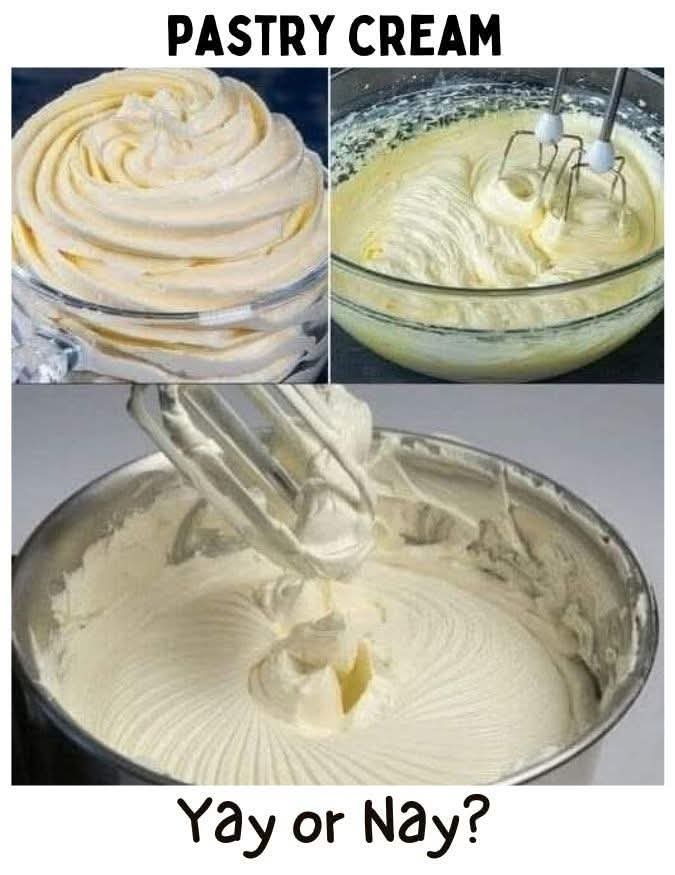
Here is a comprehensive guide to creating the perfect pastry cream, presented with all the elements you requested.
—
The Alchemist’s Guide to Crème Pâtissière: The Soul of French Pastry
Introduction
In the grand theatre of French patisserie, where delicate choux and flaky mille-feuille command the spotlight, there is one silent, unassuming star that makes the magic possible: Crème Pâtissière, or pastry cream. It is the soul of the éclair, the heart of the fruit tart, and the luxurious filling of the classic Napoleon. This is not merely a pudding; it is a cornerstone of culinary craftsmanship.
Mastering pastry cream is a rite of passage for any baker. It appears deceptively simple—a handful of pantry staples—yet its creation is a delicate dance of science and intuition. The perfect batch is a paradox: a rich, liquid custard that, with the application of heat and patience, transforms into a silky, stable cream that holds its shape yet melts luxuriously on the tongue. This guide will take you on a journey through its history, the science behind its formation, and provide the definitive recipe to achieve perfection every time.
—
The Definitive Recipe for Classic Pastry Cream
Yield: Approximately 1.2 kg (enough to fill 20-25 large éclairs or one 10-inch tart)
Prep time: 10 minutes
Cook time: 15-20 minutes
Chill time: Minimum 3 hours
Ingredients
Ingredient Quantity Notes & Function
Whole Milk 1 liter (4 ¼ cups) The foundational liquid. Whole milk is non-negotiable for its fat content, which provides richness, flavor, and a smoother mouthfeel.
Egg Yolks 4 large (about 80g) The primary thickener and emulsifier. Yolks add a custardy flavor, a golden color, and contribute to the cream’s structure.
Granulated Sugar 150g (¾ cup) Provides sweetness, but also tenderizes the egg proteins, preventing curdling, and helps retain moisture.
Cornstarch 70g (5 heaping tbsp) The crucial stabilizer. Unlike flour, cornstarch is a pure starch that thickens at a lower temperature, creates a clearer, silkier texture, and is gluten-free.
Vanilla Bean or Paste 1 bean or 2 tbsp paste The soul of the flavor. Real vanilla provides complex aromatic notes that imitation extracts cannot replicate.
Unsalted Butter 50g (3 ½ tbsp) Added at the end, it enriches the cream, adds a glossy sheen, and helps form a skin on the surface to prevent drying during cooling.
Pinch of Salt 1 pinch Enhances all the flavors and balances the sweetness.
—
Method: The Step-by-Step Process
1. Aromatic Infusion: In a heavy-bottomed saucepan, pour the milk. If using a vanilla bean, split it lengthwise with a knife, scrape out the tiny seeds, and add both the seeds and the pod to the milk. Heat over medium heat until it just begins to simmer. Turn off the heat, cover, and let it steep for 15-20 minutes. This step extracts maximum flavor.
2. The Tempering Base: In a large, heatproof mixing bowl, whisk together the egg yolks, sugar, and cornstarch until the mixture is pale yellow, thick, and forms a “ribbon” when the whisk is lifted. This vigorous whisking ensures the cornstarch is fully incorporated and the sugar begins to dissolve, preventing lumps.
3. Tempering (The Critical Step): Remove the vanilla pod from the warm milk (rinse and save for vanilla sugar). Slowly pour about 1/3 of the hot milk into the egg mixture in a thin stream, whisking constantly. This gradually raises the temperature of the eggs without scrambling them. Once incorporated, pour the now-warm egg mixture back into the saucepan with the remaining milk.
4. Thickening & Cooking: Place the saucepan back over medium heat. Whisk vigorously and without stopping. The mixture will be very liquid, then will suddenly thicken as it approaches a boil. You will hear a few “plops” as large bubbles burst on the surface. Once it has thickened to a stiff, pudding-like consistency, continue to whisk and cook for 1-2 minutes more. This extra time is crucial to neutralize the starch’s thickening enzyme (amylase), ensuring the cream doesn’t thin out later.
5. Final Enrichment: Remove the saucepan from the heat. Immediately whisk in the butter and salt until completely melted and incorporated. The cream will now be glossy and smooth.
6. Cooling & Preventing a Skin: Pour the hot pastry cream into a clean, shallow baking dish or a sheet pan. This increases the surface area, allowing it to cool quickly. Press a piece of plastic wrap directly onto the surface of the cream (this is “film contact”). This prevents a dry, rubbery skin from forming. Refrigerate for at least 3 hours, or until completely chilled and set.
—
The History & Origin
The origin of pastry cream is a story of culinary evolution. While custards have existed since the Roman Empire, the specific formulation we know today is a product of 17th and 18th-century France. It evolved from a simpler “crème anglaise” (a pouring custard). French chefs, seeking stability for their elaborate pièces montées (decorative centerpieces), began adding flour or starch to the egg-milk mixture. This created a thicker, structurally sound filling that could be piped and would not run.
The recipe was codified by legendary chefs like Marie-Antoine Carême, the “King of Chefs, and Chef of Kings,” who used it as a fundamental building block in his grand patisserie. The later shift from flour to cornstarch, made possible by the Columbian Exchange, was a revolutionary refinement, yielding the silky, pure texture prized in modern pastry.
—
The Formation: A Science of Starch and Eggs
The creation of pastry cream is a masterclass in culinary science. It relies on two key processes:
1. Starch Gelatinization: Cornstarch granules absorb the liquid from the milk. As the mixture heats to around 85°C (185°F), these granules swell and burst, releasing starch molecules that form a three-dimensional network, trapping liquid and creating a thick, opaque paste.
2. Protein Coagulation: Egg yolk proteins (lipoproteins) begin to denature and coagulate around 65-70°C (149-158°F). This reinforces the structure created by the starch, adding richness and a firmer set.
The art lies in the tempering process, which prevents the eggs from coagulating too rapidly (scrambling) before the starch can stabilize the mixture.
—
Benefits & Nutritional Information
Nutritional Profile (per 100g serving, estimated):
· Calories: ~190-220
· Fat: 8-10g
· Carbohydrates: 24-28g
· Protein: 4-5g
· Key Nutrients: Calcium (from milk), Vitamin A (from egg yolks), and a source of energy.
Benefits Beyond Taste:
· Culinary Versatility: It is a blank canvas. It can be flavored with chocolate, coffee, fruit purées, liqueurs, or citrus zest.
· Structure Builder: It is the base for other creams like Crème Mousseline (with softened butter) and Crème Chiboust (with Italian meringue).
· Emotional Comfort: A well-made pastry cream evokes a sense of nostalgia, accomplishment, and pure, unadulterated comfort.
—
Lovers of Pastry Cream
Pastry cream enjoys a universal appeal. It is beloved by:
· Professional Pâtissiers: Who view it as a fundamental test of skill and the foundation of their craft.
· Home Bakers: For its reliability and the “wow” factor it adds to homemade desserts.
· Choux Pastry Enthusiasts: For whom a crisp, airy choux filled with smooth, vanilla-laced cream is the ultimate indulgence.
· Artisanal Bakeries: Where it distinguishes a simple fruit tart from a work of art.
· Gluten-Free Bakers: As cornstarch-based pastry cream is naturally gluten-free, making it accessible.
—
Conclusion: The Heart of the Matter
To make a perfect pastry cream is to connect with centuries of culinary tradition. It is a simple, elegant process that demands patience, attention, and respect for its ingredients. The reward is a versatile, decadent cream that elevates any pastry from simple to sublime. Whether you are filling delicate cream puffs for a special occasion or layering it between buttery puff pastry for a simple weeknight treat, mastering this recipe is an investment in your skills as a baker.
It is more than just a recipe; it is a fundamental technique. With this guide, you now hold the key to unlocking a world of classic French desserts. So, gather your ingredients, embrace the process, and savor the unparalleled satisfaction of creating the perfect Crème Pâtissière.