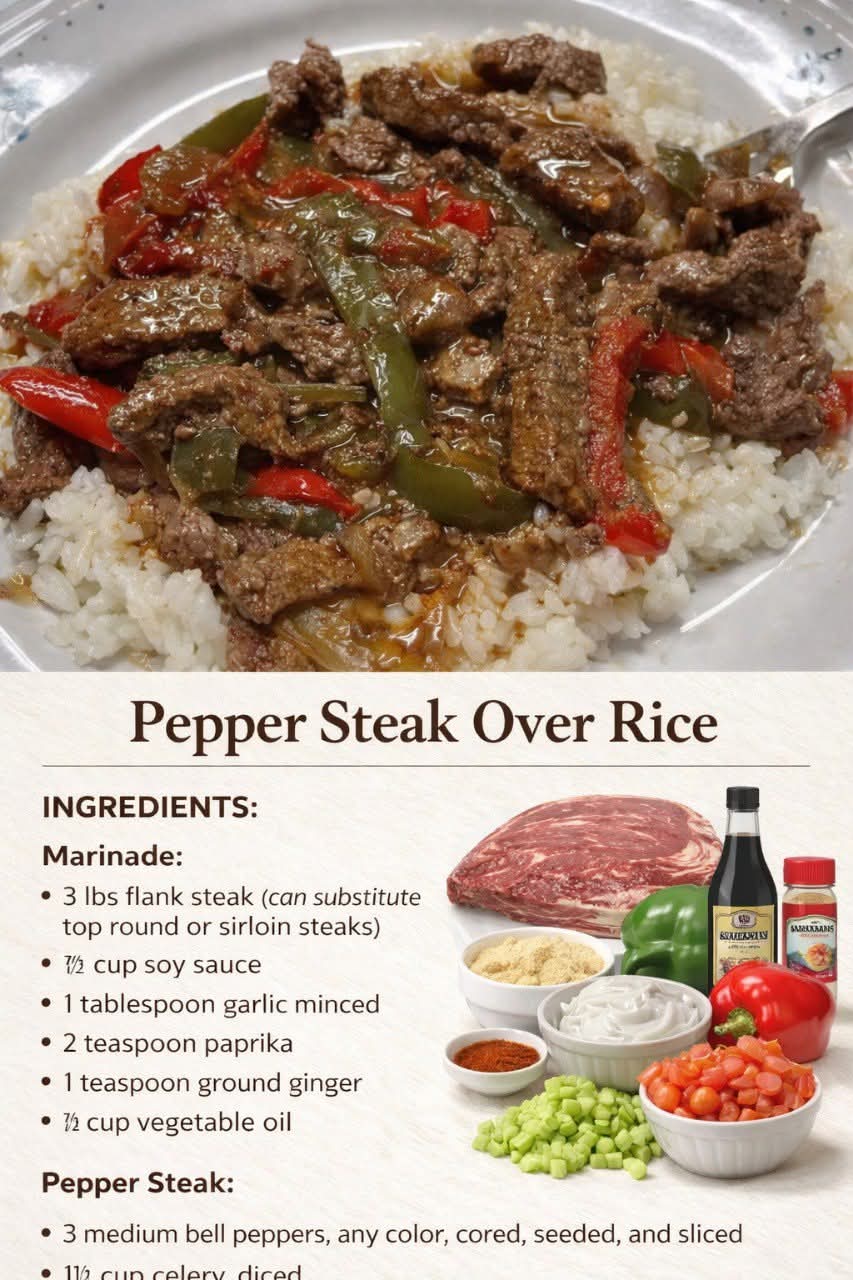
Here is a comprehensive and detailed recipe for Pepper Steak Over Rice, structured to meet all your requests, from its history to its nutritional profile.
—
Introduction
Pepper Steak Over Rice is a cornerstone of Chinese-American cuisine, a dish that perfectly embodies the concept of culinary fusion. Born from the wave of Chinese immigration to the United States in the 19th century, it was crafted to appeal to American palates while retaining the core techniques of Chinese wok cooking. Unlike its more subtle cousin, the Sichuan-style pepper steak, this version is characterized by a rich, savory, slightly sweet sauce, tender strips of beef, and the vibrant crunch of bell peppers. Served over a bed of fluffy white rice, it transforms simple, humble ingredients into a deeply satisfying and iconic comfort food that has graced dinner tables and takeout menus for over a century. This recipe is a tribute to that legacy, focusing on the crucial technique of velveting the beef to achieve that signature tender texture.
—
History
The history of Pepper Steak is a story of adaptation. It traces back to stir-fry dishes from the Guangdong (Canton) region of China, where beef and peppers were common. However, the dish as it is widely known today was popularized in the United States during the mid-20th century. Chinese immigrants, facing limited access to traditional ingredients, cleverly substituted available American vegetables like bell peppers and onions. They also adapted sauces to be richer and sweeter, using more soy sauce and sugar to suit local tastes. The dish became a staple of the “chop suey” era, representing a delicious bridge between two cultures. It was affordable, used readily available cuts of beef, and could be made quickly in a hot wok—a perfect meal for a busy American family. This recipe honors that history by balancing authentic stir-fry technique with the beloved flavors that made this dish a classic.
—
Benefits
Beyond its delicious taste, Pepper Steak Over Rice offers several benefits:
1. High-Quality Protein: Flank steak is an excellent source of complete protein, essential for muscle building, repair, and overall bodily function.
2. Rich in Iron: Red meat is a primary source of heme iron, which is easily absorbed by the body and crucial for preventing anemia and transporting oxygen in the blood.
3. Vitamin C Powerhouse: Bell peppers, especially red and yellow ones, are loaded with vitamin C, a powerful antioxidant that supports the immune system and aids in collagen production.
4. Balanced Macronutrients: When served with rice, the dish provides a balanced mix of protein, carbohydrates for energy, and fats for satiety.
5. Customizable Nutrition: It’s easy to add more vegetables like broccoli, snap peas, or carrots to increase the fiber and micronutrient content.
—
Ingredients
For the Marinade (The “Velvet” Technique):
· 3 lbs flank steak (or top round/sirloin), thinly sliced against the grain. Slicing against the grain is the most critical step for tenderness.
· ⅔ cup soy sauce (low-sodium recommended for better control of saltiness)
· 1 tablespoon minced garlic
· 2 teaspoons paprika (for color and a subtle smokiness)
· 1 teaspoon ground ginger
· ⅔ cup vegetable oil (or another neutral oil like canola or avocado)
For the Stir-Fry & Sauce:
· 2 large bell peppers (use a mix of green, red, and yellow for color and flavor), sliced into 1-inch strips
· 1 large yellow or white onion, sliced into half-moons
· 4 cloves garlic, thinly sliced
· 1 tablespoon fresh ginger, grated
· ½ cup beef broth (or water)
· ¼ cup soy sauce
· ¼ cup oyster sauce (the secret to deep, savory flavor)
· 2 tablespoons brown sugar (packed)
· 1 tablespoon cornstarch, mixed with 2 tablespoons of cold water (slurry)
· ½ teaspoon black pepper (plus more for finishing)
· Steamed white or brown rice, for serving
· Optional garnishes: Sesame seeds, sliced green onions
—
Methods & Instructions
Preparation (Mise en Place):
1. Prepare the Beef: Place the flank steak in the freezer for 30 minutes to make it firm, which makes slicing easier. Slice the beef across the grain into thin, ¼-inch thick strips.
2. Marinate the Beef: In a large bowl, combine the sliced beef, ⅔ cup soy sauce, 1 tablespoon minced garlic, 2 teaspoons paprika, and 1 teaspoon ground ginger. Mix well. Add the ⅔ cup vegetable oil and stir to coat. This oil is the key to the “velveting” process, sealing in moisture. Cover and let it marinate for at least 30 minutes at room temperature, or up to 2 hours in the refrigerator. Let it come to room temperature before cooking.
3. Prepare the Sauce: In a small bowl, whisk together the beef broth, ¼ cup soy sauce, oyster sauce, brown sugar, and a generous amount of black pepper. Set aside.
Cooking:
1. Sear the Beef (High Heat): Heat a large wok or heavy-bottomed skillet over high heat until it’s smoking hot. Add the marinated beef in a single layer (you may need to do this in 2 batches to avoid steaming). Let it sear undisturbed for 1-2 minutes until browned, then stir-fry for another 1-2 minutes until just cooked through. Using a slotted spoon, transfer the beef to a plate, leaving the oil in the wok.
2. Stir-Fry the Aromatics & Vegetables: Reduce heat to medium-high. Add the sliced onion and bell peppers to the wok. Stir-fry for 3-4 minutes until they begin to soften and develop slight char marks. Add the sliced garlic and grated ginger and stir-fry for another 30 seconds until fragrant.
3. Combine and Create the Sauce: Pour the prepared sauce mixture into the wok with the vegetables. Bring it to a boil. Give the cornstarch slurry a final stir and pour it into the sauce. Cook for 1 minute, stirring constantly, until the sauce thickens to a glossy, gravy-like consistency.
4. Finish the Dish: Return the cooked beef and any accumulated juices from the plate to the wok. Toss everything together to coat the beef and vegetables in the sauce. Cook for another minute to heat through. Taste and adjust seasoning with a final crack of black pepper.
—
Formation (Plating)
To create a beautiful and appetizing presentation:
1. The Base: Use a deep, wide-rimmed bowl or a plate with a shallow well. Pack a generous serving of steamed rice into a small bowl to create a tight dome, then invert it onto the center of the plate. This classic form elevates the dish.
2. The Main Event: Ladle the pepper steak mixture generously over and around the dome of rice, ensuring an even distribution of beef, peppers, and onions.
3. The Garnish: For a professional finish, sprinkle with toasted sesame seeds and thinly sliced green onions. The green adds a pop of color and a fresh, mild onion flavor that contrasts beautifully with the rich sauce.
—
Lovers
This dish is beloved by:
· Busy Families: It’s a quick, one-wok meal that comes together faster than takeout delivery.
· Home Cooks: It’s a fantastic dish for learning essential stir-fry techniques like velveting and high-heat searing.
· Comfort Food Enthusiasts: The rich, savory, and slightly sweet sauce over tender beef and fluffy rice is the ultimate in cozy, satisfying eating.
· Those New to Cooking Asian Cuisine: It uses easily accessible ingredients and is forgiving, making it a perfect gateway dish.
· Any Lover of Iconic Takeout: It satisfies that craving for classic, American-Chinese restaurant flavor in the comfort of your own home.
—
Nutrition (Approximate per serving, serves 6-8)
Note: Nutrition is an estimate and will vary based on specific ingredients and portion sizes.
· Calories: 580-680
· Protein: 45-50g
· Fat: 30-35g
· Carbohydrates: 35-40g
· Fiber: 2-4g
· Sugar: 8-12g
· Sodium: 1200-1500mg (can be reduced by using low-sodium soy sauce and limiting added salt)
—
Conclusion
This Pepper Steak Over Rice recipe is more than just a set of instructions; it’s a celebration of a dish that has earned its place as a beloved classic. By mastering the simple but crucial steps—slicing the beef against the grain, using the velveting technique, and cooking over high heat—you can recreate the magic of your favorite takeout restaurant with fresher, healthier ingredients in your own kitchen. The result is a symphony of textures and flavors: the melt-in-your-mouth tenderness of the beef, the vibrant crunch of the peppers, and the rich, savory-sweet sauce that clings to every grain of rice. It’s a wholesome, satisfying, and deeply flavorful meal that is sure to become a cherished staple in your culinary repertoire. Thank you for allowing me to share this recipe with you.