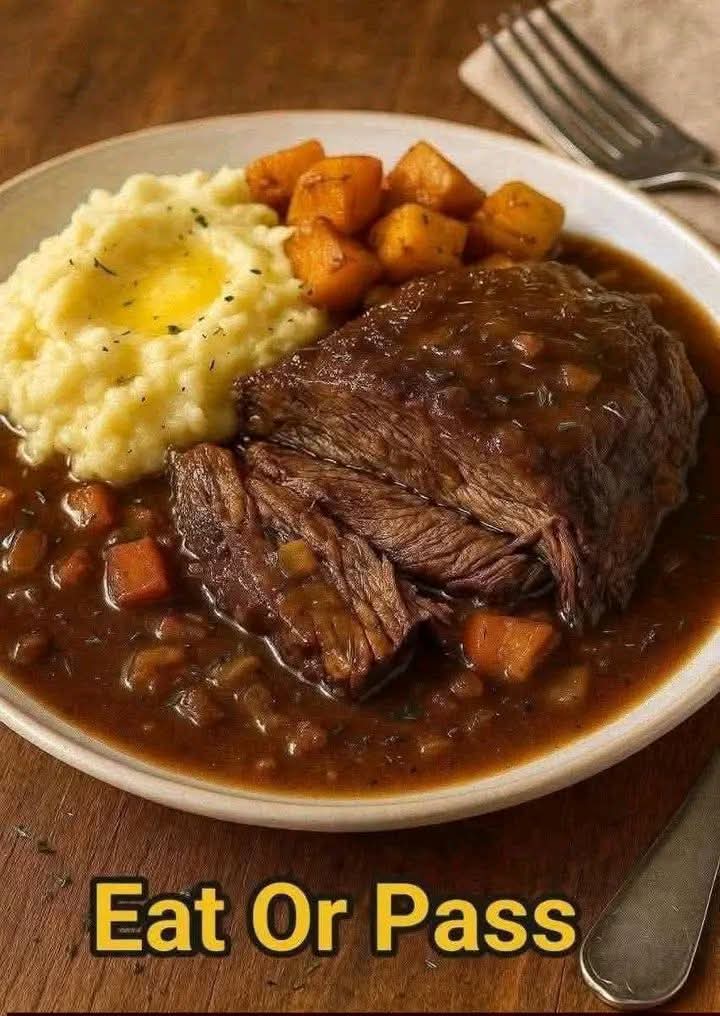
Here is a complete, detailed recipe for Slow-Cooked Pot Roast with Gravy Over Creamy Mashed Potatoes, structured exactly as you requested.
—
Introduction
There is a reason the pot roast is often called “Sunday Dinner.” It is the quintessential comfort food—a dish that transforms a humble, tough cut of beef into a fork-tender masterpiece through the alchemy of low, slow heat. This recipe pairs that succulent roast with a rich, savory gravy and a bed of velvety creamy mashed potatoes. It is a meal built for gathering, filling the kitchen with an aroma that promises warmth and satisfaction. More than just a recipe, this is a tradition passed down through generations, representing the heart of home cooking: patience, simplicity, and the joy of sharing a perfect bite.
—
History
The origins of the pot roast date back to Europe before the widespread availability of stovetop ovens. In France, it evolved into Boeuf à la Mode; in Germany, it became Sauerbraten; and in Jewish communities, it was the beloved Brisket. When European immigrants settled in America, they brought these methods with them. The dish became a staple because it utilized affordable, tough cuts of meat (like chuck or round) that required hours of moist cooking to break down collagen into gelatin. The invention of the Dutch oven and, later, the Crock-Pot in the 20th century cemented the pot roast as a cornerstone of American cuisine—a reliable, economical way to feed a large family with a rich, satisfying meal.
—
Benefits
· Nutritional Value: Pot roast is high in protein and iron. Chuck roast contains collagen, which is excellent for joint health and skin elasticity. When loaded with carrots and onions, it provides a healthy dose of Vitamin A and antioxidants.
· Economical: It transforms an inexpensive cut of beef into a luxurious meal, offering a high yield for the cost.
· Emotional Well-being: The act of slow-cooking is therapeutic. The long, unattended cooking time fills the home with a comforting aroma that reduces stress and builds anticipation.
· Versatility: It is an all-in-one meal. You get the protein, the vegetable side (if you add root veggies), and the base for the gravy in a single pot.
—
Formation (The Science)
This recipe relies on three scientific principles:
1. The Maillard Reaction: Searing the meat at high heat creates a brown crust through a chemical reaction between amino acids and reducing sugars. This crust is the flavor foundation of the entire dish.
2. Collagen to Gelatin: Chuck roast is rich in connective tissue (collagen). When held at a low temperature (around 200°F / 93°C) for an extended period, the collagen breaks down into gelatin. This gelatin gives the gravy its silky mouthfeel and makes the meat “fork-tender.”
3. Starch Thickening: The flour used to dust the meat acts as a thickener for the gravy. As the roast cooks, the flour particles absorb liquid and swell, creating the base viscosity for the final sauce.
—
Ingredients
For the Pot Roast & Gravy:
· 1 (3 to 4 lb) boneless beef chuck roast
· 1 tbsp salt (plus more for seasoning)
· 1 tbsp black pepper
· 2 tsp garlic powder
· ½ cup all-purpose flour
· 3 tbsp olive oil or vegetable oil
· 2 large yellow onions, sliced
· 6 cloves garlic, smashed
· 2 cups beef broth (preferably low-sodium)
· 1 cup dry red wine (optional, replace with more broth if avoiding alcohol)
· 2 tbsp tomato paste
· 4 sprigs fresh rosemary
· 4 sprigs fresh thyme
· 2 bay leaves
· 4 large carrots, peeled and cut into 2-inch chunks
For the Creamy Mashed Potatoes:
· 3 lbs Yukon Gold or Russet potatoes
· 1 cup whole milk or heavy cream
· ½ cup unsalted butter (1 stick)
· Salt and white pepper to taste
—
Instructions
Step 1: Prepare the Meat
Pat the chuck roast completely dry with paper towels. In a small bowl, mix salt, pepper, and garlic powder. Rub this seasoning all over the roast. Dredge the roast in the flour, shaking off the excess.
Step 2: Sear
Heat oil in a large Dutch oven over medium-high heat. Place the roast in the pot. Sear for 4-5 minutes per side until a deep, dark brown crust forms. Do not move the meat while searing. Remove the roast and set aside. Do not wipe out the pot.
Step 3: Build the Base
Lower the heat to medium. Add the sliced onions and cook for 5-7 minutes until softened and starting to brown. Add the smashed garlic and tomato paste; cook for 1 minute until fragrant. Pour in the red wine (if using) to deglaze the pot, scraping the bottom with a wooden spoon to lift the browned bits (fond). Add the beef broth, rosemary, and thyme.
Step 4: Slow Cook
Return the roast to the pot. Add the bay leaves. Bring the liquid to a simmer. Cover the pot and place it in a preheated oven at 325°F (163°C) . Cook for 3 hours.
Step 5: Add Vegetables
After 3 hours, add the carrot chunks to the pot. If the liquid looks low, add a splash more broth. Cover and cook for an additional 1 to 1.5 hours, until the meat shreds easily with a fork and the carrots are tender.
Step 6: Make the Mashed Potatoes
About 30 minutes before serving, peel and quarter the potatoes. Place them in a large pot of cold, salted water. Bring to a boil and cook for 15-20 minutes until fork-tender. Drain well. Return the potatoes to the hot pot to steam off excess moisture. Heat the milk and butter together until the butter melts. Mash the potatoes, adding the hot milk mixture gradually until smooth and creamy. Season with salt and white pepper.
Step 7: Finish the Gravy
Remove the roast and carrots from the Dutch oven to a cutting board. Place the pot over medium heat on the stovetop. Discard the herb sprigs and bay leaves. Using a spoon, skim excess fat off the surface. Use an immersion blender to blend the onions into the liquid for a thicker, smoother gravy, or whisk vigorously to break down the onions. Taste and adjust salt.
Step 8: Serve
Slice the roast against the grain or simply pull it apart into large chunks. Spoon a generous amount of creamy mashed potatoes onto a plate. Top with the pot roast and carrots. Ladle the rich gravy over everything generously.
—
Nutrition (Approximate per serving)
Based on 6 servings
· Calories: 720
· Protein: 48g
· Fat: 42g
· Carbohydrates: 38g
· Iron: 35% DV
· Vitamin A: 110% DV
—
Lovers
This dish is beloved by:
· The Traditionalist: Those who appreciate the nostalgic flavors of a classic Sunday supper.
· The Busy Parent: Because it requires 15 minutes of active work for a meal that feeds a crowd and tastes like it took all day.
· The Adventurous Cook: It serves as a perfect canvas for variations, allowing for different herbs, wines, or the addition of mushrooms and parsnips.
· The Comfort Seeker: Anyone needing a warm, hearty, and soul-soothing meal after a long week.
—
Methods & Variations
· Slow Cooker Method: After searing the meat and sautéing the aromatics on the stove, transfer everything to a slow cooker. Cook on Low for 8-10 hours or High for 5-6 hours.
· Instant Pot Method: Use the “Sauté” function to sear. Add liquids and cook on High Pressure for 70-90 minutes (depending on roast size), followed by a natural release for 15 minutes.
· Thickening: For an ultra-thick gravy, after removing the roast, whisk 2 tablespoons of cornstarch mixed with 2 tablespoons of cold water into the simmering liquid.
—
Conclusion
The Slow-Cooked Pot Roast with Gravy over Creamy Mashed Potatoes is more than just a recipe; it is a rite of passage in the kitchen. It teaches patience, rewards preparation, and delivers a result that is far greater than the sum of its humble parts. The deep, savory flavors of the beef, the silky texture of the gravy, and the buttery softness of the mashed potatoes combine to create a perfect harmony of taste and texture. Whether you are cooking for a holiday, a family gathering, or simply to fill your home with warmth on a chilly evening, this dish promises satisfaction.
—
Final Note for Lovers
For the lovers of fine food and good company, this meal serves as a reminder that the best things in life take time. It is a dish that invites you to sit down, slow down, and savor the moment—sharing not just a meal, but a memory around the table.