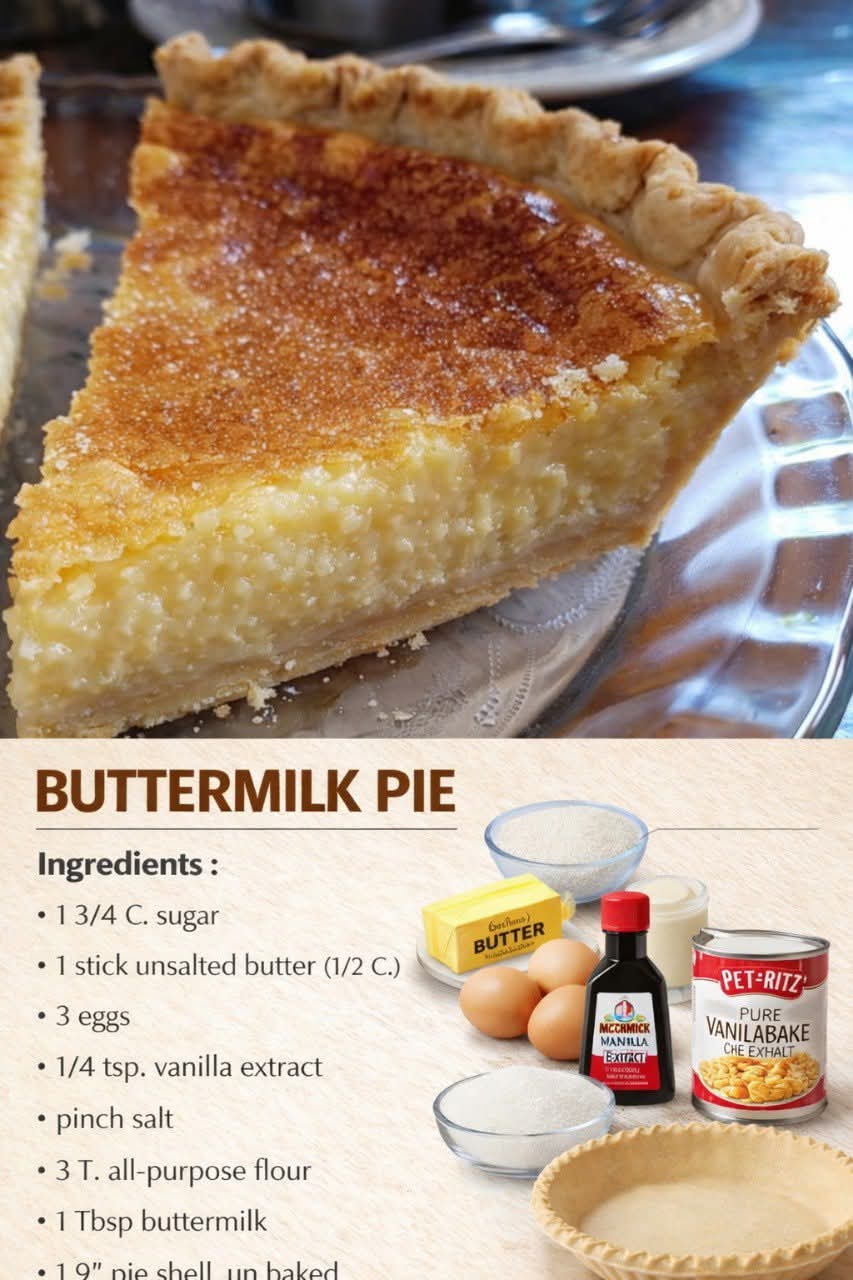
Here is a comprehensive guide to Buttermilk Pie, crafted to meet all your requests for history, methodology, nutrition, and more.
—
The Classic Southern Buttermilk Pie
Introduction
Buttermilk Pie is a quintessential Southern dessert that epitomizes the art of simple, resourceful cooking. Often found on holiday tables and Sunday dinner spreads across the American South, this pie is a custard-based delight. With its smooth, creamy interior that tastes like a cross between crème brûlée and a cheesecake, balanced by a flaky, buttery crust, it offers a complex flavor profile—tangy, sweet, and vanilla-kissed—from humble pantry staples. It is a testament to the ingenuity of Southern home cooks who transformed basic ingredients into something transcendent.
—
History
The origins of Buttermilk Pie date back to the 18th and 19th centuries in England, where “transparent pies” or “chess pies” were popular. When British settlers arrived in the American South, they adapted these recipes using available ingredients. Buttermilk, a byproduct of churning butter, was a staple in every Southern kitchen and rarely went to waste. During the post-Civil War era and through the Great Depression, buttermilk pies became a symbol of Southern thrift and hospitality. Unlike fruit pies that required seasonal harvests, buttermilk pie could be made year-round with ingredients that were almost always on hand. It remains a beloved classic, evoking nostalgia and the warmth of Southern hospitality.
—
Ingredients
For the Pie Crust (or use 1 pre-made 9-inch deep-dish crust):
· 1 ¼ cups all-purpose flour
· ½ teaspoon salt
· ½ cup unsalted butter, cold and cubed
· 3-4 tablespoons ice water
For the Buttermilk Filling:
· 1 ¾ cups granulated sugar
· ½ cup (1 stick) unsalted butter, room temperature
· 3 large eggs, room temperature
· 3 tablespoons all-purpose flour
· ½ cup buttermilk, room temperature
· 1 teaspoon vanilla extract (or ¼ tsp if using pure vanilla bean paste)
· ¼ teaspoon ground nutmeg (plus extra for dusting)
· 1 tablespoon fresh lemon juice (optional, for brightness)
—
Instructions & Methods
1. Prepare the Crust (Traditional Method)
1. In a large bowl, whisk flour and salt. Cut in the cold butter using a pastry blender until mixture resembles coarse meal with pea-sized lumps.
2. Drizzle ice water in one tablespoon at a time, tossing with a fork until the dough just comes together.
3. Form into a disk, wrap in plastic, and chill for at least 1 hour.
4. On a floured surface, roll the dough into a 12-inch circle. Fit into a 9-inch pie plate. Trim, crimp the edges, and chill for 30 minutes.
2. Blind Bake the Crust
1. Preheat oven to 375°F (190°C).
2. Line the chilled crust with parchment paper and fill with pie weights or dried beans.
3. Bake for 15 minutes. Remove weights and parchment, then bake for another 5-7 minutes until the bottom is set and lightly golden. Reduce oven temperature to 350°F (175°C).
3. Make the Filling (Custard Method)
1. In a stand mixer or using a hand mixer, cream the room-temperature butter and sugar together until light and fluffy (about 3 minutes).
2. Add the eggs one at a time, mixing well after each addition. Scrape down the sides of the bowl.
3. Add the flour and nutmeg, mixing until just combined.
4. Crucial Step: Slowly pour in the buttermilk and vanilla extract while mixing on low speed. The mixture will look slightly curdled initially—this is normal. Mix until smooth and homogenous.
5. Pour the filling into the pre-baked crust.
4. Bake
1. Bake at 350°F (175°C) for 45 to 55 minutes. The edges should be set, but the center will still have a slight jiggle (like Jell-O) when gently shaken.
2. Note: A cracked top is common and does not affect flavor.
5. Cool and Set
1. Allow the pie to cool completely on a wire rack for at least 2 hours.
2. For the cleanest slices and best texture, refrigerate for an additional 2-4 hours before serving.
—
Formation (The Science)
The “formation” of Buttermilk Pie is a delicate chemical balance. The acidic buttermilk reacts with the baking soda (if used in older recipes) or simply tenderizes the gluten in the flour. More importantly, it interacts with the eggs to create a custard structure. As the pie bakes, the proteins in the eggs coagulate, setting the structure, while the butter and sugar create a rich, dense, yet creamy matrix. The low, slow baking prevents the eggs from curdling, resulting in a smooth, velvety texture. The flour acts as a stabilizer, preventing the custard from weeping or separating as it cools.
—
Nutrition (Per Serving, Approximate)
Based on 8 servings
· Calories: 450-520 kcal
· Fat: 24g
· Saturated Fat: 14g
· Cholesterol: 120mg
· Sodium: 200mg
· Carbohydrates: 58g
· Sugar: 45g
· Protein: 6g
· Calcium: 45mg (from buttermilk)
Note: Buttermilk provides probiotics and calcium, though the sugar and butter content make this a decadent “special occasion” dessert rather than a daily staple.
—
Benefits (Beyond Nutrition)
1. Thrift & Zero Waste: Historically, this pie was created to use up buttermilk left over from churning butter, embodying a sustainable cooking ethos.
2. Comfort Food: The rich, creamy texture and sweet-tangy flavor profile are scientifically linked to dopamine release, providing a genuine sense of comfort and nostalgia.
3. Versatility: It acts as a perfect “base” recipe; you can add coconut, lemon zest, or berries to the custard to create entirely new desserts.
4. Make-Ahead Friendly: Unlike many desserts that must be served immediately, buttermilk pie tastes better the next day after the flavors have melded in the refrigerator.
—
Lovers
This pie is beloved by:
· Traditionalists: Those who appreciate authentic Southern cuisine and “grandma’s cooking.”
· Custard Enthusiasts: Fans of crème brûlée, flan, and chess pie who crave that dense, creamy texture.
· Home Bakers: Amateur bakers love it because it requires no complex techniques like tempering eggs or creating a meringue.
· Contrast Seekers: People who enjoy the juxtaposition of a flaky, salty crust against a sweet, tangy filling.
—
Conclusion
Buttermilk Pie is far more than just a dessert; it is a slice of Southern history. It transforms the most humble of ingredients—buttermilk, sugar, eggs, and butter—into a luxurious custard that is both simple and elegant. Whether served at a rustic family gathering or a refined holiday dinner, its creamy texture and perfectly balanced sweet-tangy flavor leave a lasting impression. Easy enough for a novice baker to master yet sophisticated enough to impress a connoisseur, the buttermilk pie stands as a timeless classic.
—
Final Note for Lovers of the Recipe
For lovers of buttermilk pie, the experience is often defined by the crust-to-filling ratio and the “jiggle.” True devotees know that patience is the secret ingredient—allowing the pie to cool completely and chill overnight transforms it from a good dessert into a transcendent one. Serve it with a dollop of freshly whipped cream, a drizzle of caramel, or simply a strong cup of black coffee to balance the sweetness. Once you master this recipe, it will undoubtedly become a requested favorite in your own family recipe box.