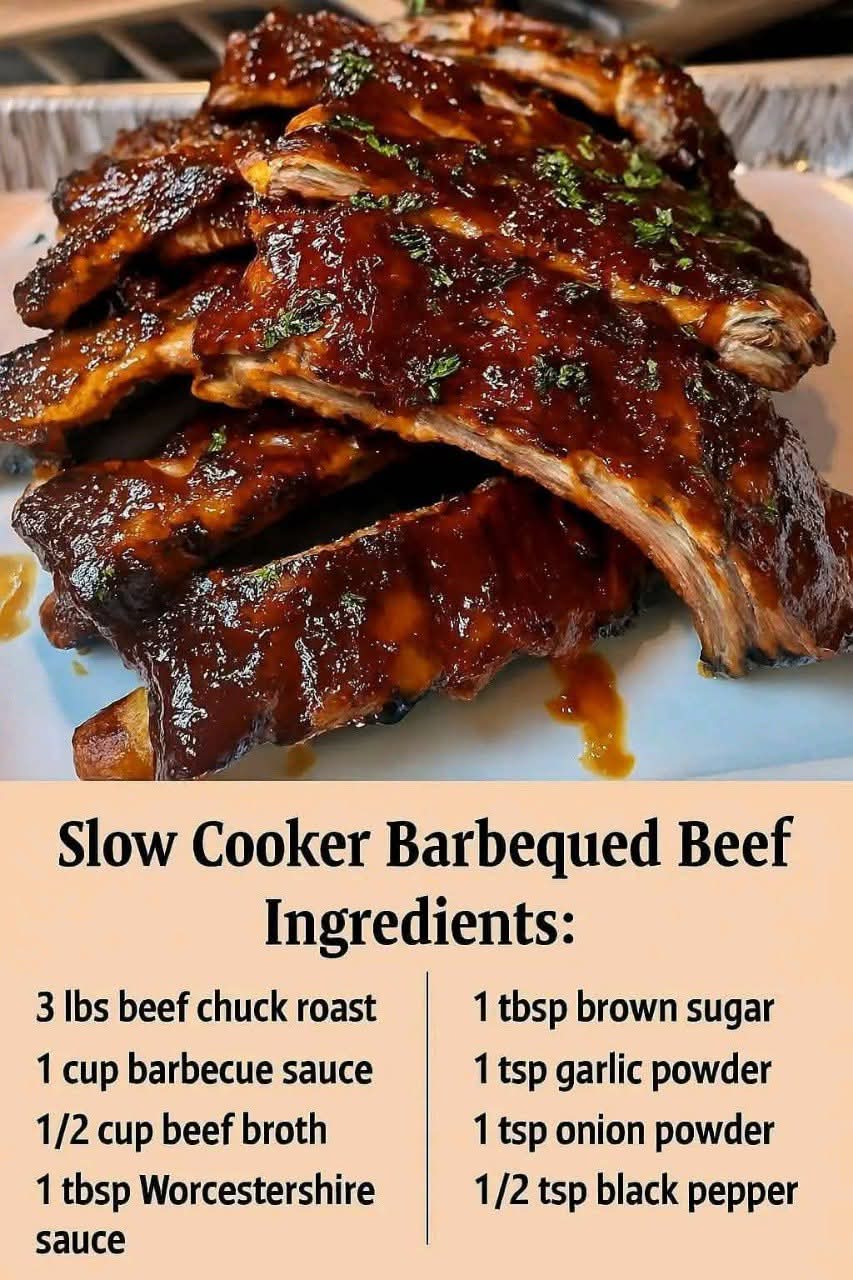
Here is a comprehensive and detailed recipe for Slow Cooker Barbecued Beef Ribs, structured with all the elements you requested.
—
Introduction
There is something deeply satisfying about biting into a rib so tender it falls off the bone with the slightest tug. While traditional barbecue purists may swear by low-and-slow smoking, the Slow Cooker Barbecued Beef Rib is a masterpiece of convenience without sacrificing flavor. This method transforms the often-tough, collagen-rich beef back ribs into a succulent, melt-in-your-mouth meal. By utilizing the gentle, consistent heat of a crockpot, the connective tissue breaks down completely, bathing the meat in a rich, tangy, and smoky barbecue sauce. This recipe is designed for the home cook who wants that “low and slow” result without tending to a smoker or grill for hours. It is the ultimate set-it-and-forget-it dish, perfect for game day, a busy weeknight, or a hearty family dinner.
—
History
The history of barbecued ribs is deeply rooted in Southern American cuisine, particularly in Texas, Memphis, and Kansas City, where beef is king. Traditionally, beef ribs were considered a “butcher’s cut”—the meat left on the rack after the prime ribeye was removed. Because they are tough and fatty, they required long, slow cooking over indirect heat and wood smoke to become palatable.
The adaptation to the slow cooker is a modern twist born in the late 20th century. As electric slow cookers (or “Crock-Pots”) became a staple of American kitchens in the 1970s and 80s, home cooks began adapting classic barbecue techniques to this new appliance. It allowed families to enjoy the deep, smoky, and tangy flavors of Southern barbecue without the need for outdoor pits or constant monitoring. This recipe represents the evolution of regional American cuisine into accessible, contemporary home cooking.
—
Benefits
1. Collagen Breakdown: Beef ribs are high in collagen. The low, slow, moist heat of the slow cooker converts this collagen into gelatin, resulting in exceptionally tender, juicy meat that doesn’t dry out.
2. Convenience: Unlike grilling or smoking, this method requires no constant babysitting. You simply add the ingredients, turn on the cooker, and go about your day.
3. Flavor Infusion: Extended cooking time allows the barbecue sauce and beef broth to deeply penetrate the meat, creating layers of flavor that are hard to achieve with fast cooking methods.
4. Energy Efficient: Slow cookers use significantly less electricity than a traditional oven or maintaining a charcoal or gas grill for several hours.
5. Versatility: This recipe is a perfect base. You can customize the sauce, add spices, or finish the ribs under the broiler for a caramelized crust.
—
Nutrition (Approximate per serving, based on 4 servings)
Please note that nutritional values vary based on the specific barbecue sauce used.
· Calories: 780-950
· Protein: 52g
· Fat: 58g
· Carbohydrates: 35g
· Sodium: 1100mg
· Iron: 28% DV
· Vitamin B12: High (Beef ribs are an excellent source of B12, essential for nerve health and energy production).
—
Ingredients
· 4 pounds beef back ribs (about 2 full racks, cut into 3-4 rib sections)
· 2 cups barbecue sauce (use your favorite brand for familiarity, or a homemade smoky bourbon sauce for depth)
· 1/2 cup beef broth (low sodium recommended to control salt levels)
· 1 large yellow onion, thinly sliced (acts as a natural rack to keep ribs off the bottom)
· 4 cloves garlic, minced
· 1 tablespoon smoked paprika (adds a smoky flavor reminiscent of traditional BBQ)
· 1 teaspoon kosher salt
· 1 teaspoon black pepper
· 1 teaspoon onion powder
· Optional for finishing: Fresh parsley, extra barbecue sauce, or a splash of apple cider vinegar for brightness.
—
Methods & Instructions
Preparation Time: 15 minutes
Cook Time: 6-8 hours (Low) or 3-4 hours (High)
Total Time: 6 hours 15 minutes – 8 hours 15 minutes
Step 1: Prepare the Ribs
Remove the ribs from the refrigerator 30 minutes before cooking. If there is a thin, papery membrane on the bone side of the rack, slide a butter knife under it to loosen, then grab it with a paper towel and pull it off. Removing this allows the seasonings and smoke (or in this case, sauce) to penetrate better. Pat the ribs dry with paper towels.
Step 2: Season
In a small bowl, combine the smoked paprika, kosher salt, black pepper, and onion powder. Rub this spice mixture generously all over the beef ribs, covering both the meaty side and the bone side.
Step 3: Sear (Optional but Recommended)
For maximum flavor, heat a large skillet or Dutch oven over medium-high heat with a tablespoon of oil. Sear the ribs in batches, meat-side down, for 2-3 minutes until a deep brown crust forms. This Maillard reaction adds a layer of savory complexity that you cannot achieve from the slow cooker alone. If short on time, you may skip this step, though the flavor is superior with searing.
Step 4: Layer the Slow Cooker
Place the sliced onions in an even layer at the bottom of the slow cooker. This prevents the ribs from sitting directly in the liquid and scorching. Scatter the minced garlic over the onions. Place the seared (or raw) ribs on top of the onions, standing them up along the sides if necessary to fit.
Step 5: Combine Liquids
In a medium bowl or large measuring cup, whisk together the 2 cups of barbecue sauce and the 1/2 cup of beef broth. Pour this mixture evenly over the ribs, ensuring the meat is well-coated but not fully submerged (the liquid should come about halfway up the ribs).
Step 6: Cook
Cover the slow cooker with the lid. Cook on LOW for 7 to 8 hours or on HIGH for 3 to 4 hours. The ribs are done when the meat is fork-tender and pulling away from the bone easily.
Step 7: Reduce the Sauce (Optional)
Once the ribs are cooked, carefully remove them to a baking sheet lined with foil. Pour the liquid from the slow cooker into a saucepan. Skim off excess fat, then bring the liquid to a boil. Simmer for 10-15 minutes until it reduces to a thick, syrupy glaze.
Step 8: Finish and Serve
Brush the reduced glaze over the ribs. For a caramelized finish (highly recommended), place the ribs under a preheated broiler for 3-5 minutes, watching closely to avoid burning. Garnish with fresh parsley and serve with extra sauce on the side.
—
Formation (How to Serve)
To create the perfect plate, formation is key. Place the ribs on a large platter with the bone side facing outwards to showcase the “pull-back” (where the meat shrinks back from the bone, a sign of perfect cooking). Serve with classic Southern sides like creamy coleslaw for crunch, cornbread to soak up the sauce, and baked beans. For a healthier balance, grilled corn on the cob or a tangy cucumber salad complements the richness of the beef.
—
Lovers
This recipe is beloved by a wide range of food enthusiasts:
· The Busy Parent: Loves that dinner is ready after work with minimal cleanup.
· The Aspiring Pitmaster: Appreciates the ability to achieve tender, flavorful ribs during off-seasons or when weather doesn’t permit grilling.
· The Comfort Food Enthusiast: Adores the rich, sticky, sweet-and-savory profile that defines classic American comfort food.
· Meal Preppers: Love that this recipe yields large quantities of protein that can be used for tacos, sandwiches, or salads throughout the week.
—
Conclusion
The Slow Cooker Barbecued Beef Rib is proof that you don’t need a $2,000 smoker to achieve world-class tenderness and flavor. By harnessing the power of patience and moist heat, this recipe transforms a humble cut of meat into a show-stopping centerpiece. It respects the traditions of Southern barbecue—low heat, long cooking, and bold flavors—while adapting perfectly to the modern lifestyle. Whether you are feeding a hungry crowd or simply treating your family to a hearty weekend dinner, these ribs promise a messy, satisfying, and absolutely delicious experience that will have everyone coming back for seconds.
—
Lovers (Extended)
Beyond the home cook, this dish is a favorite among food bloggers for its high success rate and visual appeal (the “fall-off-the-bone” shot is iconic). Holiday hosts love it because it frees up oven space for side dishes. College students and young professionals find it approachable—it requires minimal active cooking time but yields results that taste like they spent all day in a professional kitchen. Ultimately, anyone who appreciates the intersection of convenience and culinary delight falls in love with this recipe.