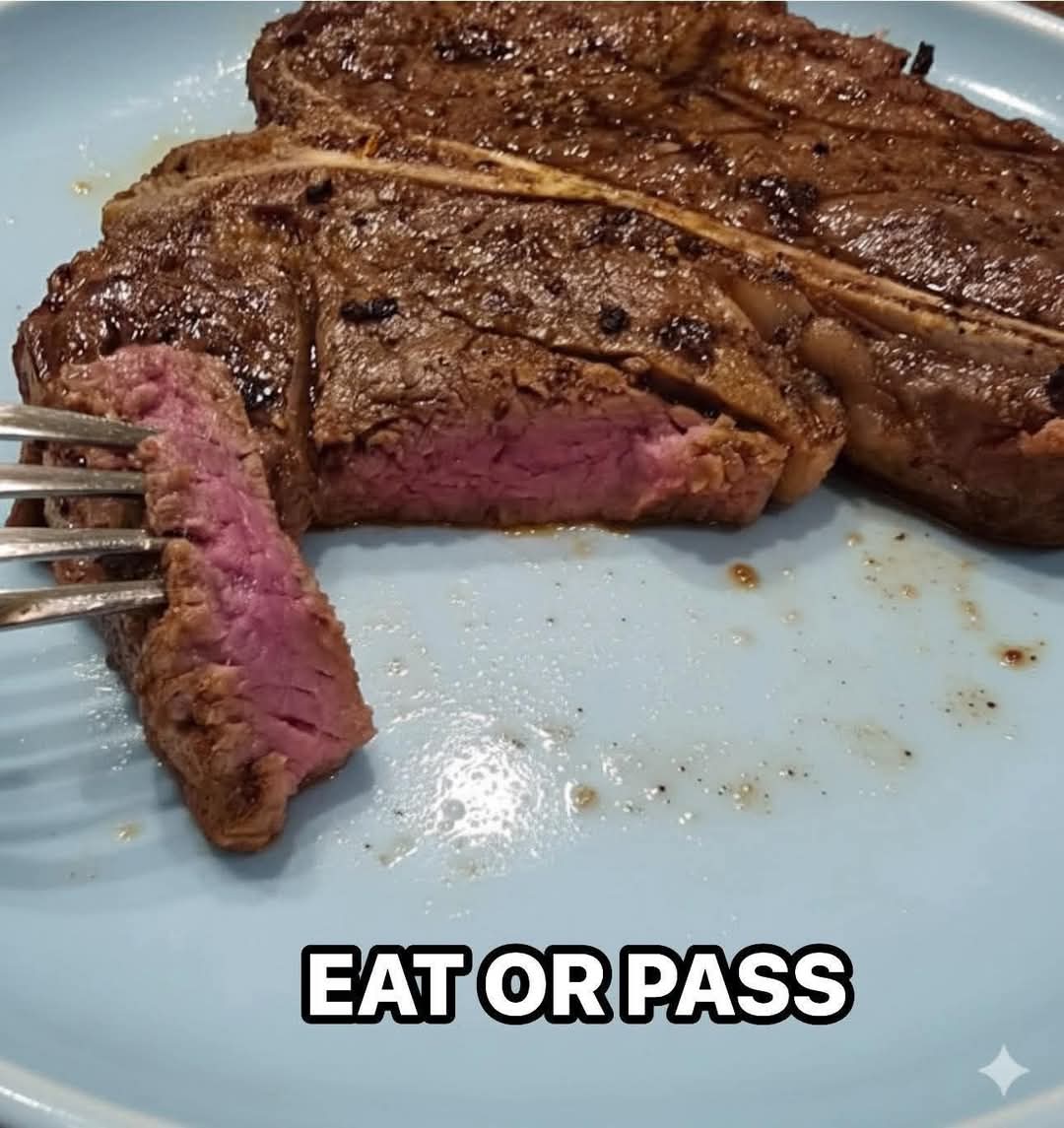
🔥 THE ULTIMATE T-BONE STEAK EXPERIENCE 🥩
“Where two steaks meet in perfect harmony”
—
📜 INTRODUCTION
The T-Bone steak stands as a carnivore’s crown jewel—a magnificent cut that delivers a dual-texture experience unrivaled in the culinary world. This iconic steak features a T-shaped bone that separates two distinct muscles: the tender, buttery filet mignon on the smaller side, and the robust, flavorful strip steak (New York strip) on the larger side. When properly prepared, this steak offers a journey through contrasting textures and flavors that has made it a centerpiece in steakhouses and home kitchens for generations. The bone itself isn’t just for show—it conducts heat differently and imparts additional depth of flavor that boneless cuts simply cannot replicate.
—
📖 HISTORY
The T-Bone steak carries a rich heritage dating back to the early 20th century American steakhouse culture. Its name derives from the distinctive T-shaped lumbar vertebra that remains attached to the meat. This cut comes from the short loin section of the cow, specifically where the lumbar vertebrae meet the ribs. The T-Bone’s close relative, the Porterhouse, comes from the same region but features a larger filet portion due to being cut from further back.
Historically, T-Bones were considered “working man’s food” in the Midwest, particularly in Kansas City and Chicago, where stockyards and meatpacking industries flourished. The post-World War II economic boom elevated the T-Bone to celebratory status—a symbol of prosperity and the American dream. Today, it remains a cherished cut worldwide, though purists argue that the best examples still come from well-marbled, grain-fed beef raised in the American heartland.
—
🥩 THE STEAK LOVERS
This masterpiece speaks directly to:
· Texture Explorers – Those who appreciate the contrast between buttery-soft filet and robust, meaty strip
· Traditionalists – Diners who believe bone-in cooking yields superior flavor
· Special Occasion Diners – Anyone celebrating achievements, anniversaries, or simply the joy of exceptional food
· Home Grill Masters – Cooks seeking to perfect their technique on a challenging yet rewarding cut
· Steak Connoisseurs – Those who understand that different muscles offer different experiences on one plate
—
✅ BENEFITS
Beyond its legendary flavor profile, T-Bone steak offers:
Nutritional Profile (per 8oz serving, approximately):
· Protein: 45-50g (complete protein with all essential amino acids)
· Iron: 4.5mg (25% DV) – highly bioavailable heme iron
· Zinc: 8mg (70% DV) – crucial for immune function
· B-Vitamins: B12 (100% DV), B6, Niacin – energy metabolism support
· Creatine: Supports muscle function and cognitive health
· Healthy Fats: Balanced ratio of saturated to monounsaturated fats
Culinary Benefits:
· Built-in portion control (bone indicates serving size)
· Natural flavor enhancement from bone during cooking
· Two textures in one dish – menu variety without extra preparation
· Impressive presentation – minimal plating required
—
🛒 INGREDIENTS
For the Perfect T-Bone (Serves 2-4):
The Star:
· 1 (32-40 oz) T-Bone steak, cut 1.5 to 2 inches thick
Look for: Bright cherry-red color, creamy-white fat, at least 1/2 inch fat cap
The Dry Brine:
· 1 tablespoon kosher salt (preferably Diamond Crystal or Morton’s)
· 1 teaspoon freshly ground black pepper
The Finish:
· 2 tablespoons high smoke-point oil (avocado, grapeseed, or refined coconut oil)
· 3 tablespoons unsalted butter
· 4 cloves garlic, smashed
· 4 sprigs fresh thyme
· 2 sprigs fresh rosemary
· Flaky sea salt (Maldon or fleur de sel) for finishing
Optional Compound Butter:
· 4 tablespoons unsalted butter, softened
· 1 teaspoon fresh parsley, finely chopped
· 1 teaspoon fresh chives, finely chopped
· 1/2 teaspoon lemon zest
· 1 small shallot, minced (optional)
—
🔪 PREPARATION & FORMATION
Understanding Your Cut:
The T-Bone contains two distinct muscles separated by the lumbar vertebra:
1. The Strip Side (Top Loin) – Longer, more elongated muscle with a tight grain and robust beef flavor. Contains more marbling and a pronounced fat cap.
2. The Filet Side (Tenderloin) – Smaller, circular muscle that does minimal work, resulting in extreme tenderness. Almost buttery texture with milder flavor.
The bone acts as an insulator, meaning the meat closest to the bone cooks slightly slower than the exterior—this is actually desirable, as it ensures the area around the bone remains perfectly medium-rare while the exterior develops a crust.
—
👨🍳 METHODS: STEP-BY-STEP INSTRUCTIONS
Step 1: Preparation (24-48 Hours Before Cooking)
1. Pat the steak completely dry with paper towels. Moisture is the enemy of crust formation.
2. Apply the dry brine: Sprinkle kosher salt evenly on all surfaces, including edges. Use approximately 1 teaspoon per pound.
3. Place uncovered on a wire rack set over a baking sheet.
4. Refrigerate 24-48 hours. This draws out moisture then reabsorbs it with salt, seasoning deep into the meat while drying the surface for superior browning.
Step 2: Tempering (2 Hours Before Cooking)
1. Remove steak from refrigerator 2 hours before cooking.
2. Let rest at room temperature on the rack. This ensures even cooking from edge to center.
3. Pat dry again if any moisture has surfaced.
4. Grind fresh black pepper over all surfaces (salt already applied during dry brine).
Step 3: Preparing Your Fire
For Grilling:
· Build a two-zone fire: pile coals on one side, leave other side empty
· Target temperature: 450-500°F on hot side
· Clean and oil grates thoroughly
For Pan-Searing:
· Choose heavy-bottomed cast iron or stainless steel skillet
· Ensure proper ventilation (there will be smoke!)
Step 4: The Sear (The Most Critical Moment)
1. Apply oil to the steak’s surface (not the pan) – this prevents sticking and ensures even contact.
2. When cooking surface is ripping hot, place steak with the strip side toward the heat source first (it can handle more heat than the filet).
3. Sear without moving for 3-4 minutes until deep golden brown.
4. Flip using tongs (never pierce the meat!). Sear second side 3-4 minutes.
5. Stand the steak on its fat cap using tongs, holding for 60-90 seconds to render the fat edge.
Step 5: The Baste
1. Reduce heat to medium-low.
2. Add butter, smashed garlic, thyme, and rosemary to pan.
3. Tilt pan slightly and use a large spoon to continuously baste the steak with foaming butter for 2-3 minutes.
4. Each spoonful should wash over the entire surface, carrying herb and garlic flavors.
Step 6: Temperature Management
Use an instant-read thermometer for precision:
Doneness Temperature Visual Cue
Rare 120-125°F Cool red center
Medium-Rare 130-135°F Warm red center (target)
Medium 140-145°F Hot pink center
Medium-Well 150-155°F Slight pink
Note: Temperature will rise 5°F during resting
Step 7: The Rest (Non-Negotiable!)
1. Transfer steak to cutting board.
2. Tent loosely with foil (not tight – you want steam to escape).
3. Rest 10-15 minutes (5 minutes per inch of thickness).
4. During this time, juices redistribute throughout the meat rather than flooding the cutting board.
Step 8: Serving
1. Slice strip side against the grain into 1/2-inch thick pieces.
2. Slice filet side against its grain (different direction than strip).
3. Arrange on warm platter.
4. Sprinkle with flaky sea salt.
5. Top with compound butter if using.
6. Serve immediately.
—
⚡ QUICK REFERENCE METHOD
The 4-4-4 Method:
· 4 minutes sear first side
· 4 minutes sear second side
· 4 minutes butter basting
· 10-15 minutes rest
—
📊 NUTRITIONAL INFORMATION
Per 8oz serving (cooked, approximate)
Nutrient Amount % Daily Value
Calories 520-580 –
Protein 46g 92%
Total Fat 38g 49%
Saturated Fat 15g 75%
Cholesterol 145mg 48%
Iron 4.5mg 25%
Zinc 8mg 70%
Vitamin B12 2.4mcg 100%
Selenium 45mcg 82%
Phosphorus 280mg 22%
Note: Values vary based on specific cut, grade, and preparation method
—
🏆 CONCLUSION
The T-Bone steak represents more than dinner—it’s a culinary experience that honors tradition while delivering exceptional eating pleasure. Its dual nature offers the best of both worlds: the refined tenderness of filet mignon alongside the bold, beefy character of strip steak, all connected by a bone that whispers stories of the animal’s life and the craft of butchery.
Mastering this cut requires attention to detail—proper sourcing, patient dry brining, aggressive heat management, and respect for the rest period. Yet the reward is a meal that transforms an ordinary evening into a celebration. Whether you’re cooking for a steak lover, celebrating an achievement, or simply treating yourself to excellence, the perfectly prepared T-Bone delivers on every level.
The sizzle as it hits the pan, the aroma of browning butter and herbs, the first cut revealing that perfect gradient of doneness, and finally—the taste that makes all the effort worthwhile. This is steak perfection. This is the T-Bone.
—
💬 JOIN THE CONVERSATION
T-Bone Lovers, Sound Off!
Are you team filet or team strip? What’s your preferred doneness? Do you sauce or let the beef speak for itself? Share your T-Bone experiences, questions, and photos below! 🔥👇
“The T-Bone: Because why choose when you can have both?”
—
Pro Tip: Save the bone after eating! It’s perfect for adding depth to soups, stews, or making a quick beef broth. Waste not, want not! 🍖