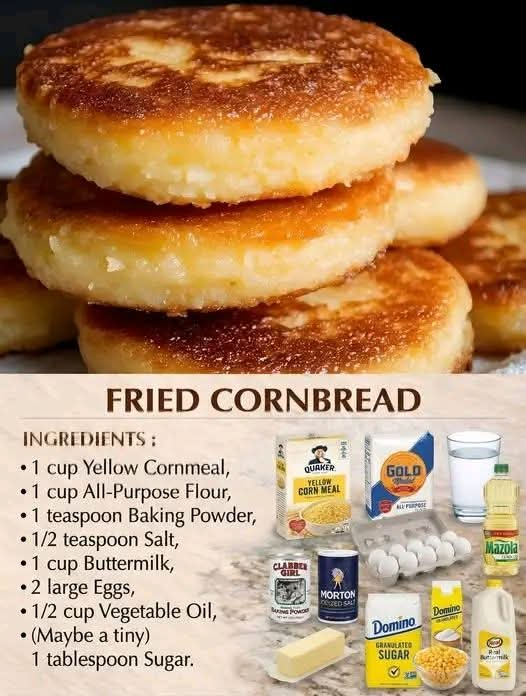
Here is a comprehensive guide to fried cornbread, inspired by the classic recipe you provided and expanded with history, variations, and nutritional insights.
The Ultimate Guide to Fried Cornbread: A Crispy Southern Classic
Introduction
Golden brown, irresistibly crunchy on the outside, and wonderfully tender on the inside—fried cornbread is the epitome of Southern comfort food. Unlike its baked counterpart, this stovetop version delivers a satisfying crispiness that pairs perfectly with everything from hearty chili and collard greens to a simple drizzle of honey. This guide celebrates the simple, rustic recipe you shared while exploring the rich traditions and variations that make fried cornbread a timeless favorite. Whether you call them hoecakes, johnnycakes, or hot water cornbread, these golden fritters are more than just a side dish; they are a delicious connection to generations of home cooking.
The History of Cornbread
The story of cornbread begins long before it became a Southern staple, with roots deeply embedded in Native American cuisine. Indigenous peoples across the Americas were the first to master the art of grinding dried corn (maize) into meal and combining it with water to create simple, unleavened breads cooked over open fires . Tribes like the Cherokee and Seneca would enrich their versions with chestnuts, sunflower seeds, berries, or beans, creating a diverse array of corn-based dishes .
When European settlers arrived, they adopted this crucial food source from Native Americans. Corn was easier to grow in the Southern climate than the wheat they had brought from Europe, which often spoiled in the heat and humidity . Cornbread thus emerged from necessity, becoming a dietary cornerstone for both settlers and, tragically, enslaved African peoples who brought their own culinary interpretations to the dish .
One of the most poignant ancestors of modern fried cornbread is the hoecake. This simple version, made from just cornmeal, water, and salt cooked in a skillet, was said to be named after the gardening tool that enslaved people would use as a makeshift griddle over an open fire . Similarly, corn pone was another rustic, egg-less and milk-less dough cooked in hot grease . These variations represent the ingenuity and resilience at the heart of Southern cooking. Over time, as ingredients like buttermilk, eggs, and baking powder became more accessible, these simple fried cakes evolved into the richer, more flavorful bread we enjoy today .
The Classic Fried Cornbread Recipe
This recipe stays true to the one you shared, creating perfectly crispy and tender fried cornbread every time.
Y****ield: 8-10 pieces
Prep time: 10 minutes
Cook time: 10-12 minutes
Ingredients
· 1 cup cornmeal (yellow or white, fine or medium-ground)
· ½ cup all-purpose flour
· 1 tsp baking powder
· ½ tsp salt
· 1 cup buttermilk (well-shaken)
· Vegetable oil (for frying, about ¼-inch depth in the skillet)
Instructions
1. Prepare the Batter: In a medium-sized bowl, whisk together the cornmeal, all-purpose flour, baking powder, and salt until well combined .
2. Combine Wet Ingredients: Create a well in the center of the dry ingredients and pour in the buttermilk. Stir with a spoon or spatula until just combined. Be careful not to overmix; a few small lumps are okay. The batter should be thick and spoonable, not runny .
3. Heat the Oil: Pour enough vegetable oil into a large, heavy skillet (cast-iron is ideal) to reach a depth of about ¼ inch. Heat the oil over medium heat until it shimmers. To test if it’s ready, drop a tiny bit of batter into the oil; it should sizzle and bubble immediately .
4. Fry the Cornbread: Carefully drop spoonfuls of the batter into the hot oil, using about 2 tablespoons per piece. Gently flatten each dollop slightly with the back of the spoon to form small patties. Do not overcrowd the pan; fry in batches to keep the oil temperature consistent .
5. Achieve Golden Perfection: Fry for 2-3 minutes per side, or until the edges are golden brown and crispy and the bread is cooked through. Flip carefully with a spatula or slotted spoon .
6. Drain and Serve: Remove the fried cornbread from the skillet and transfer to a plate lined with paper towels to drain any excess oil. Serve immediately while warm and crispy for the best texture and flavor.
Recipe Notes & Tips
· Oil Temperature is Key: If the oil isn’t hot enough, the cornbread will absorb too much oil and become greasy. If it’s too hot, the outside will burn before the inside cooks. Maintain a steady medium heat .
· Don’t Overmix: Overmixing the batter can develop the gluten in the flour, resulting in tough, dense cornbread instead of tender. Mix until the ingredients are just moistened .
· The Right Pan: A well-seasoned cast-iron skillet is the traditional choice because it retains heat exceptionally well, ensuring even frying and a perfect crispy crust .
Delicious Variations
One of the joys of fried cornbread is its versatility. Feel free to customize the basic recipe to your taste.
· Savory Add-Ins: Stir in ¼ cup of finely chopped onion, a minced jalapeño, or ½ cup of shredded cheddar cheese into the batter before frying for an extra flavor boost .
· Spicy Kick: Add a pinch of cayenne pepper or a few dashes of your favorite hot sauce to the batter .
· Sweet Cornbread: For those who enjoy a touch of sweetness, add 1 tablespoon of sugar or honey to the batter .
· Hot Water Cornbread: For a different texture, try a variation by using boiling water instead of buttermilk. Combine self-rising cornmeal with just enough boiling water to form a stiff dough, then drop spoonfuls into hot oil. This creates an extra-crispy crust with a dense, tender interior .
Nutritional Information and Benefits
Fried cornbread is a source of energy and several key nutrients, though it’s best enjoyed as part of a balanced diet. The nutritional content can vary based on specific ingredients and preparation.
A typical serving of fried cornbread (one piece) contains approximately :
· Calories: 150-200
· Fat: 6-7g
· Carbohydrates: 22-33g
· Protein: 3-4g
· Fiber: 1-1.5g
· Sodium: 250-360mg
Cornmeal provides a good source of several important nutrients :
· Phosphorus: Essential for strong bones and teeth, as well as energy production.
· Selenium: An important antioxidant that helps protect your cells from damage and supports thyroid function .
· B Vitamins: Including thiamine, niacin, and folate, which are crucial for energy metabolism and brain function.
· Antioxidants: Corn and corn products contain beneficial bioactive compounds and antioxidants that contribute to overall health .
A Dish for All to Love
Fried cornbread has a universal appeal that transcends generations. For home cooks, it’s a quick and easy recipe that comes together in minutes with pantry staples . For those who grew up in the South, it’s a taste of nostalgia, evoking memories of grandmothers’ kitchens and Sunday suppers . Food lovers adore its satisfying contrast of crunchy exterior and soft interior, a texture that’s simply irresistible. And for anyone seeking comfort, its warm, golden goodness is the perfect companion to soul-warming dishes like beans, greens, stews, and chili . It’s a dish that feeds both body and soul.
Methods for Perfect Cornbread
While pan-frying in a skillet is the classic method described here, there are other ways to cook cornbread.
· Skillet-Frying (Our Method): This involves shallow frying spoonfuls of batter on the stovetop. It’s the fastest method and produces the maximum amount of crispy, golden surface area .
· Deep-Frying (Hushpuppies): A thicker, often onion-flavored batter is dropped into deep hot oil, forming balls or nuggets. These are a classic accompaniment to fried fish .
· Baked Skillet Cornbread: This method involves heating a cast-iron skillet with fat in a hot oven, then pouring in the batter and baking until done. It results in a large, single bread with a famously crispy crust .
Conclusion
From its ancient origins with Native Americans to its evolution through Southern history and onto our modern tables, fried cornbread is a dish with a profound story. The simple recipe you shared is a direct link to that rich culinary heritage. It proves that with just a few humble ingredients—cornmeal, buttermilk, and a hot skillet—you can create something truly magical: a warm, crispy, tender bread that embodies comfort and tradition. So, next time you’re craving a taste of the South, don’t lose this recipe. Heat up that skillet and treat yourself to a batch of golden, homemade fried cornbread. Enjoy ❤️😋