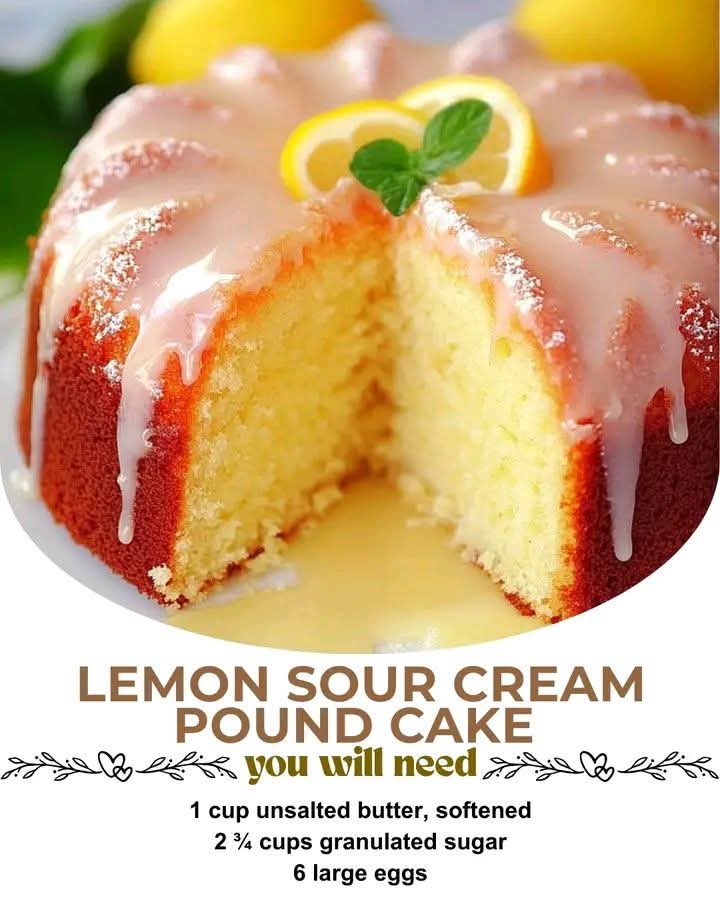
Here is a comprehensive guide to the Lemon Sour Cream Pound Cake, structured as you requested.
The Quintessential Lemon Sour Cream Pound Cake: A Slice of Sunshine
Introduction
There are cakes, and then there are experiences. The Lemon Sour Cream Pound Cake belongs firmly in the latter category. It is a dessert that commands attention not through excessive sweetness or complicated architecture, but through its elegant simplicity and perfect balance of flavors. This is a cake that understands the beauty of a dense, tender crumb, the richness of butter, and the transformative power of citrus. Each slice is a golden promise of a moist, velvety interior, punctuated by the bright, zesty pop of fresh lemon. It’s the kind of cake that feels both nostalgic—like something a grandmother would bake for a special Sunday dinner—and utterly sophisticated, equally at home on a picnic blanket or a fine china plate. This recipe is more than just a list of steps; it is an invitation to create a timeless classic that will fill your kitchen with an irresistible aroma and your heart with comfort.
History
The pound cake is a true American and British classic, with a history as rich as its texture. Its name originates in early 18th-century Europe and North America from a recipe that called for a pound of each of its four primary ingredients: flour, butter, eggs, and sugar. The original formula was simple, easy to remember, and produced a large, dense cake that could feed a crowd.
Over the centuries, bakers have refined this simple template. The advent of leavening agents like baking powder and baking soda allowed for a lighter crumb. The addition of sour cream was a revolutionary moment in pound cake history. By the mid-20th century, cooks discovered that sour cream’s acidity and fat content added an incredible moisture and tenderness to baked goods, preventing the cake from becoming dry—a common pitfall of the original dense recipe. The marriage of sour cream with lemon was a natural and brilliant evolution. The tanginess of the sour cream complements the acidity of the lemon, creating a more complex and layered flavor profile than a plain lemon cake could ever achieve. This combination elevated the humble pound cake to a new level of refinement.
Benefits (or, The Case for Baking This Cake)
While we don’t eat cake for its health benefits, there are undeniable merits to choosing a Lemon Sour Cream Pound Cake:
· Mood-Boosting Aromatherapy: The scent of lemon zest mingling with butter and sugar as it bakes is a natural stress reliever, proven to uplift mood and create a sense of warmth and well-being in the home.
· Ingredient Integrity: By baking from scratch, you control every ingredient. You use real butter, fresh eggs, and a whole lemon, avoiding the preservatives, artificial flavors, and high-fructose corn syrups found in many store-bought desserts.
· The Joy of Creation: There is a profound sense of accomplishment and satisfaction that comes from creating something so beautiful and delicious with your own two hands. It’s a tangible expression of care and creativity.
· Perfect for Sharing: This cake is built for connection. A loaf is the perfect size to bring to a potluck, a neighbor in need, or to share with family after a meal. It’s a vehicle for community and kindness.
· A Blank Canvas: The cake itself is a masterpiece, but it’s also wonderfully versatile. It can be dressed up with a simple glaze, fresh berries, and whipped cream, or enjoyed perfectly plain with a cup of tea.
Formation (The Science of a Perfect Crumb)
This recipe is a beautiful example of baking chemistry. Here’s how each ingredient plays a crucial role:
· Butter (The Structure & Flavor): The creaming of softened butter and sugar is the most critical step. This process incorporates air into the butter, creating tiny pockets that will expand in the oven, giving the cake its rise and delicate crumb. The high fat content also provides the cake’s signature richness and tenderness.
· Sugar (The Tenderizer & Sweetener): Sugar does more than just sweeten. It interferes with gluten development, ensuring the cake remains tender, not tough. It also helps with browning and moisture retention.
· Eggs (The Strength): Eggs provide structure. The proteins in the eggs coagulate during baking, giving the cake its final form. They also add richness and help to emulsify the batter, bringing the fat and liquid components together.
· Flour (The Scaffold): All-purpose flour provides the gluten network that forms the cake’s backbone. The recipe’s ratio is carefully calibrated to provide enough structure to support the dense, moist crumb without becoming tough.
· Sour Cream (The Moisture & Tenderness): This is the secret weapon. The acidity of sour cream tenderizes the gluten strands, guaranteeing a soft, velvety texture. Its high fat content adds incredible moisture, ensuring the cake stays fresh for days.
· Lemon (The Brightness): Lemon zest is packed with fragrant essential oils, delivering an intense, pure lemon flavor without the harsh acidity that too much juice can bring. The juice, used in the glaze, adds a final pop of bright, tart flavor that cuts through the cake’s richness.
· Baking Soda (The Lift): A small amount of baking soda reacts with the acid in the sour cream, creating carbon dioxide bubbles that provide a gentle, additional lift to the dense batter.
Ingredients
For the Pound Cake:
· 1 cup (2 sticks) unsalted butter, softened to room temperature
· 2 ¾ cups granulated sugar
· 6 large eggs, at room temperature
· 3 cups all-purpose flour
· ½ teaspoon baking soda
· ½ teaspoon salt
· 1 cup sour cream, at room temperature
· 2 tablespoons fresh lemon zest (from about 2-3 large lemons)
· 2 teaspoons pure vanilla extract
For the Lemon Glaze (Optional, but highly recommended):
· 1 ½ cups powdered sugar, sifted
· 3-4 tablespoons fresh lemon juice
· 1 tablespoon melted butter (for extra richness)
Instructions (Methods)
Preparation is Key:
1. Preheat & Prep: Preheat your oven to 325°F (163°C). Generously grease and flour a 10-inch (12-cup) Bundt pan or two 9×5-inch loaf pans. Ensure you get the flour into all the crevices if using a Bundt pan; this is crucial for a clean release.
2. Room Temperature is a Rule, Not a Suggestion: Take your butter, eggs, and sour cream out of the refrigerator 1-2 hours before you begin. Room-temperature ingredients emulsify much better, creating a smooth, stable batter that bakes evenly.
Making the Cake Batter:
1. Cream Butter and Sugar: In the bowl of a stand mixer fitted with the paddle attachment (or with a large bowl and a hand mixer), beat the softened butter and granulated sugar on medium-high speed for 5-7 minutes. Stop to scrape down the sides and bottom of the bowl once or twice. The mixture should become very light in color, pale yellow, and noticeably fluffy. This step cannot be rushed.
2. Add Eggs One at a Time: With the mixer on medium speed, add the eggs one at a time, beating well after each addition (about 30 seconds per egg). Scrape the bowl down after every two eggs. This gradual addition helps maintain the emulsion.
3. Combine Dry Ingredients: In a separate medium bowl, whisk together the all-purpose flour, baking soda, and salt. This ensures the leavening and salt are evenly distributed.
4. Alternate Additions: With the mixer on low speed, add about one-third of the flour mixture to the butter mixture, mixing just until combined. Add half of the sour cream, mixing until just incorporated. Repeat with another third of the flour, the rest of the sour cream, and finally the remaining flour. Mix only until the last streaks of flour disappear. Overmixing at this stage will develop too much gluten and result in a tough cake.
5. Add Flavorings: Add the lemon zest and vanilla extract to the batter. Fold them in gently with a rubber spatula, making sure to scrape the very bottom of the bowl to ensure everything is well incorporated.
6. Transfer to Pan: Spoon the thick, luxurious batter into your prepared pan and smooth the top with the spatula. Gently tap the pan on the counter a few times to release any large air bubbles trapped in the batter.
Baking and Cooling:
1. Bake: Bake for 60-75 minutes for a Bundt pan, or 50-65 minutes for loaf pans. The exact time will vary, so start checking for doneness around the minimum time. The cake is done when a long wooden skewer or toothpick inserted into the deepest part of the center comes out clean or with a few moist crumbs (but no wet batter).
2. Cool in the Pan: Place the pan on a wire rack and let the cake cool for 15-20 minutes. This allows the structure to set so it doesn’t crumble when you turn it out.
3. Turn Out and Cool Completely: Gently run a thin knife or offset spatula around the edges of the pan to loosen the cake. Place the wire rack on top of the pan and, holding them together firmly, carefully invert the cake. Lift the pan off. Let the cake cool completely on the wire rack before glazing.
Making the Glaze:
1. Whisk: In a small bowl, whisk together the sifted powdered sugar, 3 tablespoons of fresh lemon juice, and the melted butter until smooth. The glaze should be thick but pourable. If it’s too thick, add the remaining lemon juice a teaspoon at a time until you reach the desired consistency.
2. Glaze the Cake: Place the completely cooled cake on a serving plate. Drizzle the glaze evenly over the top, letting it cascade down the sides. Allow the glaze to set for about 15-20 minutes before slicing.
Nutrition Information (Approximate, per slice, assuming 16 slices)
· Calories: 410-450
· Fat: 18-22g
· Saturated Fat: 11-13g
· Cholesterol: 115-135mg
· Sodium: 200-250mg
· Carbohydrates: 58-65g
· Sugar: 40-45g
· Protein: 6-7g
(Note: This is an estimate and will vary based on specific ingredients and glaze usage.)
Conclusion
The Lemon Sour Cream Pound Cake is more than the sum of its parts. It is a testament to the magic that happens when simple, high-quality ingredients are treated with patience and care. From the initial, satisfying creaming of butter and sugar to the final, triumphant moment you unveil the golden, glazed beauty, the process is a joy. The result is a cake with a texture so tender it nearly melts on your tongue, and a flavor so bright and true it feels like capturing a ray of sunshine. It is a slice of pure, unadulterated comfort.
For the Lovers
This cake is for the person who finds joy in a quiet afternoon with a good book and a cup of Earl Grey tea. It’s for the host who wants to offer their guests a memorable end to a wonderful meal. It’s for the baker who finds peace in the rhythm of a trusted recipe. It’s for the friend who brings comfort in the form of something homemade. It’s for anyone who understands that a simple slice of lemon cake, made with love, is one of life’s most profound and simple pleasures. This one is for you. Enjoy ❤️