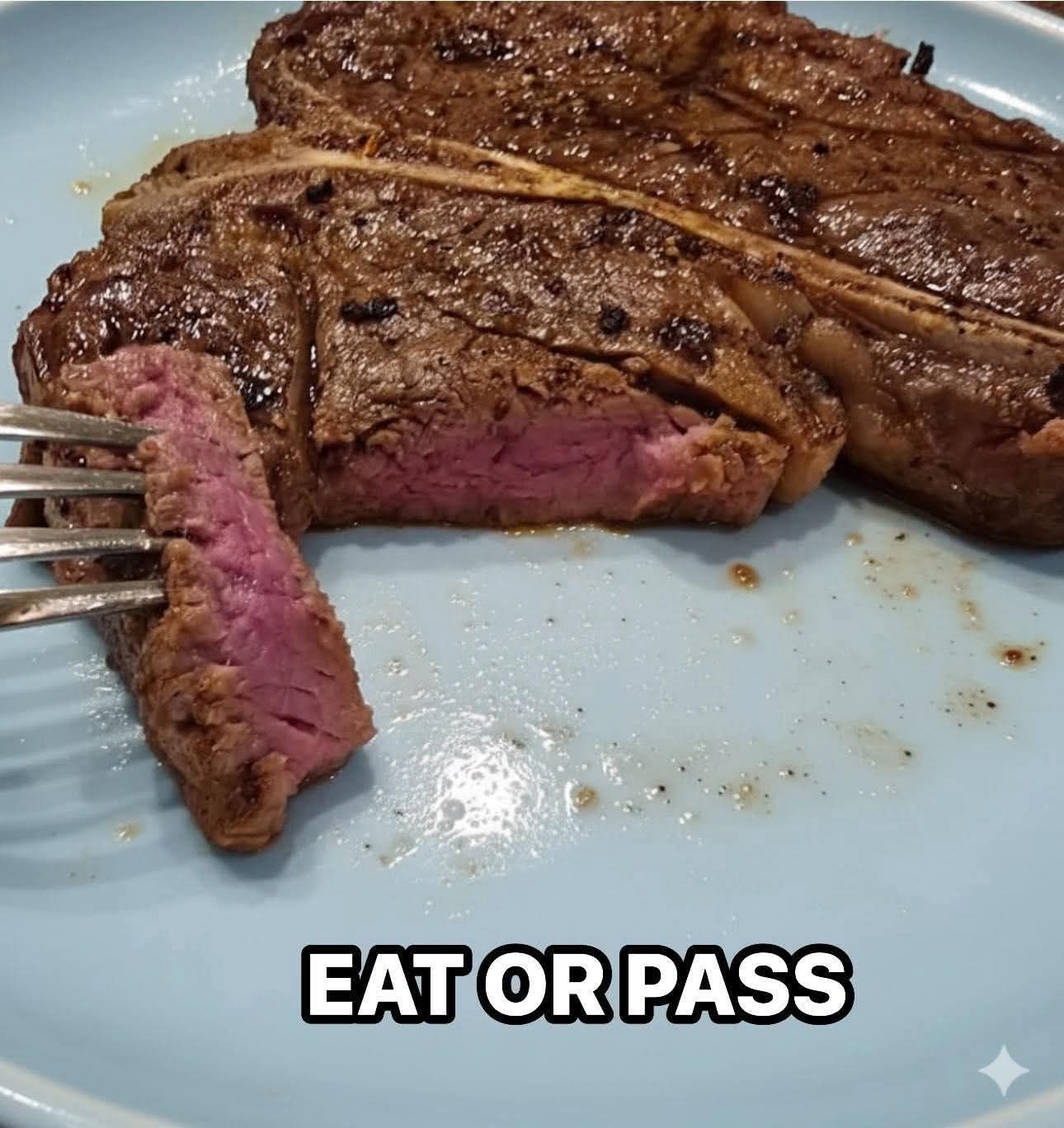
Here is a comprehensive guide to achieving T-Bone Steak Perfection, crafted as a big, detailed recipe and guide just for you.
—
🔥 T-Bone Steak Perfection: The Ultimate Guide to the Best of Both Worlds 🥩
Introduction: A Carnivore’s Masterpiece
The T-bone steak is more than just a cut of meat; it’s an icon. A true carnivore’s masterpiece, it stands as a delicious testament to the beauty of bovine anatomy. When you hold a T-bone, you’re not just holding a steak; you’re holding two distinct steak experiences in one. On one side of the characteristic T-shaped bone lies the tender, buttery filet mignon. On the other, the robust, beefy-flavored New York strip. This duality is what makes the T-bone the ultimate sharing steak—even if you’re just sharing it with yourself. Grilling a T-bone to perfection is a rite of passage for any home cook. It’s about respecting the ingredients, mastering the heat, and ultimately, creating a meal that is unforgettable. Get ready to fire up the grill and embark on a journey to achieve the perfect sear, the ideal crust, and a juicy, flavorful interior that will have everyone at the table begging for more.
—
A Brief History: From Ancient Fires to Modern Plates
The history of the T-bone is as old as butchery itself. The act of cutting through the backbone of a cow and leaving a section of the tenderloin attached to a strip steak dates back centuries. However, its rise to fame is closely tied to the American steakhouse tradition of the late 19th and early 20th centuries. As cattle farming flourished in the American West and railways made transporting beef possible, steakhouses in cities like Chicago and New York City began to flourish. The T-bone, with its impressive size and presentation, became a centerpiece on menus, a symbol of prosperity and the simple, hearty pleasure of a perfectly cooked piece of beef. Its popularity was cemented in the mid-20th century with the rise of suburban backyard grilling, where the T-bone became the star of countless summer cookouts.
—
The Lovers: Who is the T-Bone For?
The T-bone is for the indecisive, the adventurous, and the true beef enthusiast.
· The Indecisive Diner: Can’t choose between a tender filet and a flavorful strip? The T-bone offers the perfect compromise.
· The Texture Connoisseur: It provides a fascinating textural journey in a single meal—from the melt-in-your-mouth filet to the satisfyingly chewy strip.
· The Grill Master: For those who love a challenge and the reward of presenting a truly magnificent piece of meat to their guests.
· The History Buff: It’s a link to the classic American steakhouse tradition, a meal that feels both timeless and special.
—
The Benefits: Why Choose a T-Bone?
· Two Steaks in One: The most obvious benefit is the variety. You get two different textures and flavor profiles in one serving.
· Flavor from the Bone: The bone itself adds flavor during cooking, insulating the meat and releasing rich, savory notes as it heats.
· Impressive Presentation: A large T-bone is a showstopper. It’s a meal that commands attention and makes any dinner feel like a special occasion.
· Juiciness and Tenderness: When cooked correctly, the combination of the tenderloin’s tenderness and the strip’s rich marbling results in an incredibly juicy and satisfying steak.
—
The Information: What Makes a Great T-Bone?
· Cut: A T-bone is a cross-cut from the short loin of the cow. The key identifier is the T-shaped lumbar vertebra. The larger side is the top loin (New York strip), and the smaller side is the tenderloin (filet mignon).
· Porterhouse vs. T-Bone: A Porterhouse is a T-bone steak cut from the rear of the short loin, where the tenderloin is larger. By USDA guidelines, a Porterhouse must have a tenderloin at least 1.25 inches wide at its widest point. A T-bone has a smaller tenderloin.
· Grade: Look for USDA Prime or Choice for the best marbling and flavor. Prime has the most marbling and is typically found in high-end steakhouses and specialty butchers.
· Thickness: For perfect grilling, aim for a steak that is at least 1.5 inches thick. This allows you to get a great sear without overcooking the inside.
—
The Formation: Preparing for Greatness
1. Start with the Right Steak: Purchase a high-quality, thick-cut T-bone (1.5 – 2 inches thick) from a trusted butcher.
2. The Dry Brine (Crucial Step): At least 45 minutes before cooking, but ideally 12-24 hours in advance, pat the steak completely dry with paper towels. Place it on a wire rack set over a baking sheet. Season generously on all sides with coarse kosher salt. This process draws out moisture, which then reabsorbs, seasoning the meat deep within and leaving the surface perfectly dry for a superior sear. Refrigerate, uncovered.
3. Temper the Meat: About 45-60 minutes before grilling, remove the steak from the fridge. This allows it to come to room temperature, ensuring more even cooking. Do not wash off the salt.
—
The Recipe: Grilled T-Bone Steak Perfection
Ingredients
· 1 x 1.5 – 2 inch thick T-Bone or Porterhouse steak (about 2 – 2.5 lbs)
· Coarse Kosher salt (for dry brining and finishing)
· Coarsely ground black pepper
· 2 tbsp high-smoke-point oil (e.g., Avocado oil, canola oil, or grapeseed oil)
· 2 sprigs fresh rosemary
· 2 sprigs fresh thyme
· 3 cloves garlic, smashed
· 4 tbsp unsalted butter
Equipment
· Charcoal or Gas Grill
· Instant-read meat thermometer
· Tongs
· Cast iron skillet or heavy-duty grill pan (optional, for butter basting)
· Wire rack and baking sheet
—
The Methods: Step-by-Step Guide to Grilling
Step 1: Fire Up the Grill
For a perfect T-bone, you need a two-zone fire. This means one side of the grill is for high, direct heat, and the other is for indirect, cooler heat.
· Charcoal: Bank the hot coals to one side of the grill.
· Gas: Turn one burner on high and leave the other(s) off.
Step 2: The Initial Sear (Direct Heat)
1. Pat the tempered steak dry again with a paper towel (it might have released a bit more moisture).
2. Rub the steak all over with the high-smoke-point oil.
3. Season liberally with coarsely ground black pepper. (Remember, it’s already salted from the dry brine).
4. Place the steak over the direct, high-heat side of the grill. Sear for 2-3 minutes per side, until a deep, golden-brown crust forms. You’re looking for a good char, not just a pale color. Don’t move the steak while it’s searing; let the heat do its work.
Step 3: The Gentle Finish (Indirect Heat)
1. Once both sides are beautifully seared, use your tongs to move the steak to the cooler, indirect heat side of the grill.
2. Position the steak so the bone is closest to the heat source. This helps protect the tenderloin from overcooking, as it’s the smallest part.
3. Close the lid of the grill. Insert your instant-read thermometer into the thickest part of the strip steak (not touching the bone). Continue cooking until the internal temperature reaches about 10-15°F below your desired doneness.
· Rare: 115-120°F (pull at 105-110°F)
· Medium-Rare: 125-130°F (pull at 115-120°F) HIGHLY RECOMMENDED
· Medium: 135-140°F (pull at 125-130°F)
Step 4: The Finishing Touch (Optional but Highly Recommended Butter Baste)
For the ultimate in flavor and decadence, perform a butter baste during the indirect cooking phase.
1. Place a cast iron skillet on the direct heat side of the grill to get hot.
2. When the steak is about 10°F from your target temp, transfer it to the hot skillet. Add the butter, smashed garlic, rosemary, and thyme.
3. As the butter melts, tilt the pan slightly and use a large spoon to continuously scoop the foaming butter and herbs over the steak for about 1-2 minutes per side. This adds an incredible nutty, aromatic flavor.
Step 5: The Essential Rest
This is not optional. Transfer the steak to a clean wire rack set over a baking sheet. Tent it loosely with foil. Let it rest for 10-15 minutes. This allows the juices, which have been driven to the center by the heat, to redistribute evenly throughout the meat. If you cut into it immediately, all those precious juices will end up on your plate, not in your steak.
—
Nutrition (Approximate, per 8oz serving)
· Calories: 550-700
· Protein: 55-65g
· Fat: 35-50g (varies greatly based on marbling)
· Iron: High
· Vitamin B12: High
· Zinc: High
Note: A T-bone is a nutrient-dense food, providing high-quality protein and essential vitamins and minerals.
—
Conclusion: The Ultimate Reward
Mastering the T-bone steak is a rite of passage. It’s a technique-driven process that rewards patience and precision. From the initial dry brine to the final, crucial rest, every step is an act of love that culminates in a truly spectacular meal. The first cut, revealing the perfect gradient of pink from the crust to the center, is a moment of pure triumph. The first bite, where you can savor the distinct textures of the tenderloin and the strip, is the ultimate reward. It’s more than just dinner; it’s an experience.
—
Lovers’ Final Verdict
This T-bone method is for lovers of life, lovers of flavor, and lovers of a meal that demands to be savored. It’s for the couple sharing a steak on a summer evening, the family gathered around the table, or the solo cook treating themselves to something extraordinary. It’s a dish that says, “This moment matters.” So go forth, fire up the grill, and create your own T-bone masterpiece. Your taste buds—and everyone you share it with—will thank you. 🤤🔥🥩