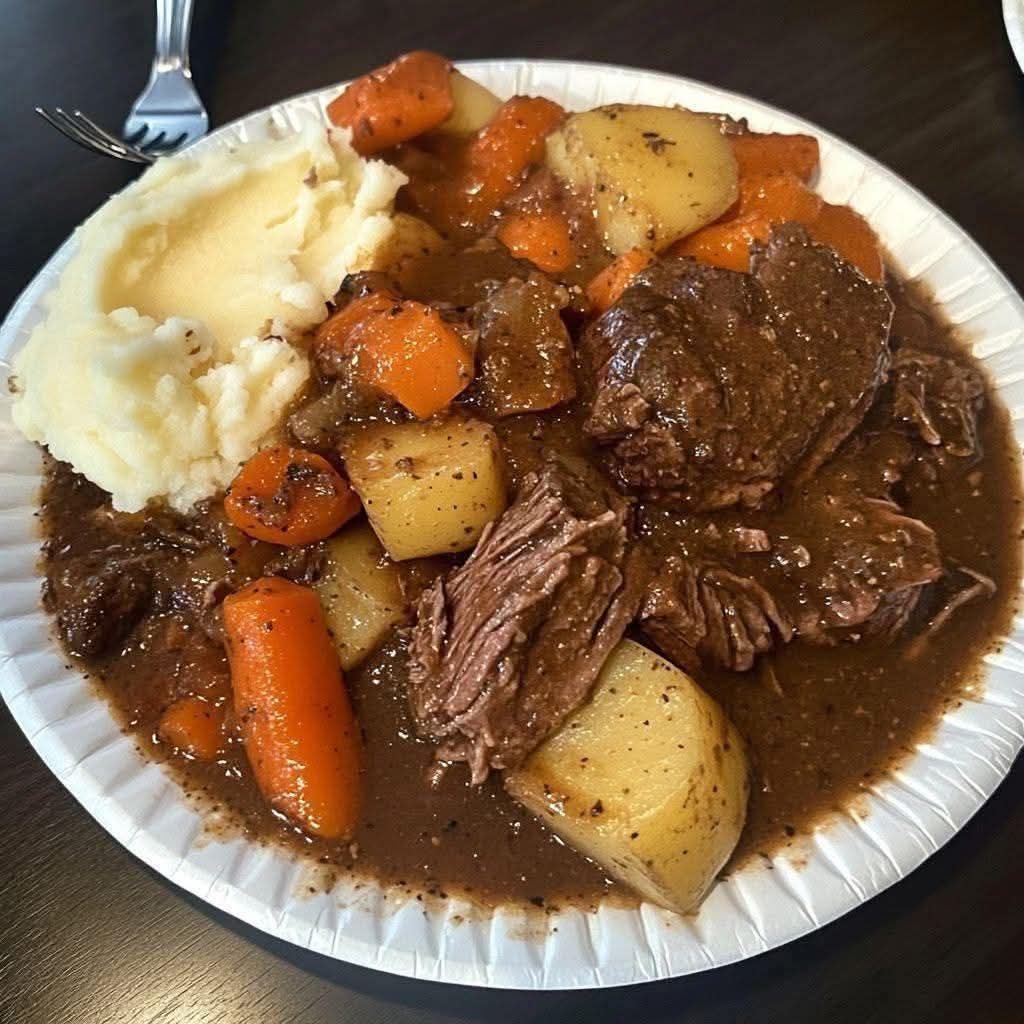
Here is a comprehensive guide to Beef Pot Roast with Potatoes, Carrots, and Mashed Potatoes, structured exactly as you requested.
—
The Timeless Sunday Supper: A Complete Guide to Beef Pot Roast
Introduction
Does anyone here actually still eat Beef Pot Roast with Potatoes, Carrots, and Mashed Potatoes? The answer is a resounding yes. In a world of fleeting food trends and deconstructed dishes, the pot roast stands as a monument to the enduring power of comfort food. It is the very definition of home—a dish that fills the house with an intoxicating aroma long before it ever hits the table. This isn’t just a meal; it’s an experience. It’s the anticipation that builds as a large hunk of beef slowly surrenders its toughness to gentle, moist heat, transforming into a fork-tender masterpiece. Surrounded by sweet carrots, hearty potatoes, and served atop a cloud of creamy mashed potatoes, all bathed in a rich, savory gravy born from the roast itself, this dish is a celebration of simple, honest ingredients. It’s the meal that says “welcome home,” “I love you,” or simply, “slow down and savor this.” So, clear your afternoon, preheat your oven, and prepare to create a dish that has warmed hearts and filled bellies for generations.
—
A Bite of History
The pot roast is a descendant of the age-old technique of braising, a method used across cultures to tenderize tougher, more affordable cuts of meat. In Europe, particularly in France (where it’s known as Boeuf à la Mode) and Germany ( Sauerbraten ), families would cook large cuts of beef in a covered pot with liquid, aromatics, and root vegetables over a low fire for hours. When European immigrants settled in America, they brought this tradition with them. The “Yankee Pot Roast,” as it became known in New England, was the perfect dish for a new nation: economical, resourceful, and capable of feeding a large family with ingredients that could be stored through the winter (like carrots, potatoes, and onions). It became a cornerstone of American Sunday dinners, a meal that could cook largely unattended while the family was at church, ready to be enjoyed together upon their return. It’s a dish born of necessity, perfected by tradition, and loved for its soul-warming results.
—
The Big Recipe
This recipe is designed to yield a generous, show-stopping meal for 6-8 people. Don’t be intimidated by the length; the process is simple and deeply rewarding.
Yields: 6-8 servings
Prep time: 25 minutes
Cook time: 3.5 – 4 hours
Ingredients
For the Pot Roast & Vegetables:
· 1 (3-4 lb) Beef Chuck Roast (or boneless short ribs)
· 2 tbsp olive oil, divided
· 2 tsp kosher salt, plus more to taste
· 1 ½ tsp freshly ground black pepper, plus more to taste
· 1 large yellow onion, chopped into large chunks
· 4 large carrots, peeled and cut into 2-inch chunks
· 4 stalks celery, cut into 2-inch chunks
· 4 cloves garlic, minced
· 2 tbsp tomato paste
· 1 cup dry red wine (like Cabernet Sauvignon or Merlot – optional, but recommended)
· 2 cups beef broth (low sodium preferred)
· 2 sprigs fresh rosemary
· 3 sprigs fresh thyme
· 2 bay leaves
· 1.5 lbs Yukon Gold or baby potatoes, left whole if small, or halved if larger
For the Mashed Potatoes:
· 3 lbs Russet or Yukon Gold potatoes, peeled and quartered
· ½ cup unsalted butter (1 stick), softened
· 1 cup whole milk or heavy cream, warmed
· Salt and white pepper to taste
Instructions / Method
1. Preparation and Searing: Preheat your oven to 325°F (165°C). Pat the beef chuck roast completely dry with paper towels. This is crucial for a good sear. Season the roast generously on all sides with the 2 tsp salt and 1 ½ tsp pepper. In a large Dutch oven or heavy-bottomed oven-safe pot, heat 1 tbsp of olive oil over medium-high heat until it shimmers. Carefully place the roast in the pot and sear, undisturbed, for 4-5 minutes per side, until a deep, brown crust forms. Use tongs to sear the edges as well. Transfer the seared roast to a large plate.
2. Building the Flavor Base: Reduce the heat to medium. Add the remaining 1 tbsp of olive oil to the pot. Toss in the onion, carrots, and celery. Sauté for 6-8 minutes, stirring occasionally, until the vegetables begin to soften and get some color on the edges. Add the minced garlic and tomato paste and cook for another minute, stirring constantly, until the paste darkens and becomes fragrant. This step deepens the umami flavor.
3. Deglazing and Braising: If using wine, pour it into the pot and scrape the bottom with a wooden spoon to lift up all the delicious browned bits (the “fond”). Let the wine simmer for 2-3 minutes until it has reduced slightly. Add the beef broth, rosemary, thyme, and bay leaves. Bring the mixture to a simmer.
4. The Long, Slow Cook: Return the seared roast to the pot, along with any juices that have accumulated on the plate. The liquid should come about halfway up the sides of the roast. Cover the pot tightly with its lid and transfer it to the preheated oven. Braise for 2 hours.
5. Add the Potatoes: After 2 hours, carefully remove the pot from the oven. Add the potatoes, nestling them down into the liquid around the roast. They should be mostly submerged. Return the pot to the oven, cover, and continue cooking for another 1.5 to 2 hours. The roast is done when it is fall-apart tender and a fork twists out of the meat with zero resistance. The potatoes should be tender when pierced.
6. Make the Mashed Potatoes (about 30 minutes before serving): While the roast finishes, place the quartered potatoes in a large pot and cover with cold water by an inch. Add a generous pinch of salt. Bring to a boil, then reduce to a simmer and cook for 15-20 minutes, until the potatoes are fork-tender. Drain them well and return them to the hot pot for a minute to steam off any excess moisture. Pass the potatoes through a ricer or mash them thoroughly with a potato masher. Add the softened butter and begin to incorporate it. Gradually pour in the warm milk or cream, mashing or stirring until you reach your desired creamy consistency. Season generously with salt and white pepper. Keep warm until serving.
7. Rest, Shred, and Serve: Once the roast is done, carefully transfer the meat and vegetables to a large platter or cutting board. Tent loosely with foil to keep warm. Discard the herb sprigs and bay leaves. Let the braising liquid rest for a few minutes, then skim off any excess fat that rises to the surface. You can serve this liquid as a thin, flavorful jus, or thicken it into a gravy. For gravy, place the pot with the liquid over medium heat on the stove. In a small bowl, whisk together 2 tbsp of cornstarch with 2 tbsp of cold water to make a slurry. While whisking the simmering liquid, slowly pour in the slurry. Continue to whisk until the gravy thickens, about 1-2 minutes. The roast will be so tender you can pull it apart into large chunks with two forks. Serve the meat and braised vegetables over a generous scoop of mashed potatoes, and ladle the rich gravy over everything.
—
The Benefits (Beyond the Plate)
· Nutritional Powerhouse: This isn’t just comfort food; it’s a well-rounded meal. Beef chuck is a fantastic source of high-quality protein, iron, and essential B vitamins like B12, which are crucial for energy and red blood cell formation. The carrots provide a hefty dose of beta-carotene (which your body converts to Vitamin A for eye health), while the potatoes offer Vitamin C, potassium, and fiber, especially if you leave the skins on.
· Economical & Sustainable: Pot roast utilizes a tougher, less expensive cut of meat, making it a budget-friendly way to feed a crowd. This “nose-to-tail” or “whole-animal” approach is inherently more sustainable, as it values every part of the animal.
· Mental Well-being: There is a psychological benefit to a slow-cooked meal. The process is meditative, the aromas are therapeutic, and the act of sharing this hearty food fosters connection and a sense of well-being. It’s a culinary hug.
· Leftover Magic: The benefits extend for days. Shredded leftovers make incredible sandwiches, can be folded into a rich beef pot pie, or stirred into a pasta sauce.
—
Nutritional Information (Approximate, per serving)
· Serving Size: 1/8 of recipe
· Calories: 650-750
· Protein: 45-50g
· Fat: 35-40g (primarily from the beef and butter in the mash)
· Carbohydrates: 40-45g (from potatoes, carrots, and onions)
· Fiber: 6-8g
· Sugar: 8-10g (natural sugars from vegetables)
· Sodium: 800-1000mg (varies based on broth and added salt)
Note: These are estimates and can vary based on specific ingredients and portion sizes.
—
For the Lovers
This dish is for the lovers of tradition. It’s for the families who gather on Sunday afternoons, for the friends who become family over a shared table. It’s for the person who believes that good food takes time and that the best conversations happen over a second helping. It is for the home cook who finds joy in the alchemy of transforming simple ingredients into something transcendent. It’s for anyone who has ever felt the comfort of a warm kitchen on a cold day. This pot roast is a love letter, written not with words, but with time, patience, and the most basic, beautiful ingredients.
Conclusion
So, does anyone still eat Beef Pot Roast? Absolutely. And they always will. In a fast-paced world, it remains a delicious anomaly—a dish that demands we slow down, be patient, and trust the process. It is a testament to the fact that the best things in life are often the ones that take the longest. It’s more than just beef and vegetables; it’s a tradition, a comfort, and a connection to generations past. By making this pot roast, you aren’t just cooking dinner; you are creating an aroma, a feeling, and a memory that will linger long after the last bite is gone. Now, go forth and braise.