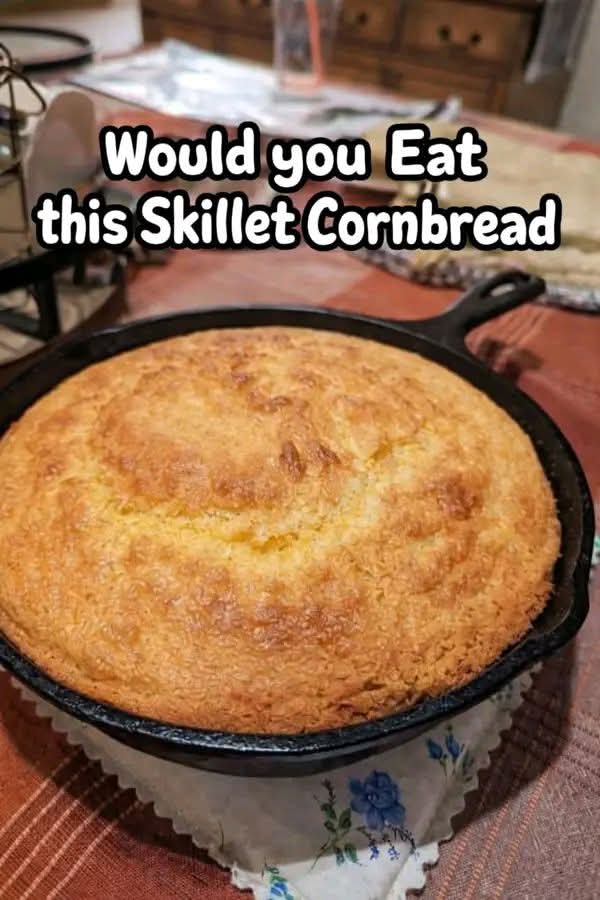
Here is a comprehensive guide to Skillet Cornbread, structured as you requested, scaling the recipe to a generous size perfect for sharing.
—
A Slice of Golden History: The Ultimate Skillet Cornbread
Introduction
There is perhaps no bread more quintessentially American than cornbread. Its story is one of ingenuity, born from the union of Native American agriculture and European cooking techniques. While the first cornbreads were simple, often unleavened cakes cooked over an open fire, the version we know and love today—particularly the skillet variety—is a celebration of texture and flavor.
This recipe is for a “Yankee” or Northern-style cornbread, slightly sweet and tender, with a golden, craggy crust that can only be achieved in a preheated cast-iron skillet. The sizzle when the batter hits the hot pan is the first promise of the beautiful crust to come. This isn’t just a side dish; it’s a vehicle for butter, a sopper-upper of chili, and a comforting bite of history.
The Big Recipe: Sweet & Tender Skillet Cornbread
Yields: 8-10 generous servings
Prep time: 15 minutes
Cook time: 20-25 minutes
Ingredients
· The Dry Mix:
· 1 ½ cups coarse-ground cornmeal (yellow or white)
· 1 ½ cups all-purpose flour
· ½ cup granulated sugar (adjust to taste)
· 1 ½ tablespoons baking powder
· 1 teaspoon fine salt
· The Wet Mix:
· 2 large eggs
· 1 ½ cups buttermilk, shaken
· ½ cup (1 stick) unsalted butter, melted and slightly cooled, plus 2 tablespoons for the skillet
Methods: A Step-by-Step Guide to Perfection
1. The Prelude: Preheat and Prepare
Place your 10-inch cast-iron skillet in the oven and preheat both to 425°F (220°C) . Getting the skillet screaming hot is the secret to that legendary crust.
2. The Dry Chorus
In a large bowl, whisk together the cornmeal, flour, sugar, baking powder, and salt. Whipping them not only combines but aerates the mixture for a lighter crumb.
3. The Wet Harmony
In a separate medium bowl or large liquid measuring cup, whisk the eggs until they are broken up and frothy. Pour in the buttermilk and the ½ cup of melted butter. Whisk until the eggs are fully incorporated and the mixture is uniform.
4. The Union
Pour the wet ingredients into the well of the dry ingredients. Using a spatula or wooden spoon, fold gently until just combined. Do not overmix! A few streaks of flour are okay; overworking the gluten will make your cornbread tough and dense.
5. The Sizzle
Carefully remove the preheated skillet from the oven. Add the remaining 2 tablespoons of butter to the skillet and swirl it around until it melts and coats the bottom and sides completely. The butter will bubble and brown slightly, which is exactly what you want.
6. The Bake
Pour the batter into the hot, buttered skillet. It should sizzle satisfyingly as it hits the pan. Spread it into an even layer and return the skillet to the oven immediately.
7. The Finish
Bake for 20-25 minutes, or until the top is golden brown and a toothpick inserted into the center comes out clean or with a few moist crumbs. Let the cornbread cool in the skillet on a wire rack for at least 10 minutes before slicing and serving directly from the skillet.
History: From the Hearth to the Skillet
Cornbread’s roots are deep in Indigenous American cuisine, where corn (maize) was a staple. Early European settlers adopted this grain, creating “journey cakes” (later johnnycakes) and hoecakes cooked on open flames. The addition of wheat flour, sugar, and leaveners like baking powder came later, creating a softer, more cake-like bread. The cast-iron skillet became the vessel of choice, prized for its ability to retain and distribute heat evenly, creating that coveted crispy crust that defines the best cornbread.
Benefits (Nutritional & Otherwise)
While cornbread is a comfort food, it does offer some benefits:
· Source of Energy: Primarily carbohydrates from cornmeal and flour provide fuel.
· Dietary Fiber: Cornmeal contains some fiber, which aids in digestion.
· Minerals: Buttermilk provides calcium and phosphorus for bone health.
· The Joy Factor: Let’s not overlook the immense psychological benefit of eating warm, buttery, freshly baked bread. It’s a mood booster!
Formation: What Makes it a “Skillet” Cornbread?
The magic is in the formation. When the cold batter hits the hot, buttered skillet, two things happen instantly:
1. The Sear: The outside layer of the batter begins to cook and set immediately, forming a thin, craggy crust.
2. The Rise: The intense, even heat of the cast iron causes the baking powder to react rapidly, creating steam and carbon dioxide. This gives the bread a fantastic rise with a light, tender interior, all while the crust continues to develop and brown.
For the Lovers
This cornbread is for the lovers of:
· Contrasting Textures: Those who adore the combination of a crisp, buttery crust and a soft, tender, slightly crumbly interior.
· Sweet & Savory: The gentle sweetness of this recipe perfectly complements the savory notes of the browned butter and corn, making it a friend to both chili and a drizzle of honey.
· Rustic Comfort: It’s for those who find joy in simple, honest food served in the very vessel it was baked in.
Nutrition (Approximate per serving, based on 10 servings)
· Calories: 295
· Fat: 13g (Saturated Fat: 7g)
· Carbohydrates: 40g
· Protein: 6g
· Fiber: 2g
· Sugar: 11g
(Note: Nutritional values are estimates and will vary based on specific ingredients used.)
Conclusion
In the end, skillet cornbread is more than a recipe; it’s a ritual. It’s the anticipation as the skillet heats, the satisfying sizzle of the batter, and the irresistible aroma that fills the kitchen. It bridges the gap between our modern ovens and the rustic hearths of the past. Whether served alongside a hearty bowl of soup, crumbled into a glass of cold buttermilk, or simply slathered with butter and jam, this golden bread is a timeless classic. Mastering this recipe means you hold a piece of culinary history in your hands—one that is delicious, versatile, and deeply satisfying.