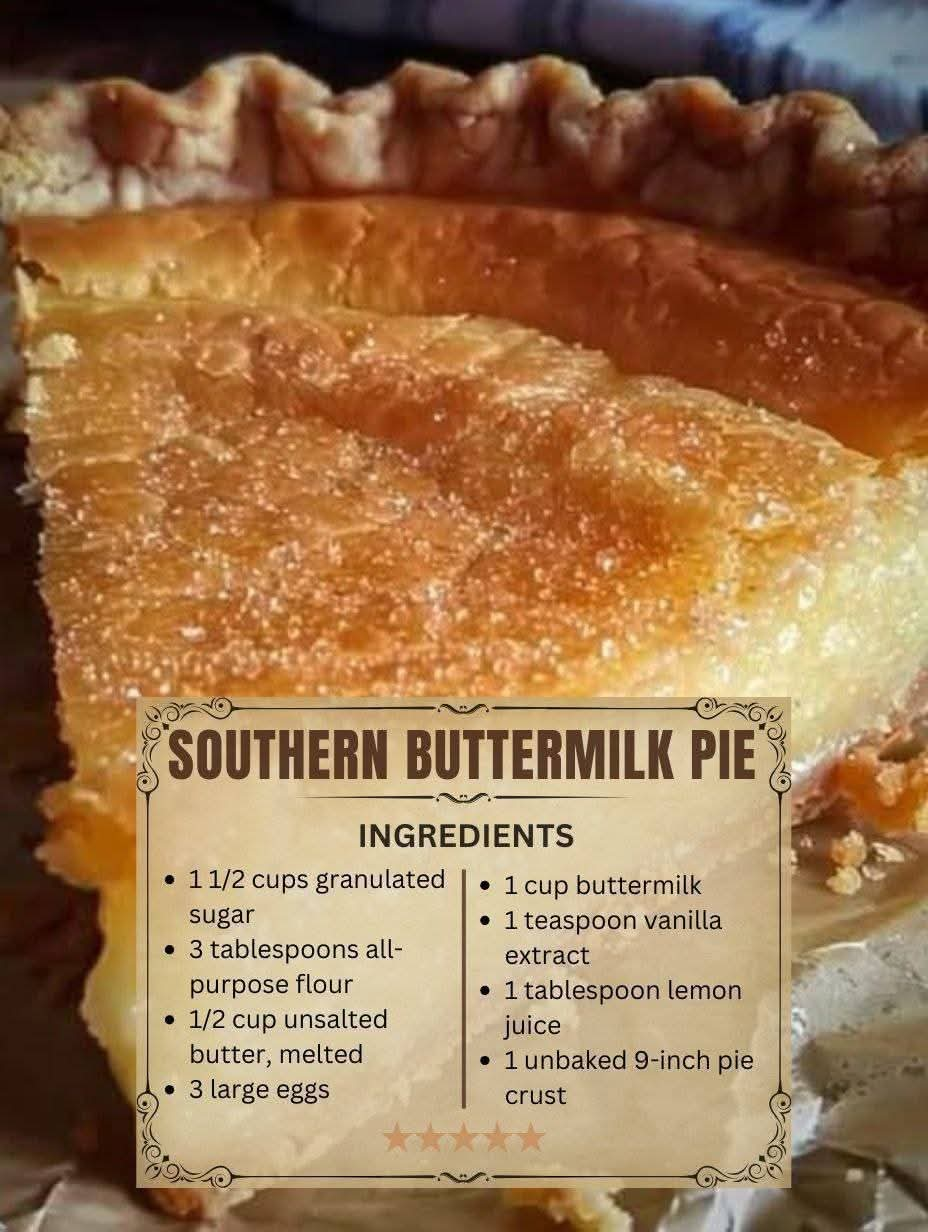
Here is a comprehensive guide to buttermilk pie, crafted to include all the elements you requested—from its rich history and detailed recipe to its nutritional profile and cultural significance.
The Quintessential Buttermilk Pie: A Slice of Southern Heritage 🥧
Introduction
Buttermilk pie is a classic dessert that holds a cherished place in the tapestry of Southern American cuisine. At its core, it is a custard pie, characterized by a sweet, tangy, and incredibly creamy filling nestled within a flaky, golden-brown crust . What sets it apart is its deceptive simplicity; it transforms humble, everyday ingredients—buttermilk, sugar, eggs, and butter—into a dessert of remarkable sophistication and comfort . The magic lies in the buttermilk itself, whose natural acidity cuts through the sweetness, creating a balanced flavor profile that is both refreshing and indulgent, often compared to a cross between a classic custard pie and a light cheesecake . This guide will take you on a journey through the pie’s storied past, provide a foolproof recipe, and explore everything you need to know to create and appreciate this timeless treat.
The History of Buttermilk Pie
The story of buttermilk pie is one of resourcefulness, resilience, and the rich cultural heritage of the American South. Its origins can be traced back to English settlers in the 18th and 19th centuries, who brought with them recipes for simple custard pies . However, it was in the Southern United States that the pie truly found its identity, evolving into a staple of regional cuisine.
Buttermilk pie is often classified as a “desperation pie” or “make-do pie” . This category of desserts was born out of necessity, particularly during times of scarcity like the Reconstruction era, the Great Depression, and World War II. When fresh fruits were out of season or unavailable, resourceful home cooks relied on pantry staples that were always on hand: flour, sugar, eggs, and buttermilk . Buttermilk, in particular, was a ubiquitous ingredient. Traditionally, it was the tangy, nutritious liquid left over after churning butter, so it was a byproduct that was never in short supply on farms and in rural households .
The pie became especially popular in regions like Texas and throughout the Appalachian South, where it was embraced by diverse communities . In African American culinary traditions, it represents a powerful example of turning simple, often limited, provisions into a dish of profound comfort and cultural significance . Early recipes, such as one published in the Dallas Herald in 1867, show just how enduring the formula has been, calling for simple ingredients like buttermilk, eggs, and flour . Over the centuries, it has transcended its humble beginnings to become a beloved classic, not because of flashy ingredients, but because of its soulful, satisfying flavor that evokes family traditions and Southern hospitality .
The Recipe: Classic Southern Buttermilk Pie
This recipe stays true to the traditional method, ensuring a creamy, tangy, and perfectly set pie every time .
Ingredients
For the Crust:
· 1 9-inch unbaked pie shell (homemade or store-bought). A classic pastry crust works best.
For the Filling:
· 1/2 cup (1 stick) unsalted butter, softened to room temperature
· 1 1/2 cups granulated sugar
· 3 large eggs, at room temperature
· 1/3 cup all-purpose flour
· 1 cup buttermilk, shaken well, at room temperature
· 1 teaspoon vanilla extract (pure is best)
· 1/4 teaspoon salt
· Optional: A pinch of freshly grated nutmeg or 1 teaspoon of lemon zest for added brightness
Instructions
1. Preparation and Preheating:
Begin by preheating your oven to 350°F (175°C) . Position an oven rack in the middle position to ensure even baking. Have your unbaked pie crust ready in a 9-inch pie plate .
2. Make the Filling:
In a large mixing bowl, combine the softened butter and granulated sugar. Beat them together with a hand mixer or a sturdy whisk until the mixture is light, fluffy, and pale in color. This step is crucial for incorporating air, which contributes to the pie’s texture .
Add the eggs one at a time, beating well after each addition until they are fully incorporated .
In a separate small bowl, whisk the flour and salt together to combine. Gradually add this dry mixture to the wet ingredients, mixing on low speed or by hand until just combined. Be careful not to overmix.
Slowly pour in the buttermilk and add the vanilla extract (and lemon zest, if using). Mix gently until the batter is smooth and homogeneous .
3. Assemble and Bake:
Place the unbaked pie crust on a baking sheet (this makes it easier to move and catches any potential spills). Pour the filling into the crust . If using, sprinkle the pinch of nutmeg over the top.
Bake for 45 to 60 minutes. The pie is done when the edges are set and golden, and the center is mostly set but still has a slight jiggle. A knife inserted near the center should come out clean or with just a few moist crumbs . If the crust edges start browning too quickly, cover them loosely with aluminum foil or a pie shield .
4. Cooling and Serving:
Place the baked pie on a wire rack and let it cool completely to room temperature. This takes about 2 to 3 hours and is essential for the custard to finish setting properly . The pie can be served at room temperature or slightly chilled.
Methods and Techniques for Success
Achieving the perfect buttermilk pie relies on understanding a few key techniques:
· Room Temperature Ingredients: Using eggs and buttermilk that are at room temperature allows them to blend together more smoothly, creating a homogenous emulsion and a more tender, evenly baked custard .
· Mixing with Care: While you want to cream the butter and sugar thoroughly, once you add the flour and buttermilk, mix just until combined. Overmixing at this stage can develop the gluten in the flour, leading to a dense or tough filling rather than a tender one .
· The “Jiggle” Test: Don’t rely solely on a knife or toothpick. The best indicator of a perfectly baked custard pie is a gentle jiggle. When you gently shake the pie, the center should wobble slightly, like set Jell-O. It will continue to cook and set firmly as it cools. Overbaking can cause the filling to crack or become watery .
· Blind Baking (for a firmer bottom): For those who prefer an extra-crispy bottom crust, you can partially blind bake the crust. Line the unbaked crust with parchment paper, fill with pie weights or dried beans, and bake at 400°F (200°C) for 10-12 minutes. Remove the weights and parchment, and bake for another 5 minutes before filling .
Variations on the Classic
While the classic version is perfect, there are many delightful ways to make it your own:
· Buttermilk Chess Pie: A close relative, chess pie typically includes cornmeal in the filling, which gives it a slightly firmer texture and a subtle crunch .
· Buttermilk Lemon Pie: Enhance the pie’s natural tang by adding the zest of one lemon and 2 tablespoons of fresh lemon juice to the filling for a bright, citrusy kick .
· Buttermilk Coconut Pie: Fold in 1 cup of sweetened shredded coconut to the filling for a tropical twist and delightful texture .
· Spiced Buttermilk Pie: Warm up the flavor profile by adding 1/2 teaspoon of cinnamon and 1/4 teaspoon of nutmeg or cardamom to the filling .
Nutrition Information
Buttermilk pie is an indulgent dessert, best enjoyed in moderation. The following nutrition information is an estimate for one slice of a classic buttermilk pie (based on 8 servings) .
Nutrient Approximate Amount per Serving
Calories 280-380 kcal
Total Fat 14-18g
Saturated Fat 8-10g
Cholesterol 46-80mg
Sodium 220-300mg
Total Carbohydrates 35-51g
Dietary Fiber ~1g
Total Sugars 26-36g
Protein 4-5g
Calcium ~3-8% of Daily Value
Note: Values can vary significantly based on specific ingredients and preparation methods .
Benefits and Considerations
While primarily a comfort food, the pie does offer some nutritional considerations.
· Source of Calcium and Protein: Thanks to the buttermilk and eggs, the pie provides a modest amount of calcium, which is essential for bone health, and protein, which is vital for muscle maintenance .
· Digestibility of Buttermilk: Cultured buttermilk contains probiotics and is often lower in lactose than regular milk, making it potentially easier to digest for some individuals with mild lactose sensitivities .
· Emotional Well-being: The act of baking and sharing a pie, as well as enjoying its nostalgic, comforting flavor, can be a wonderful contributor to emotional well-being and a sense of connection .
· Considerations: The pie is high in calories, added sugars, and saturated fat. Regular overconsumption can contribute to weight gain and increase the risk of heart-related issues. It’s a dessert to be savored as an occasional treat .
Conclusion and Final Thoughts for Pie Lovers
Buttermilk pie is far more than the sum of its simple parts. It is a dessert with a soul, a edible story of ingenuity and tradition passed down through generations. Its beauty lies in its perfect balance—the tangy against the sweet, the creamy custard against the flaky crust. For the home baker, it is a forgiving and rewarding recipe that requires no special skills, only a desire to create something genuinely delicious.
Whether you serve it at a holiday gathering, a summer picnic, or as a quiet weeknight treat, a slice of buttermilk pie is an invitation to slow down and savor a piece of Southern history. It pairs beautifully with a dollop of fresh whipped cream, a scoop of vanilla ice cream, or a handful of fresh berries to cut through the richness . So, preheat your oven, gather your ingredients, and carry on the tradition of this wonderfully creamy, tangy, and unforgettable pie. 😋😋