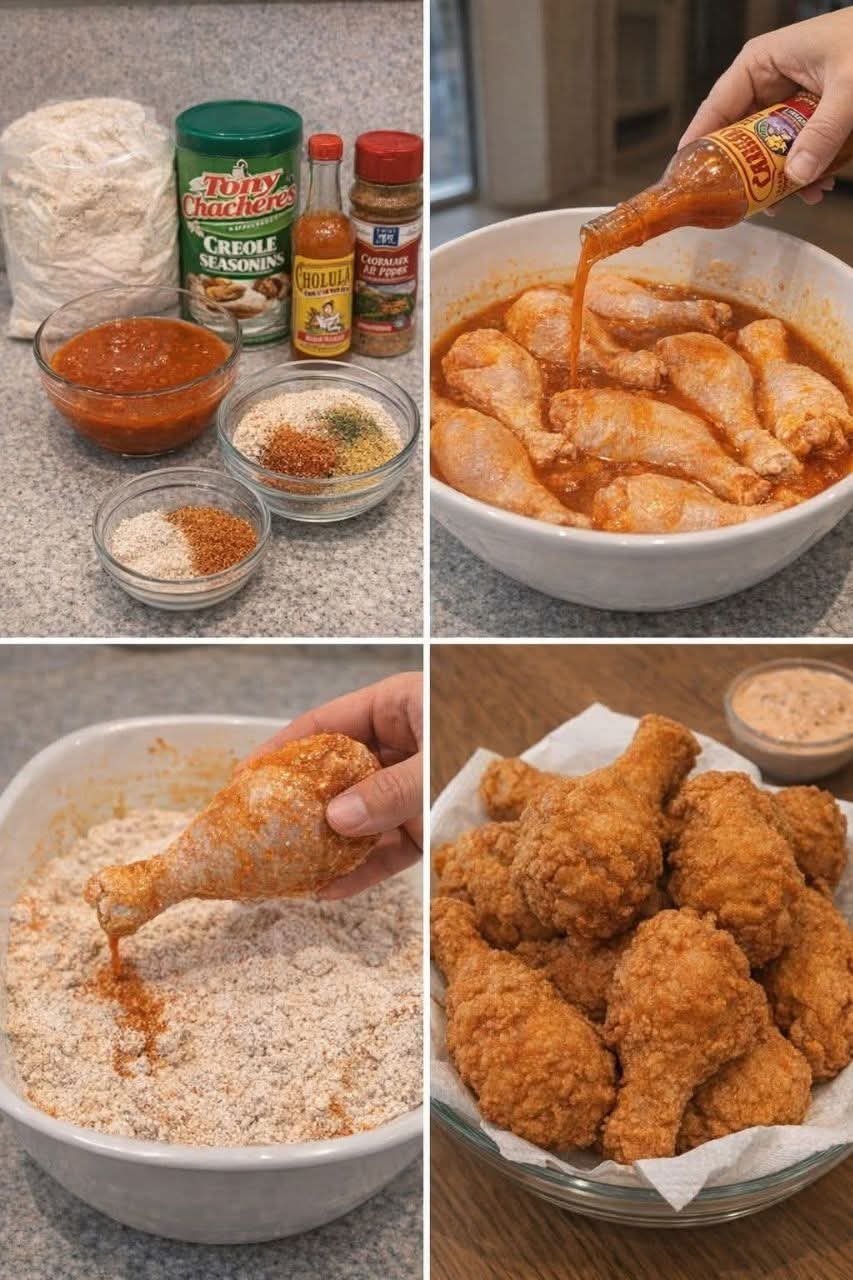
Here is a comprehensive, detailed recipe for Popeye’s Copycat Fried Chicken, structured exactly as you requested. Get ready for the most flavorful, juicy, and crispy fried chicken you’ll ever make at home!
—
The Ultimate Popeye’s Copycat Fried Chicken: A Love Letter to Louisiana Flavor
There’s fried chicken, and then there’s Popeye’s fried chicken. That iconic, fiery-orange crust, the incredible crunch that shatters with every bite, and the juicy, tender meat within—it’s a fast-food legend. But what if you could bring that magic into your own kitchen? What if you could create a version so authentic, so perfectly spiced, and so satisfyingly crispy that it rivals the drive-thru?
This recipe isn’t just a list of ingredients; it’s a culinary journey. It’s the result of countless experiments, taste tests, and a deep appreciation for the art of Southern frying. We’re going to break down every single step, from the crucial buttermilk marinade to the double-dredging technique that creates that signature crust. So, put on your favorite apron, gather your ingredients, and get ready to become a fried chicken legend in your own home. This is the Ultimate Popeye’s Copycat Fried Chicken.
—
Part 1: The Foundation – Ingredients & Preparation
The secret to incredible fried chicken lies in the details. Every ingredient plays a specific role in building flavor and texture.
For the Buttermilk Marinade (The Tenderizer):
· 2 lbs chicken pieces (a mix of drumsticks, thighs, and wings is best – bone-in, skin-on for maximum flavor and moisture)
· 2 cups full-fat buttermilk (this is non-negotiable; it tenderizes the meat and provides the base for the coating to stick)
· 1 tablespoon hot sauce (like Louisiana Hot Sauce or Crystal – this adds a subtle tang and heat that’s classic for Popeye’s)
· 1 teaspoon salt
· 1 teaspoon black pepper
For the Seasoned Flour (The Flavor Bomb):
· 2 cups all-purpose flour
· 1 tablespoon paprika (this is what gives the chicken its signature orange-red color)
· 1 teaspoon garlic powder
· 1 teaspoon onion powder
· 1 teaspoon cayenne pepper (adjust to your spice preference – this is key for the kick!)
· 1 teaspoon white pepper (a subtle, earthy heat that’s a Southern secret)
· 1 teaspoon dried thyme
· 1 teaspoon dried oregano
· 1 teaspoon salt
· 1 teaspoon MSG (optional but highly recommended) – This is the “secret weapon” that amplifies the savory flavor, making it taste just like the restaurant version.
For Frying:
· Peanut oil, or vegetable oil with a high smoke point (like canola), for deep frying. Peanut oil adds a wonderful, subtle nutty flavor.
—
Part 2: The Method – A Step-by-Step Guide to Perfection
This is where the science meets the art. Follow these steps closely for guaranteed success.
Step 1: The Marinade (Do This the Night Before!)
In a large bowl or a large resealable plastic bag, combine the buttermilk, hot sauce, 1 teaspoon of salt, and 1 teaspoon of black pepper. Add the chicken pieces, ensuring they are all fully submerged. Seal the bag or cover the bowl and refrigerate for at least 4 hours, but ideally for 12-24 hours. This long marinade is the secret to unbelievably tender, juicy meat.
Step 2: The Seasoned Flour Dredge
In a separate large, shallow dish (like a pie plate or a cake pan), whisk together the 2 cups of flour with all the remaining dry spices: paprika, garlic powder, onion powder, cayenne, white pepper, thyme, oregano, salt, and MSG (if using). Make sure everything is evenly distributed. The color of the flour mixture should be a beautiful, vibrant orange.
Step 3: The Dredging Process – The “Double Dip”
This is the most important step for achieving that thick, shatteringly crispy crust.
1. Remove a piece of chicken from the buttermilk marinade, letting the excess drip off.
2. Place it in the seasoned flour. Turn to coat thoroughly, pressing the flour into all the nooks and crannies.
3. Here’s the key: Lift the chicken out, shake off the excess flour, and then dip it back into the buttermilk for a few seconds.
4. Now, place it back into the seasoned flour for a second coat. Press firmly again, ensuring a thick, craggy layer of coating forms. This double-dredge is what creates that iconic, crunchy crust.
5. Place the double-dredged chicken pieces on a wire rack. Let them rest for 15-20 minutes. This allows the coating to adhere and will prevent it from falling off during frying.
Step 4: The Fry
1. In a large, heavy-bottomed pot or Dutch oven, heat about 2-3 inches of oil to 350°F (175°C) . Use a deep-fry thermometer to monitor the temperature—this is crucial. If the oil is too cool, the chicken will be greasy; if it’s too hot, the outside will burn before the inside is cooked.
2. Gently place a few pieces of chicken into the hot oil, being careful not to overcrowd the pot. Overcrowding will lower the oil temperature too much.
3. Fry the chicken for about 12-15 minutes, turning occasionally with tongs, until it is golden brown, deeply crispy, and cooked through. The internal temperature should reach 165°F (74°C) for breasts and 175°F (80°C) for thighs and drumsticks.
4. Once cooked, transfer the chicken to a clean wire rack set over a baking sheet (NOT on paper towels, which can make the bottom soggy). This allows the air to circulate and keeps the crust crispy.
—
Part 3: The Story – A Brief History of a Louisiana Legend
Popeyes Louisiana Kitchen, founded in 1972 in New Orleans, Louisiana, by Al Copeland, wasn’t initially a fried chicken chain. It started as “Chicken on the Run,” but it failed. Copeland then retooled the concept, focusing on a spicier, more flavorful, “Louisiana-style” fried chicken, borrowing the name from the detective in the movie “The French Connection,” Popeye Doyle. The spicy, bold flavors—a direct reflection of Cajun and Creole culinary traditions—were an instant hit, setting it apart from its milder competitors. This recipe is a tribute to that bold, unapologetically flavorful spirit.
—
Part 4: Why Make It at Home? (The Benefits)
· Superior Flavor & Quality: You control the ingredients. Use high-quality, fresh chicken and real spices.
· Customizable Spice: Love it hot? Add more cayenne. Prefer it mild? Reduce or omit it.
· Cost-Effective: Making a large batch at home is significantly cheaper than feeding a family at a restaurant.
· The Pure Joy of Creation: There’s an immense satisfaction in pulling a batch of perfect, golden-brown fried chicken out of your own fryer. It’s a skill to be proud of.
—
Part 5: The Final Formation – What to Expect
When you bite into this chicken, the first thing you’ll hear is the crunch. The thick, craggy crust shatters beautifully. Immediately following the crunch is an explosion of flavor—the warmth of paprika, the subtle sting of cayenne and white pepper, the earthy notes of thyme, and that deep, savory umami from the optional MSG. The meat underneath is impossibly juicy and tender, a direct result of the long buttermilk soak. It’s a symphony of textures and tastes that perfectly captures the essence of the original.
—
Part 6: For the Lovers
This recipe is for the lovers. For the lovers of soulful Southern cooking. For the lovers of bold, unapologetic flavor. For the lovers who appreciate the time and care it takes to create something truly special. Share this chicken with the people you love—at a backyard barbecue, a Sunday dinner, or just because. Watch their eyes light up with that first bite. That’s the real reward.
—
Part 7: Pro-Tips & Methods for Success
· Thermometer is King: Don’t guess the oil temperature. An instant-read thermometer for the oil and the chicken is your best friend.
· Don’t Skip the Rest: Letting the dredged chicken rest is not a step to rush. It’s what makes the crust stick.
· Work in Batches: Maintain that oil temperature by frying only a few pieces at a time.
· Keep it Warm: Place finished chicken on the wire rack in a 200°F (95°C) oven while you finish frying the rest. This keeps it perfectly hot and crispy.
—
Part 8: Nutritional Information (Approximate, per serving)
Please note: This is an estimate and will vary based on specific ingredients and frying methods. Values are for one piece of chicken (e.g., a thigh).
· Calories: ~350-450
· Fat: ~20-28g
· Saturated Fat: ~4-6g
· Cholesterol: ~100-130mg
· Sodium: ~700-900mg (can be reduced by using less salt)
· Carbohydrates: ~15-20g
· Protein: ~25-30g
—
Part 9: The Grand Conclusion
This isn’t just a fried chicken recipe; it’s a passport to the heart of Louisiana. It’s a project of love that rewards you with the most incredible, crave-worthy meal. While the original Popeye’s will always have its place, there’s something truly special about sitting down to a plate of chicken you made with your own two hands, knowing you’ve cracked the code.
So go on, don’t lose this recipe. Print it out, bookmark it, and share it with someone who loves fried chicken as much as you do. Get ready for the compliments, the requests for “when are you making this again?,” and the deep satisfaction of a job perfectly, deliciously done. Now, go forth and fry! 🔥🤤