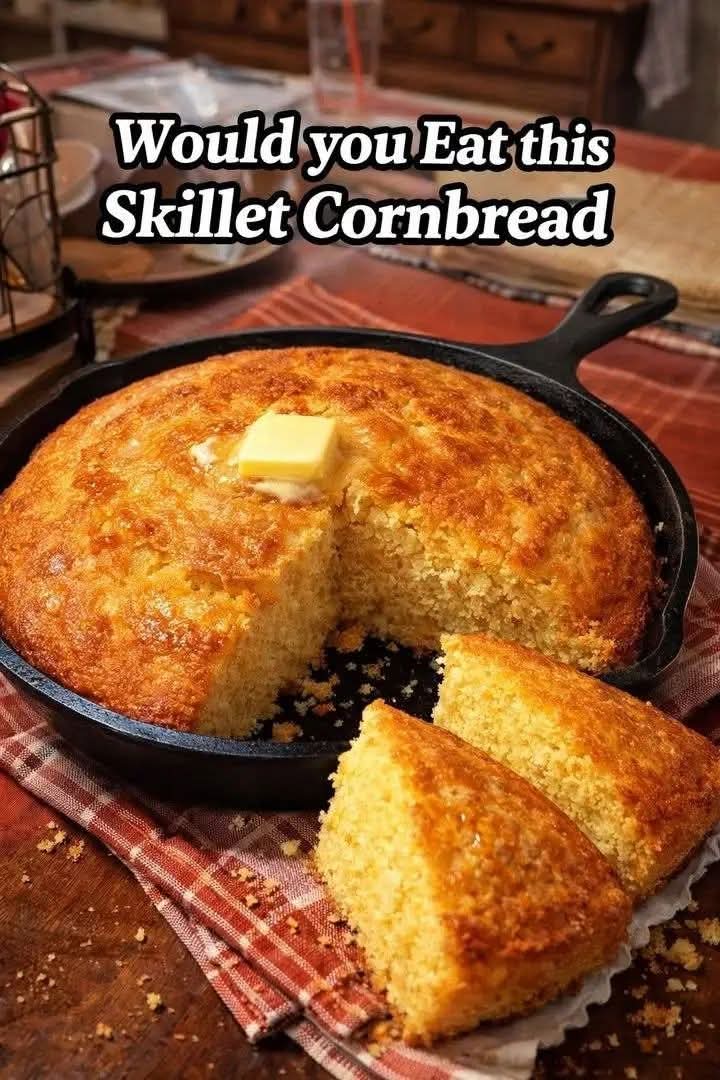
Skillet Cornbread
The Golden Heart of Southern Comfort
—
🌽 INTRODUCTION
There’s something magical about the moment you slide a cast iron skillet, sizzling with butter, into the oven—and pull out a golden, crusty cornbread that perfumes your entire kitchen with warmth and nostalgia. Skillet cornbread isn’t just food; it’s a culinary tradition passed down through generations, a bridge between the simple sustenance of early settlers and the soulful tables of modern Southern homes.
This recipe delivers cornbread the way it was meant to be made: crisp and caramelized on the outside, tender and moist on the inside, with that distinctive cornmeal texture that speaks of honest, wholesome ingredients. When baked in a preheated cast iron skillet, the batter immediately begins to fry upon contact, creating that legendary crust that cornbread lovers dream about.
Whether you’re serving it alongside a hearty bowl of chili, using it to sop up the last drops of collard greens potlikker, or simply enjoying it with a drizzle of honey for breakfast, this skillet cornbread will transport you straight to comfort food heaven.
—
📜 HISTORY
Cornbread has deep roots in American culinary history, dating back to Indigenous peoples who first cultivated maize and taught European settlers how to grind it into meal. For early colonists, cornbread became a staple because corn was more reliable than wheat in the American climate and soil.
The evolution of cornbread tells the story of America itself:
· Native American Origins: The first cornbreads were simple mixtures of cornmeal and water, cooked on hot stones or in ashes
· Colonial Era: Settlers adapted Native techniques, adding European ingredients like milk and eggs when available
· Southern Staple: Cornbread became the daily bread of the South, where wheat didn’t grow as well as in the North
· Cast Iron Tradition: The cast iron skillet—a possession so valued it was often listed in wills—became the vessel of choice, giving cornbread its signature crust
· Civil War and Beyond: Cornbread sustained armies and families during times of scarcity, earning its place in American food memory
Today, the debate between Northern-style (sweet, cake-like) and Southern-style (savory, no sugar) cornbread continues at dinner tables across the country. This recipe offers the option of sugar, letting you choose your allegiance.
—
🥣 INGREDIENTS
Ingredient Amount Notes
Cornmeal 1 cup Yellow or white; medium or fine grind
All-purpose flour 1 cup Provides structure and tenderness
Sugar 1 tablespoon Optional—omit for traditional Southern style
Salt 1 teaspoon Enhances all flavors
Baking powder 1 tablespoon For lift and lightness
Milk or buttermilk 1 cup Buttermilk adds tang and tenderness
Large eggs 2 Room temperature for best incorporation
Melted butter or oil 1/3 cup Butter for flavor, oil for moisture
Additional butter 1-2 tablespoons For preheating the skillet
—
👩🍳 INSTRUCTIONS & METHODS
Preparation Time: 10 minutes
Cooking Time: 20-25 minutes
Total Time: 35 minutes
Yield: 8 servings
METHOD
Step 1: Preheat Your Skillet
Place a 9-10 inch cast iron skillet in the oven and preheat to 400°F (200°C). This crucial step ensures that when you pour in the batter, it immediately begins to create that coveted crispy crust.
Step 2: Mix Dry Ingredients
In a large bowl, whisk together:
· 1 cup cornmeal
· 1 cup all-purpose flour
· 1 tablespoon sugar (if using)
· 1 teaspoon salt
· 1 tablespoon baking powder
Whisk thoroughly to ensure the baking powder is evenly distributed—this prevents bitter spots in your finished cornbread.
Step 3: Combine Wet Ingredients
In a separate bowl or large measuring cup, whisk:
· 1 cup milk or buttermilk
· 2 large eggs
· 1/3 cup melted butter or oil
Whisk until the eggs are completely incorporated and the mixture is uniform.
Step 4: Bring Them Together
Pour the wet ingredients into the dry ingredients. Stir with a fork or spatula just until combined. A few lumps are okay—overmixing develops gluten and will make your cornbread tough and rubbery. The batter should be thick but pourable.
Step 5: Skillet Moment
Carefully remove the hot skillet from the oven (use heavy oven mitts!). Add 1-2 tablespoons of butter to the skillet and swirl as it melts, coating the bottom and sides. The butter should sizzle and foam—this is the sound of future deliciousness.
Step 6: Pour and Bake
Immediately pour the batter into the hot skillet. It should sizzle around the edges. Spread evenly if needed, but work quickly.
Return the skillet to the oven and bake for 20-25 minutes, until:
· The top is golden brown
· The edges have pulled away from the skillet sides slightly
· A toothpick inserted in the center comes out clean or with a few moist crumbs
Step 7: The Grand Reveal
Remove from oven and let cool in the skillet for 5-10 minutes. For serving, you can either cut wedges directly from the skillet or invert onto a plate and then flip right-side-up onto a serving platter (to preserve that gorgeous crust on top).
—
🌟 FORMATION & TECHNIQUE NOTES
The Science of Great Cornbread
Why the Hot Skillet Matters: When cold batter hits hot buttered iron, an immediate sear occurs. This sets the exterior before the interior has fully expanded, creating a distinctive crust while allowing the inside to steam and become tender.
The Cornmeal Factor: Cornmeal doesn’t contain gluten, which is why we add flour—to provide structure. The ratio here (1:1) creates a cornbread that holds together well while still showcasing corn’s texture and flavor.
Buttermilk Magic: If using buttermilk, the acidity does two things: it tenderizes gluten (making a more tender crumb) and reacts with baking powder for extra lift. It also contributes that subtle tang that makes Southern-style cornbread so distinctive.
Mixing Method: The “muffin method” (separate wet and dry, then combine) ensures even distribution of leavening without overmixing. This is key to tender cornbread.
—
💚 BENEFITS
Nutritional Profile (per serving, approximate)
Nutrient Amount
Calories 220-250
Protein 6g
Carbohydrates 32g
Fiber 2g
Fat 9g
Iron 8% DV
Calcium 15% DV
Why Cornbread Loves You Back
1. Cornmeal provides complex carbohydrates for sustained energy release
2. Good source of B vitamins, especially niacin and folate
3. Contains resistant starch (when cooled) that feeds beneficial gut bacteria
4. Iron from enriched flour supports healthy blood
5. Can be customized with whole grain cornmeal or gluten-free flour blends
6. Satisfies cravings without the empty calories of processed snacks
—
💕 FOR CORNBREAD LOVERS EVERYWHERE
Cornbread inspires devotion like few other foods. Here’s what lovers of this golden bread adore:
· The Crust: That buttery, crispy edge where cornbread meets skillet
· The Texture: The pleasant grit of cornmeal balanced with tender crumb
· The Versatility: Sweet with honey for breakfast, savory with beans for dinner
· The Nostalgia: Memories of grandmother’s kitchen, holiday meals, and simple suppers
· The Ritual: The satisfying heft of a cast iron skillet, the sizzle of batter, the anticipation while it bakes
· The Sharing: Cornbread is made to be passed around tables, broken by hand, shared with loved ones
Cornbread lovers know that this humble bread doesn’t need to be fancy—it needs to be right. And right means a good crust, tender inside, and made with love.
—
🥄 SERVING SUGGESTIONS & VARIATIONS
Classic Pairings
· With Chili: The ultimate comfort combination
· With Collard Greens and Potlikker: For sopping up every drop
· With Honey or Maple Syrup: Drizzled over a warm wedge
· With Butter: A pat melting into the warm crumb
· With Beans: Red beans and rice’s best friend
Delicious Variations
Add-In Ideas (fold into batter just before pouring):
· 1 cup shredded cheddar cheese
· 4 sliced jalapeños (fresh or pickled)
· 1/2 cup corn kernels (fresh or frozen)
· 4 slices cooked, crumbled bacon
· 2 tablespoons chopped chives or green onions
Flour Alternatives:
· Swap 1/2 cup flour for whole wheat for nuttier flavor
· Use gluten-free 1:1 baking blend for gluten-free version
Dairy-Free Option:
· Use plant-based milk and oil instead of butter
—
📊 COMPLETE NUTRITIONAL INFORMATION
Per serving (1/8 of recipe, using buttermilk and butter)
Component Amount
Calories 238
Total Fat 10g
Saturated Fat 5g
Cholesterol 68mg
Sodium 487mg
Total Carbohydrates 31g
Dietary Fiber 2g
Total Sugars 3g
Protein 6g
Calcium 156mg
Iron 1.7mg
Potassium 135mg
Percent Daily Values based on a 2,000 calorie diet
—
🏁 CONCLUSION
Skillet cornbread stands as a testament to the beauty of simple things done well. With just a handful of pantry staples and a cast iron skillet, you can create something far greater than the sum of its parts—a golden bread that carries history in its crust and comfort in its crumb.
This recipe honors tradition while offering flexibility for modern tastes. Whether you choose to add sugar or keep it savory, fold in cheese and jalapeños or keep it plain, you’re participating in a culinary tradition that has nourished Americans for centuries.
The next time you pull that hot skillet from the oven, take a moment to appreciate the sizzle, the aroma, the golden-brown perfection. Then break off a piece, slather it with butter, and taste the legacy.
Skillet cornbread isn’t just food—it’s a warm welcome to the table, every single time.
—
“Cornbread is the poetry of the South—simple, honest, and deeply satisfying.”
—
💝 FOR THOSE WHO LOVE CORNBREAD
This recipe is dedicated to:
· Grandmothers who knew exactly how hot the skillet should be
· Families gathered around tables, reaching for one more piece
· Cast iron enthusiasts who understand that seasoning is love made visible
· First-timers about to discover the joy of that perfect crust
· Everyone who knows that some things are better made from scratch
May your skillet always sizzle, your cornbread always rise, and your table always be full.
—
To continue receiving recipes, type “YES” 🥄
Recipe by: A Cornbread Devotee