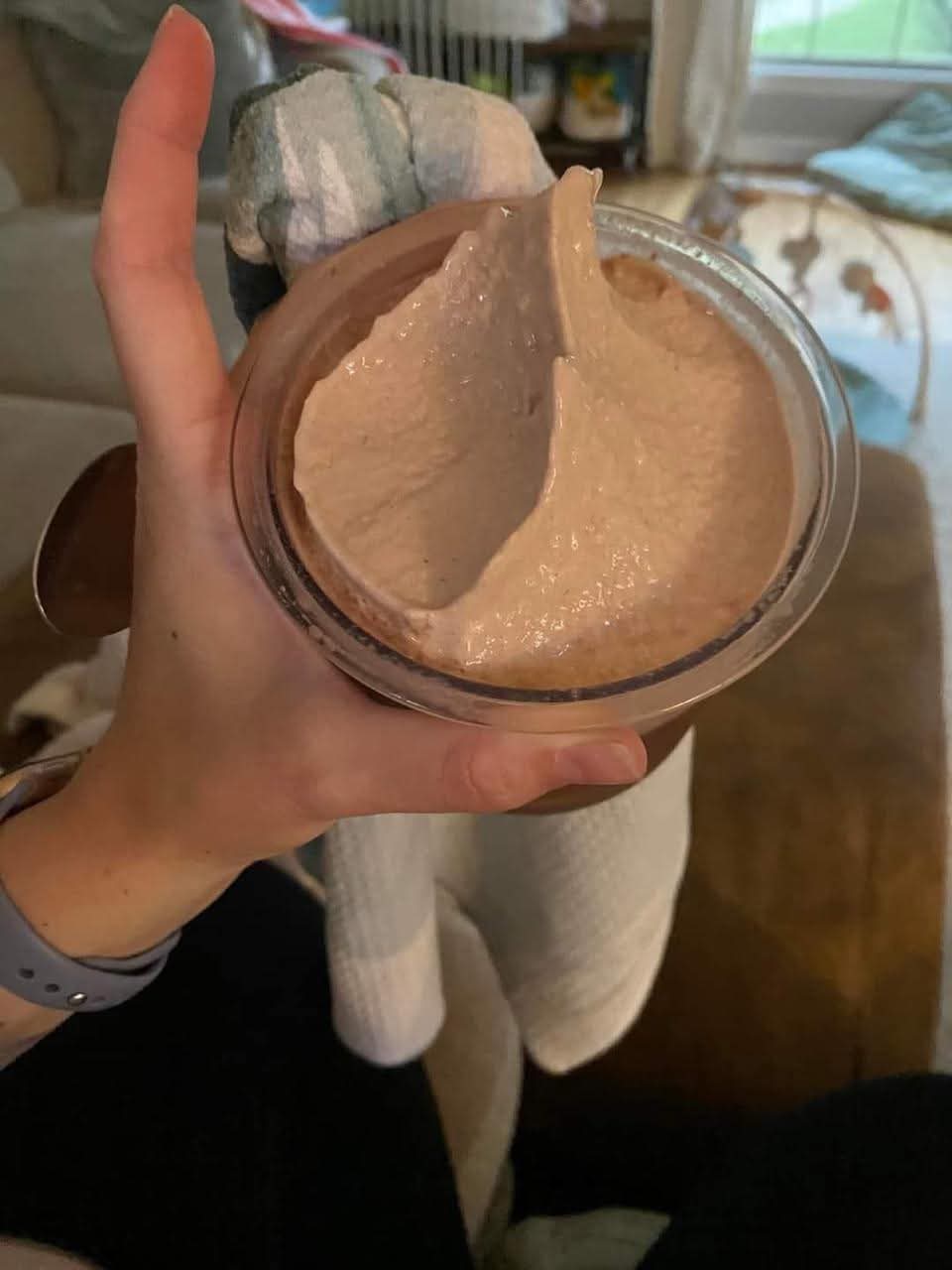
Here is a comprehensive guide to creating that show-stopping, husband-approved High-Protein Chocolate Ice Cream. This recipe is designed to be a complete resource, covering everything from its rich history to its nutritional powerhouse status.
The Chocolaty Revelation: A Dessert That Does More
There is a magical moment when indulgence meets intention. It happens when you hand a spoonful of rich, velvety chocolate ice cream to someone and wait for their verdict. According to my husband, after taking that first bite of this creation, the verdict was clear: “This is the best tasting chocolate ice cream I’ve ever tasted.” The kicker? It wasn’t loaded with heavy cream and cups of sugar. It was packed with a staggering 40 grams of protein per serving.
This isn’t just a dessert; it’s a revelation. It’s for the athlete looking for a post-workout reward, the parent wanting to give their kids a treat that actually nourishes them, or simply the chocolate lover who refuses to compromise on flavor for the sake of fitness. Get ready to churn up a batch of the most satisfying, guilt-free chocolate ice cream you will ever experience.
—
The History of Ice Cream: From Ancient Luxuries to Modern Macros
To appreciate this high-protein marvel, it helps to understand the long journey of ice cream itself.
· Ancient Beginnings (c. 500 BCE): The story starts not with cream, but with snow. In the Persian Empire, people would pour concentrated grape juice over snow, eating it as a refreshing treat. The Chinese would later mix milk, rice, and snow, creating early forms of iced dairy desserts.
· Royal Luxury (16th-17th Century): Ice cream made its way to Europe, becoming a symbol of immense wealth and power. Only royalty and the elite could afford to have ice hauled from mountains and stored in ice houses to freeze their custards. It’s said that Catherine de’ Medici brought the first ice cream recipes to France, and Charles I of England was so enamored with it he paid his chef a lifetime pension to keep the recipe a secret from the rest of the court.
· The American Dream (18th-19th Century): Ice cream crossed the Atlantic with European settlers. Thomas Jefferson was so fond of it that he wrote his own 18-step recipe for vanilla ice cream. The invention of the hand-cranked ice cream churn in the 1840s democratized the dessert, allowing families to make it at home without the backbreaking labor.
· The Industrial Revolution (20th Century): With the advent of commercial refrigeration and homogenization, ice cream became a global commodity. Brands like Breyers and Haagen-Dazs defined what we think of as “premium” ice cream: high in fat and sugar.
· The 21st Century & The Protein Boom (Today): As society became more health-conscious and fitness-oriented, the demand for “better-for-you” desserts exploded. The high-protein movement, fueled by advances in whey and casein isolates, has allowed us to reinvent this classic treat, transforming it from a simple indulgence into a functional food that supports muscle growth, satiety, and overall wellness.
Our recipe today is the culmination of this entire history—taking the luxurious, soul-satisfying essence of traditional ice cream and perfecting it for the modern world.
—
The Benefits: Why This Dessert is a Game-Changer
1. Superior Muscle Synthesis: With 40g of protein per serving, this ice cream acts as an excellent post-workout meal. Protein provides the essential amino acids needed to repair and rebuild muscle tissue broken down during exercise.
2. Enhanced Satiety: Protein is the most satiating macronutrient. Eating this will keep you feeling fuller for longer than traditional ice cream, curbing cravings and helping with weight management.
3. Blood Sugar Stability: By significantly reducing added sugar and relying on natural sweeteners and protein, this recipe prevents the dreaded “sugar crash.” You get the energy boost without the subsequent lethargy.
4. Bone Health: Dairy-based protein powders and milk are rich in calcium, which is vital for maintaining strong and healthy bones.
5. Metabolic Boost: Digesting protein requires more energy (calories) than digesting fats or carbohydrates, a phenomenon known as the Thermic Effect of Food (TEF). This gives your metabolism a slight, natural bump.
6. The Ultimate Guilt-Free Indulgence: You can satisfy your deepest chocolate cravings without derailing your dietary goals. It’s a treat for your taste buds and your body.
—
The Science: How We Achieve the Perfect Texture (The Formation)
The biggest challenge with high-protein ice cream is texture. Protein powder can often make things gritty or rubbery. Here’s how our method conquers that:
· The Protein Blend: We don’t just use one type of protein.
· Whey Protein: Provides a creamy, fast-absorbing base and emulsifies well.
· Casein Protein: This is the secret weapon. Casein is a slow-digesting protein that is naturally fantastic at absorbing water and creating a thick, smooth, pudding-like gel. It counteracts iciness and gives the ice cream a dense, premium, “super-premium” mouthfeel.
· The Fat Factor: Healthy fats from ingredients like heavy cream or full-fat coconut milk are crucial. Fat coats your tongue, carrying flavor and creating a luxurious sensation. It also inhibits the formation of large, crunchy ice crystals.
· The Sweet Science of Sweeteners: We use natural sweeteners like allulose or erythritol. Allulose is particularly good because it behaves like sugar, lowering the freezing point of the mixture. This ensures the ice cream stays scoopable straight from the freezer, rather than turning into a frozen block.
· The Churning Process: Constant churning incorporates air and breaks up ice crystals as they form, resulting in a smooth, aerated, and creamy final product.
—
The Ultimate High-Protein Chocolate Ice Cream Recipe
This recipe is designed to be a foolproof, deeply satisfying base for your frozen dessert adventures.
Yields: Approximately 1.5 quarts
Prep time: 10 minutes
Churning time: 20-25 minutes
Freezing time: 4+ hours
Ingredients
· The Protein Base:
· 1 ½ cups (360ml) Whole Milk
· 1 cup (240ml) Heavy Cream (or full-fat canned coconut milk for dairy-free)
· 2 large Egg Yolks (optional, but adds supreme richness and helps with emulsification)
· 2 scoops (approx. 60-70g) Chocolate Whey Protein Powder
· 1 scoop (approx. 30g) Chocolate Casein Protein Powder (or use all Whey, but the texture will be less creamy)
· The Sweetener & Flavor:
· ½ cup (100g) Allulose or Monk Fruit/Erythritol blend (adjust to your taste)
· ½ cup (50g) Unsweetened Dutch-Processed Cocoa Powder (for that deep, dark chocolate flavor)
· 1 tsp Vanilla Extract
· Pinch of Sea Salt (to enhance the chocolate flavor)
Instructions & Method
1. The Foundation (Mixing): In a large mixing bowl or a high-speed blender, combine the whole milk, heavy cream, and egg yolks (if using). Blend or whisk until smooth. The egg yolks are the key to a traditional custard-style base.
2. The Dry Team Activation: Add the chocolate whey protein, chocolate casein protein, cocoa powder, sweetener, vanilla extract, and sea salt.
· If using a blender: Start on low and gradually increase to high, blending for about 30-45 seconds until everything is perfectly smooth and no powder clumps remain. The mixture will thicken slightly thanks to the casein.
· If whisking by hand: Add the powders slowly while whisking vigorously to prevent lumps.
3. The Chill (Crucial Step): Pour the mixture into a bowl, cover it, and place it in the refrigerator for at least 2-4 hours, or ideally overnight. Do not skip this. A thoroughly chilled base will churn faster and result in a much creamier texture.
4. The Churn: Pour the cold mixture into your ice cream maker and churn according to the manufacturer’s instructions. This usually takes 20-25 minutes. The mixture will look like very thick soft-serve.
5. The Hardening: Transfer the churned ice cream into a freezer-safe, airtight container. Press a piece of parchment paper directly onto the surface of the ice cream (this prevents ice crystals from forming) before putting the lid on. Freeze for at least 4 hours, or until firm.
6. The Serving: Remove from the freezer and let it sit at room temperature for 5-10 minutes to soften slightly for easy scooping.
—
For the Lovers: Who Will Adore This Creation
· The Fitness Fanatic: The post-gym reward that actually aids recovery.
· The Busy Parent: A quick, high-protein snack for kids that feels like a major treat.
· The Chocolate Connoisseur: Someone who appreciates a deep, rich, and complex chocolate flavor profile.
· The Health-Conscious Dieter: A way to stick to macros without feeling deprived.
· The Curious Foodie: Anyone who loves the magic of transforming simple, healthy ingredients into something extraordinary.
—
Nutritional Information (Per Serving – based on 6 servings)
· Calories: ~350-400
· Protein: 40g
· Fat: 18-22g (depending on cream used)
· Carbohydrates: 10-15g (Net Carbs: ~5-8g, depending on sweetener)
· Fiber: 4-6g
· Sugar: 4-6g (Naturally occurring from milk)
(Note: Nutritional values are estimates and will vary based on specific brands of protein powder and sweetener used.)
—
Conclusion: The Future of Dessert is Here
This High-Protein Chocolate Ice Cream is more than a recipe; it’s a testament to how far our understanding of food has come. It proves that we don’t have to choose between what tastes good and what is good for us. By harnessing the power of high-quality ingredients and a little kitchen science, we can have our ice cream and eat it too—40 grams of protein and all. So go ahead, churn up a batch, and get ready to hear, “This is the best chocolate ice cream I’ve ever tasted.”