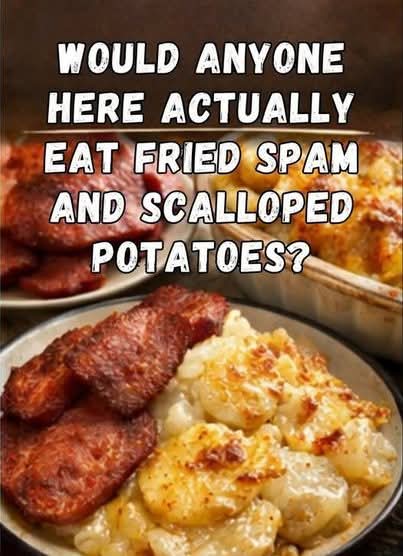
Here is a comprehensive, detailed guide to Old-Fashioned Fried Spam and Scalloped Potatoes, crafted as requested.
—
The Humble Harmony: A Complete Guide to Old-Fashioned Fried Spam & Scalloped Potatoes
Introduction
There are dishes that whisper of fine dining, and then there are dishes that speak the loud, comforting language of home. Old-Fashioned Fried Spam and Scalloped Potatoes firmly belongs to the latter category. It’s a meal that doesn’t try to impress with complex techniques or exotic ingredients; instead, it wins you over with its soul-warming simplicity and profound satisfaction. This is the food of potlucks, of rainy Sunday dinners, of family gatherings where the conversation is as rich as the food. It’s a nostalgic journey back to a time when meals were built from a pantry staple and a few humble fresh ingredients, creating a golden, crispy, and creamy masterpiece that has fed generations. This guide will explore every facet of this classic dish, from its curious history to a detailed, foolproof recipe.
—
The History: From Wartime Ration to Comfort Classic
To understand this dish, one must understand its star ingredient: Spam. Introduced in 1937 by the Hormel Foods Corporation, Spam (a portmanteau of “spiced ham”) became a global phenomenon during World War II. It was a durable, shelf-stable, and affordable protein source that could be shipped to troops overseas and fed to families on the home front facing meat rationing. Its versatility made it a kitchen workhorse.
Scalloped potatoes, on the other hand, have much older roots, dating back to Europe, where potatoes were layered with milk, butter, and sometimes cheese and baked into a comforting “pudding.” The term “scalloped” likely refers to the method of cooking food in a creamy sauce, often in a shallow dish.
The marriage of these two elements was a natural evolution in mid-20th-century American cuisine. The salty, savory fried Spam was the perfect counterpoint to the mild, creamy, and tender scalloped potatoes. It was a thrifty, hearty, and utterly delicious way to feed a family, turning two simple components into a meal that was far greater than the sum of its parts. It became a beloved classic, a testament to the resourcefulness and culinary spirit of the era.
—
The Recipe: A Step-by-Step Guide
This version focuses on a classic, from-scratch scalloped potato base that elevates the simple 4-ingredient version into a truly unforgettable dish.
Yields: 4-6 servings
Prep time: 20 minutes
Cook time: 1 hour 15 minutes
Ingredients
For the Scalloped Potatoes:
· 4 large Russet or Yukon Gold potatoes (about 2.5 lbs), peeled and thinly sliced (1/8-inch thick). Russets are starchy and absorb the sauce well, while Yukon Golds offer a buttery flavor and hold their shape.
· 2 tablespoons unsalted butter
· 2 tablespoons all-purpose flour
· 1 ½ cups whole milk or heavy cream (or a combination for extra richness)
· ½ cup low-sodium chicken or vegetable broth (adds depth without making it too salty)
· 1 teaspoon salt
· ½ teaspoon black pepper
· ¼ teaspoon ground nutmeg (a classic, warm spice that enhances the creamy sauce)
· 1 ½ cups shredded sharp cheddar cheese (plus extra for topping)
For the Fried Spam:
· 1 can (12 oz) Spam (Original or Less Sodium), sliced into ¼-inch thick pieces.
· 1 tablespoon cooking oil (vegetable, canola, or avocado oil), optional if using a non-stick pan.
Instructions & Methods
1. Preheat and Prepare: Preheat your oven to 375°F (190°C). Grease a 9×13-inch baking dish or a similar 2-quart casserole dish with butter or non-stick spray.
2. Make the Cream Sauce (The Béchamel):
· In a medium saucepan over medium heat, melt the 2 tablespoons of butter.
· Once melted and foaming, whisk in the 2 tablespoons of flour. Cook this mixture, known as a roux, for about 1-2 minutes. It should bubble gently and turn a light blonde color. This cooking step removes the raw flour taste.
· Slowly whisk in the milk (or cream) and broth in a steady stream. Continue whisking constantly to prevent lumps from forming.
· Bring the sauce to a gentle simmer. It will thicken noticeably after a few minutes.
· Remove from heat and stir in 1 cup of the shredded cheddar cheese, the salt, pepper, and nutmeg. Stir until the cheese is melted and the sauce is smooth. Taste and adjust seasoning if needed.
3. Assemble the Casserole:
· Arrange half of the sliced potatoes in an even layer on the bottom of the prepared baking dish.
· Pour half of the cheese sauce over the potatoes, spreading it to cover them evenly.
· Repeat with the remaining potato slices and the rest of the sauce. Gently shake the dish or press down on the potatoes to help the sauce settle between the layers.
· Sprinkle the remaining ½ cup of shredded cheddar cheese over the top.
4. Bake the Potatoes:
· Cover the baking dish with foil and bake for 45 minutes. This traps steam and ensures the potatoes cook through.
· Remove the foil and bake for another 20-30 minutes, or until the potatoes are tender when pierced with a fork and the top is bubbly and golden brown. If the top isn’t browning enough, you can turn on the broiler for the final 1-2 minutes, watching it carefully so it doesn’t burn.
· Let the scalloped potatoes rest for at least 10-15 minutes before serving. This allows the sauce to thicken further and set, making it easier to serve.
5. Fry the Spam:
· While the potatoes are resting, prepare the Spam. Pat the Spam slices dry with a paper towel. This helps achieve a better sear.
· Heat a large skillet (preferably cast iron) over medium-high heat. If your pan isn’t non-stick, add the 1 tablespoon of oil.
· Place the Spam slices in a single layer in the hot skillet. Do not overcrowd; you may need to do this in batches.
· Fry for 2-4 minutes per side, until they are deeply golden brown and crisp on the edges. Spam contains a lot of moisture and fat, which will render out as it cooks, helping it fry in its own juices.
· Transfer the fried Spam to a paper towel-lined plate to drain briefly.
—
The Formation: Building Flavor and Texture
The magic of this dish lies in the “formation”—how the simple components transform during cooking.
· The Scalloped Potatoes: The starches from the potatoes release into the creamy sauce as they bake, naturally thickening it. The gentle, slow cooking in the covered phase allows the potato slices to become perfectly tender without turning to mush. The final uncovered bake creates a glorious, golden-brown cheese crust that contrasts beautifully with the soft interior.
· The Fried Spam: The high heat of the skillet triggers the Maillard reaction, a chemical process between amino acids and reducing sugars that creates the complex, savory, deeply satisfying “browned” flavor. The exterior becomes shatteringly crisp, while the interior remains tender and juicy. This textural contrast is key.
—
The Benefits: More Than Just Comfort
While this is undeniably a comfort food, it offers more than just emotional satisfaction.
· Nutritional Breakdown (Per Serving, Approximate):
· Calories: 550-700
· Protein: 20-25g (from Spam, cheese, and milk)
· Carbohydrates: 40-50g (primarily from potatoes)
· Fat: 30-40g (from Spam, cheese, and cream/butter)
· Note: This is a rich, energy-dense meal. Spam is high in sodium and saturated fat, so it’s best enjoyed as an occasional treat.
· Satiety: The combination of protein, fat, and complex carbohydrates creates a deeply satisfying meal that keeps you full and energized for hours.
· Psychological Comfort: The act of eating a warm, creamy, and savory dish that is often tied to positive memories can have genuine mood-boosting and stress-relieving effects.
—
For the Lovers: Who This Dish is For
This dish is a love letter to:
· Nostalgia Seekers: Anyone who grew up with this meal will find it an instant transport back to their childhood kitchen.
· Budget-Conscious Cooks: It proves that you don’t need expensive ingredients to create a feast.
· Comfort Food Devotees: If your idea of a perfect meal is something rich, creamy, and satisfying, this is for you.
· Skeptics of Canned Meat: This is the dish that can convert a Spam-skeptic. The transformation through frying is truly remarkable.
· Families: It’s a tried-and-true family pleaser, with simple flavors that appeal to both kids and adults.
—
Conclusion
Old-Fashioned Fried Spam and Scalloped Potatoes is more than just a recipe; it’s a culinary artifact, a taste of history, and a hug on a plate. It represents a time of ingenuity and the enduring power of simple, good food to bring people together. In a world of increasingly complex and trendy dishes, there is immense value in returning to these humble roots. The satisfying crunch of the salty, caramelized Spam against the backdrop of velvety, cheesy potatoes is a timeless combination that deserves a place at any table. It is a reminder that true comfort doesn’t have to be complicated; it just has to be real.
—
Final Thoughts for the Discerning Lover
To truly master and appreciate this dish, remember these final points:
· Quality Matters: Even with simple ingredients, quality shines. Use good, sharp cheddar. Try different varieties of Spam, like the Bacon or Hickory Smoke flavor, for a new twist.
· Precision in Slicing: Use a mandoline for perfectly uniform potato slices. This ensures even cooking, so you don’t end up with some crunchy and some mushy potatoes.
· Don’t Skip the Rest: Allowing the scalloped potatoes to rest after baking is not optional; it’s the secret to clean, beautiful servings.
· Embrace the Contrast: The joy of this dish is the interplay of textures—creamy, crunchy, tender, crisp. Pay attention to each element to maximize this.
· Serve with a Bright Element: To cut through the richness, serve this dish with a simple side salad with a tangy vinaigrette or some bright, pickled vegetables. A dollop of sour cream or a sprinkle of fresh chives can also add a welcome freshness.