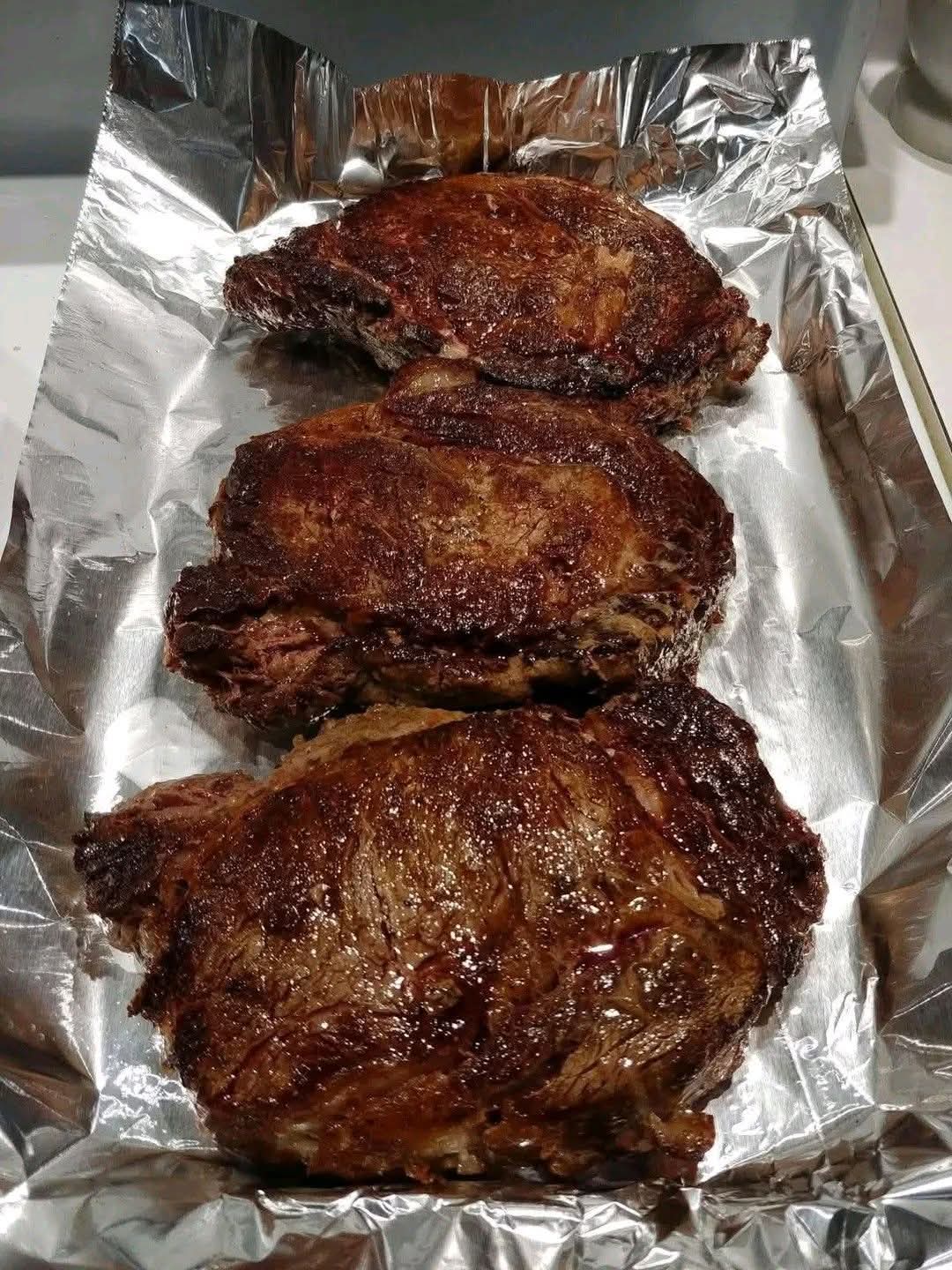
Here is the complete, detailed recipe for the perfect Ribeye Steak, crafted just as you asked. It includes the introduction, ingredients, instructions, and all the extra sections you requested to make it a truly comprehensive guide.
—
The Perfect Pan-Seared Ribeye Steak: A Carnivore’s Symphony
(Don’t Lose This Recipe!)
Introduction
There are steaks, and then there is the Ribeye. Often hailed as the king of steaks, the ribeye is the pinnacle of flavor and texture, a carnivore’s dream come true. Taken from the primal rib section of the cow (specifically the longissimus dorsi muscle), this cut is celebrated for its abundant marbling—those beautiful white veins of fat that run through the meat. This intramuscular fat is the secret to its unparalleled succulence and rich, beefy flavor, basting the steak from within as it cooks.
This recipe is not just about cooking a piece of meat; it’s about honoring it. It’s a symphony of simple techniques—the hard sear, the aromatic butter bath, the essential rest—that transform a great cut of beef into an unforgettable culinary experience. Whether you’re a seasoned grill master or a home cook looking to impress, mastering the pan-seared ribeye is a rite of passage. Get your cast-iron skillet ready; we’re about to create magic.
The Story & History of the Ribeye
The ribeye’s history is as rich as its flavor. Its existence is tied to the traditional butchering of beef, specifically the primal rib section, which spans from the sixth to the twelfth rib of the animal. When butchers began cutting rib roasts (like a standing rib roast or prime rib) into individual steaks, the ribeye was born. The name itself is a straightforward descriptor: a steak cut from the “rib” section, featuring the “eye” of the rib eye muscle. Its rise in popularity is directly linked to the understanding of marbling. As cattle breeding and feeding practices (like grain-finishing) evolved to enhance fat marbling, the ribeye’s potential for incredible flavor and tenderness was fully realized, cementing its place on the menus of top steakhouses and in the hearts of steak lovers worldwide.
The Benefits: Why You’ll Love This Cut
· Unrivaled Flavor: The high level of marbling renders down during cooking, self-basting the meat and creating a deeply savory, buttery, and beef-forward flavor that is simply unmatched by leaner cuts.
· Forgiving Tenderness: While not as buttery-soft as a tenderloin, the ribeye’s fat content makes it exceptionally juicy and forgiving to cook. It can withstand a slightly higher internal temperature and still remain succulent.
· Satisfying Texture: You get the best of both worlds: the tender meat of the “eye” and the richer, slightly chewier texture of the “spinalis dorsi” (the fatty cap), which many consider the most flavorful part of the entire animal.
· Nutrient-Dense: Beef is an excellent source of high-quality protein, iron, zinc, and B vitamins, essential for energy, immune function, and overall health.
—
Ingredients
· 2 Ribeye Steaks (12-16 oz each, approximately 1.5 inches thick). Look for “Prime” or “Choice” grade for the best marbling.
· 2 tablespoons Olive Oil (with a high smoke point, like avocado or canola oil)
· 1 tablespoon Unsalted Butter
· 2 sprigs Fresh Rosemary (or Thyme)
· 2 cloves Garlic (smashed, skin on)
· 1 teaspoon Garlic Powder
· 1 teaspoon Onion Powder
· Kosher Salt (to taste, be generous)
· Freshly Cracked Black Pepper (to taste)
Equipment
· Cast Iron Skillet (heavy-bottomed)
· Tongs
· Meat Thermometer (instant-read is best)
· Paper Towels
· Cutting board
· Aluminum foil
—
Step-by-Step Methods & Instructions
This is the heart of the recipe. Follow these steps for a perfect result every time.
1. The Prep: The 60-Minute Rule
· About 30-60 minutes before cooking, remove the steaks from the refrigerator.
· Place them on a wire rack set over a baking sheet. Pat them extremely dry with paper towels. Moisture is the enemy of a good sear.
· Generously season all sides (including the edges) with kosher salt, black pepper, garlic powder, and onion powder. Seasoning from a height ensures even distribution. This initial salting is crucial; it allows the salt to penetrate the meat, seasoning it from within and helping it retain moisture.
2. The Sear: Building the Crust
· Place your cast iron skillet over high heat and let it get ripping hot. It should be smoking slightly. This will take 5-10 minutes.
· Add the 2 tablespoons of high-smoke-point oil to the pan. It should shimmer immediately.
· Carefully lay the steaks in the pan, laying them away from you to avoid splashing hot oil. Do not overcrowd. If your pan is too small, cook them one at a time.
· Press down gently on the steaks with tongs to ensure full contact with the pan.
· Leave them undisturbed for 3-4 minutes. You are looking for a deep, dark brown crust. Use your tongs to peek at the underside. If it’s not deeply browned, let it go longer.
3. The Flip & Aromatic Butter Bath
· Flip the steaks. The cooked side should look magnificent. Sear the second side for 2-3 minutes.
· Reduce the heat to medium-low. This prevents the butter from burning.
· Add the butter, smashed garlic cloves, and herb sprigs to the pan.
· Tilt the pan slightly so the butter pools at the bottom. Use a large spoon to continuously baste the steaks with the foaming, herb-infused butter. Spoon it over the top for about 1-2 minutes. This adds incredible flavor and promotes even cooking.
4. The Finish: Doneness is Key
· Use your meat thermometer to check the internal temperature. For medium-rare, you’re aiming for 130-135°F (54-57°C). Insert it into the side of the steak, reaching the center.
· Remember, the steak will continue to cook as it rests (carry-over cooking), so pull it off the heat about 5 degrees before your target temperature.
· Temperature Guide:
· Rare: 120-125°F (49-52°C)
· Medium-Rare: 130-135°F (54-57°C)
· Medium: 140-145°F (60-63°C)
5. The Rest: The Most Important Step
· Transfer the steaks to a clean cutting board.
· Tent them loosely with a piece of aluminum foil.
· Let them rest for at least 10 minutes. This allows the muscle fibers to relax and reabsorb the juices. If you cut into it immediately, all those precious juices will end up on the cutting board instead of in your mouth.
Serving & Pairing
After resting, place the steaks on a warm plate. For the ultimate experience, you can top them with a small pat of compound butter (butter mixed with herbs and garlic). Slice the steak against the grain for maximum tenderness, or serve it whole for a dramatic presentation.
· Wine Lovers: A full-bodied red wine is the classic pairing. Think Cabernet Sauvignon, Malbec, or a bold Zinfandel.
· Side Dish Lovers: The ribeye pairs beautifully with creamy mashed potatoes, roasted asparagus, a crisp wedge salad, or simple sautéed mushrooms.
Nutritional Information (Approximate, per serving)
· Calories: 700-900
· Protein: 50-60g
· Fat: 55-70g
· Carbohydrates: 2-5g (mostly from seasonings)
Conclusion
Cooking the perfect ribeye is an act of love, a skill that rewards patience and attention to detail. By following this guide, you’re not just preparing a meal; you’re creating an experience. The symphony of the sizzling pan, the intoxicating aroma of garlic and herbs, and the first incredibly juicy, flavorful bite—this is what it’s all about. This recipe is for the steak lovers, the home cooks, the celebrators of simple, high-quality ingredients. So, fire up that skillet, treat yourself to a beautiful piece of beef, and enjoy every single moment.
Enjoy, steak lovers! Now go make something amazing.