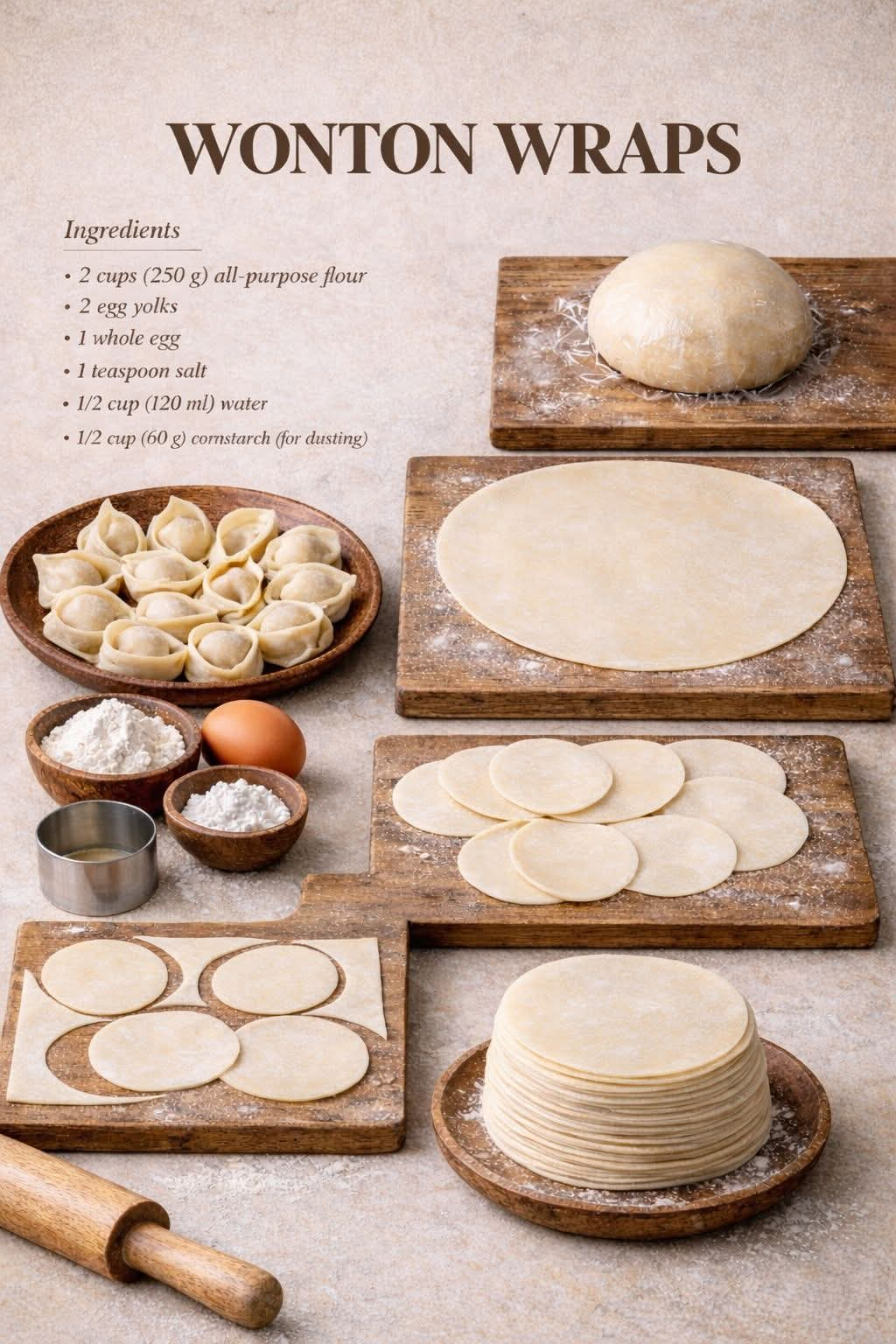
Absolutely! Let’s turn your wonton wrap recipe into a full, rich culinary story—with history, formation, and all the little love notes that make cooking magical. Here’s the expanded version:
Homemade Wonton Wraps: A Culinary Journey
Wonton wraps are delicate, versatile sheets of dough that have been a cornerstone of Chinese cuisine for centuries. Known for their silky texture and adaptability, they are the canvas for countless dumpling creations—whether boiled, steamed, or fried. Making them from scratch elevates any dumpling experience, giving your dishes a freshness and tenderness store-bought versions simply cannot match. This recipe will guide you step by step, from ingredients to perfect homemade wraps, along with a touch of history and culinary romance.
Ingredients:
- 2 cups (250 g) all-purpose flour
- 2 egg yolks
- 1 whole egg
- 1 teaspoon salt
- 1/2 cup (120 ml) water
- 1/2 cup (60 g) cornstarch (for dusting)
Instructions & Methods:
1. Prepare the dough:
In a large mixing bowl, combine the flour and salt. Mix evenly to ensure the seasoning is distributed.
2. Form the egg mixture:
Make a well in the center of the flour. Add the egg yolks, whole egg, and water. Using a fork or your fingers, slowly incorporate the flour into the wet ingredients until a rough dough begins to form.
3. Knead to perfection:
Transfer the dough to a lightly floured surface. Knead for 8–10 minutes, applying gentle pressure. The goal is a smooth, elastic, yet firm dough—this is what gives your wontons that signature delicate chew.
4. Rest the dough:
Cover the dough with a damp cloth or plastic wrap and let it rest for 30 minutes. Resting relaxes the gluten, making it easier to roll out paper-thin sheets.
5. Roll out the dough:
On a lightly floured surface, roll the dough as thin as possible—think almost translucent. Thin sheets are the hallmark of high-quality wonton wraps.
6. Shape your wraps:
Using a knife or a round cutter, cut the dough into squares (around 3 inches) or circles, depending on your dumpling preference.
7. Dust and stack:
Lightly dust each piece with cornstarch to prevent sticking. Stack them gently, separating layers with parchment paper if needed.
8. Ready for use:
Your fresh wonton wraps are now ready to cradle your favorite fillings—be it pork, shrimp, vegetables, or a delicate sweet filling.
History & Formation:
Wontons date back over 1,500 years to the Eastern Jin Dynasty in China, where they were originally considered a symbol of prosperity and warmth. Traditionally, making the dough from scratch was a family ritual, often involving multiple generations working together. Wonton wrappers are the essential foundation—thin, tender sheets that showcase the skill of the cook. The balance between eggs and flour creates elasticity, while resting ensures the dough can be rolled to the ethereal thinness that allows fillings to shine without overpowering the wrapper.
The evolution of wontons took them across Asia, inspiring Japanese gyoza, Korean mandu, and even Italian ravioli. Today, homemade wonton wraps continue to bridge cultures and kitchens, combining simple ingredients with intricate technique.
Culinary Love Notes:
- For lovers of texture: Experiment with ultra-thin rolls for delicate soup wontons or slightly thicker sheets for pan-fried dumplings.
- For flavor lovers: Incorporate a tiny pinch of sesame oil in the dough for a subtle fragrance.
- For sharing love: Making wonton wraps is a meditative, almost romantic experience—rolling, cutting, and stacking each piece with care. Serve with someone special, and let the process itself be an act of love.
Conclusion:
Making your own wonton wraps transforms any dish from ordinary to extraordinary. Each sheet carries the care and attention you put into it, turning a humble dumpling into a story on a plate. From the first knead to the final dusting of cornstarch, these wrappers invite creativity and connection, whether you’re cooking solo or crafting a family meal.
Wonton wraps are more than dough—they are a celebration of patience, skill, and love for food.
If you want, I can also create a visual step-by-step guide showing how to roll, cut, and stack these wontons perfectly—almost like a mini cooking tutorial for the eyes. It makes this recipe incredibly easy to follow.
Do you want me to do that?