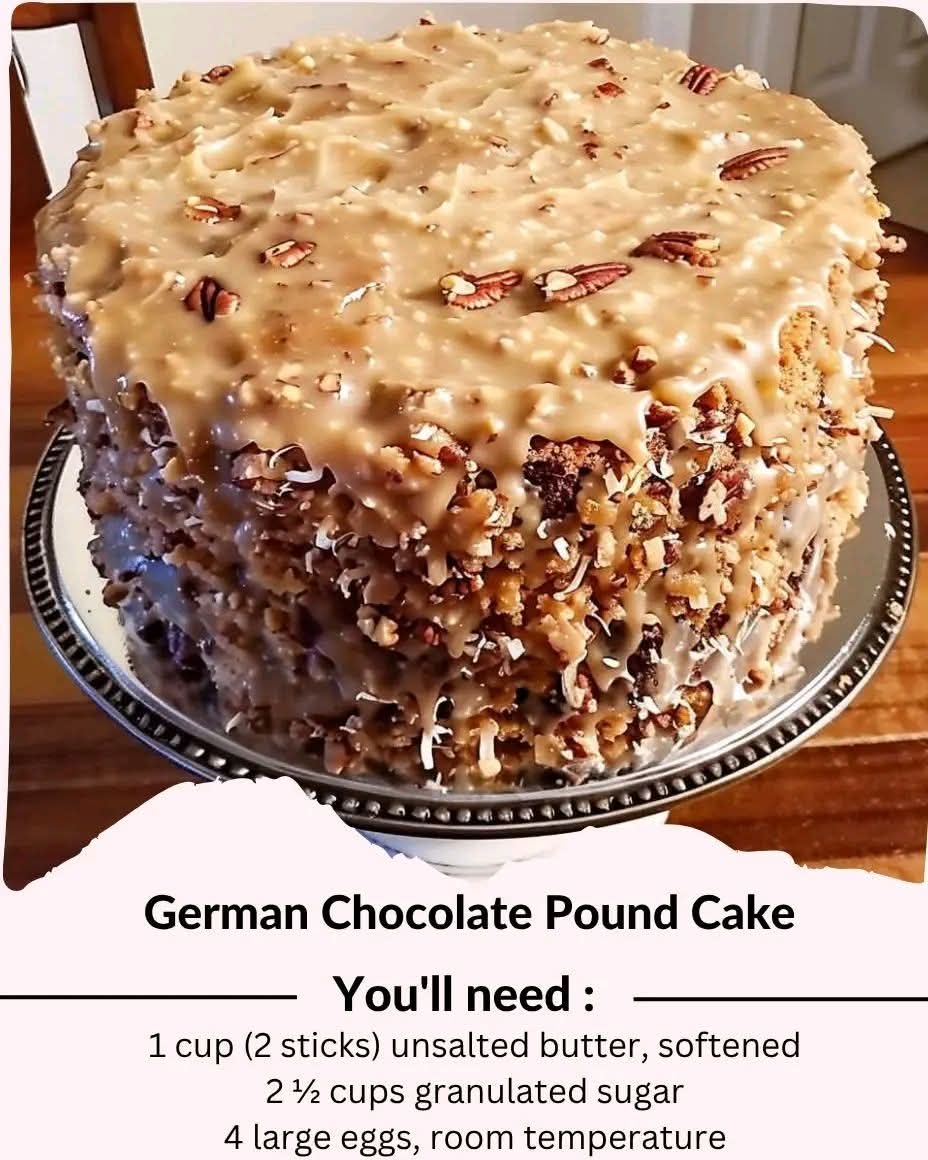
Of course! Here is a comprehensive guide to German Chocolate Pound Cake, transformed into a detailed article that includes all the elements you’ve requested.
The Ultimate German Chocolate Pound Cake: A Decadent Fusion of Two Classics
Introduction
Few desserts can claim the comforting familiarity of a pound cake while also offering the rich, complex allure of a layer cake. The German Chocolate Pound Cake masterfully bridges this gap, creating a dessert that is both unapologetically indulgent and wonderfully simple. It takes the dense, buttery crumb of a traditional pound cake and infuses it with the deep, malty sweetness of German’s chocolate. The result is a cake that stands tall on its own, yet many variations elevate it further with the iconic coconut-pecan frosting that defines its namesake . Whether enjoyed with a morning coffee or as a grand finale to a special dinner, this cake is a true testament to the magic of baking.
The History: An American Classic with a German Name
The story of this cake is a fascinating lesson in culinary misnomers. Despite its name, German Chocolate Cake is not from Germany. Its origin story begins in 1852 with an English-American baker named Samuel German. While working for the Baker’s Chocolate Company, he developed a type of dark baking chocolate that had a higher sugar content than other baking chocolates of the time. The chocolate was named “German’s Sweet Chocolate” in his honor .
The cake itself didn’t appear for another century. In 1957, a Dallas, Texas, homemaker named Mrs. George Clay sent a recipe for “German’s Chocolate Cake” to a local newspaper . The recipe, which used the namesake chocolate, became an instant sensation. The parent company, General Foods, which owned Baker’s, distributed the recipe nationwide, and it quickly became a staple in American kitchens. At some point during this widespread adoption, the possessive “German’s” was dropped, leading to the common misconception that the cake originated in Germany. The German Chocolate Pound Cake is a more recent evolution, combining the ease and shape of a pound cake with the beloved flavor profile of that 1957 classic .
The Formation: Building the Perfect Pound Cake
The “formation” of a perfect German Chocolate Pound Cake lies in its structure and the science of its ingredients. A classic pound cake gets its name from its original recipe: a pound of butter, a pound of sugar, a pound of eggs, and a pound of flour. While this version has been adjusted for flavor and texture, the principle of a dense, rich crumb remains.
The magic of this specific cake is in the formation of its flavor layers:
· The Foundation (The Batter): The creaming of butter and sugar creates air pockets, giving the cake lift. The addition of eggs provides structure, while buttermilk adds a gentle tang and activates the baking soda for a tender crumb .
· The Core (The Chocolate): The melted German’s Sweet Chocolate is the heart of the cake. Unlike semi-sweet or unsweetened chocolate, it provides a mellow, less bitter cocoa flavor that allows the butter and sugar to shine through .
· The Crown (The Frosting): For those who choose to add it, the coconut-pecan frosting is a separate formation process. It’s a cooked custard made with evaporated milk, egg yolks, and butter, which is then thickened and finished with coconut and pecans . This creates a rich, textured topping that contrasts beautifully with the smooth cake.
Ingredients
For this recipe, we will create a classic German Chocolate Pound Cake with an optional, authentic coconut-pecan topping. The recipes are synthesized from several trusted sources to create a definitive version .
For the Chocolate Pound Cake:
· 1 cup (2 sticks) unsalted butter, softened (plus more for greasing the pan)
· 2 cups granulated sugar
· 4 large eggs, room temperature
· 2 teaspoons vanilla extract
· 2½ cups all-purpose flour (plus more for dusting the pan)
· ½ teaspoon baking soda
· 1 teaspoon salt
· 1 cup buttermilk, room temperature
· 4 ounces German’s Sweet Chocolate, melted and cooled slightly
For the Coconut-Pecan Frosting (Optional, but recommended):
· 1 cup evaporated milk
· 1 cup granulated sugar
· 3 large egg yolks
· ½ cup (1 stick) unsalted butter, cut into pieces
· 1 teaspoon vanilla extract
· 1 cup sweetened shredded coconut
· 1 cup chopped pecans
Instructions and Methods
Follow these steps carefully for a perfect cake every time.
Step 1: Preparation (Mise en Place)
Preheat your oven to 325°F (160°C) . Generously grease a 10-inch Bundt or tube pan with butter and dust it with flour. Tap out the excess flour. This is crucial for a clean release. In a small saucepan, melt the 4 ounces of German’s Sweet Chocolate over low heat, stirring constantly. Once smooth, remove from heat and set aside to cool .
Step 2: Creaming Butter and Sugar
In a large mixing bowl, beat the softened butter and granulated sugar with an electric mixer on medium speed until the mixture is light, fluffy, and pale in color. This process, which takes about 3-5 minutes, incorporates air that will help leaven the cake .
Step 3: Incorporating Wet Ingredients
Add the eggs one at a time, beating well after each addition to ensure a smooth emulsion. Scrape down the sides of the bowl as needed. Mix in the vanilla extract .
Step 4: Combining Dry Ingredients
In a separate, medium-sized bowl, whisk together the all-purpose flour, baking soda, and salt. This ensures the leavening agent and salt are evenly distributed throughout the flour .
Step 5: Alternating Additions
With the mixer on low speed, add the dry ingredients to the butter mixture in three additions, alternating with the buttermilk. Start and end with the dry ingredients. For example: add 1/3 of the flour, then half the buttermilk, then another 1/3 of the flour, the rest of the buttermilk, and finally the last 1/3 of the flour. Mix until just combined after each addition. Do not overmix .
Step 6: The Final Addition
Pour the cooled, melted chocolate into the batter. Mix on low speed just until the chocolate is evenly incorporated and the batter is smooth .
Step 7: Baking
Pour the batter into the prepared pan and spread it evenly. Bake for 65 to 75 minutes, or until a long toothpick or cake tester inserted into the center comes out clean or with a few moist crumbs .
Step 8: Cooling
Place the pan on a wire rack and let the cake cool in the pan for about 15 minutes. Then, invert the pan onto the rack to release the cake. Allow it to cool completely before adding any glaze or frosting .
Step 9: Making the Frosting (Optional)
While the cake cools, prepare the frosting. In a medium saucepan over medium heat, whisk together the evaporated milk, sugar, egg yolks, and butter. Cook, stirring constantly, until the mixture thickens and turns a light golden color. This will take about 10-12 minutes .
· Remove from heat and immediately stir in the vanilla, shredded coconut, and chopped pecans.
· Let the frosting cool to room temperature until it reaches a spreadable consistency. It will continue to thicken as it cools.
Step 10: Assembly
Once the cake is completely cool, generously spread the coconut-pecan frosting over the top, allowing it to drip seductively down the ridges of the Bundt cake .
Benefits (and Joys) of This Cake
While we might not call it a health food, this cake offers several non-nutritional benefits:
· Stress Relief: The process of baking—creaming butter, mixing batter, and watching it rise—can be a meditative and rewarding stress reliever.
· Comfort Food: The rich, sweet flavors provide a sense of comfort and nostalgia, making it a perfect “feel-good” dessert.
· Versatility: It’s elegant enough for a dinner party, yet simple enough for a family Sunday supper. It can be served plain, with glaze, or with the classic frosting .
· Crowd-Pleaser: The combination of chocolate, coconut, and pecans has universal appeal, making it a guaranteed hit at any gathering.
· Freezer-Friendly: This cake freezes exceptionally well (without the frosting), allowing you to have a homemade dessert ready for unexpected guests .
Nutrition Information
Please note that these values are estimates and will vary based on specific ingredients, serving sizes, and whether you include the coconut-pecan frosting. The following is an approximate range based on recipes that include the frosting .
Nutrient Approximate Value Per Slice
Calories 440 – 580 kcal
Total Fat 22g – 32g
Saturated Fat 7g – 16g
Carbohydrates 48g – 58g
Sugar 30g – 42g
Protein 5g – 8g
Cholesterol 55mg – 130mg
Sodium 210mg – 290mg
Note: A slice is typically considered 1/12 to 1/16 of the cake.
Lovers of German Chocolate Pound Cake
This cake is for the lovers of:
· Contrast: Those who appreciate the dense, sturdy crumb of a pound cake against the gooey, textured richness of a coconut-pecan frosting.
· Nostalgia: Anyone who grew up with a boxed German chocolate cake mix or a family recipe and seeks to revisit that flavor in a new form.
· Simplicity: Bakers who love the ease of a one-pan cake but don’t want to sacrifice an ounce of flavor or decadence.
· All Things Coconut and Pecan: If the combination of toasted nuts and sweet, shredded coconut is your weakness, this cake is your destiny.
Conclusion
German Chocolate Pound Cake is more than just a dessert; it’s a delicious piece of culinary history reimagined. It pays homage to Samuel German’s 19th-century chocolate and a 20th-century Texas homemaker’s creativity, all baked into the timeless shape of a pound cake. With its incredibly moist crumb and the option of a signature decadent topping, this cake offers an unforgettable experience for the baker and all who are lucky enough to get a slice. Whether you’re a seasoned baker or a novice, this recipe is an invitation to create a little piece of American dessert history in your own kitchen. So, preheat your oven, and get ready to fall in love with a new classic.