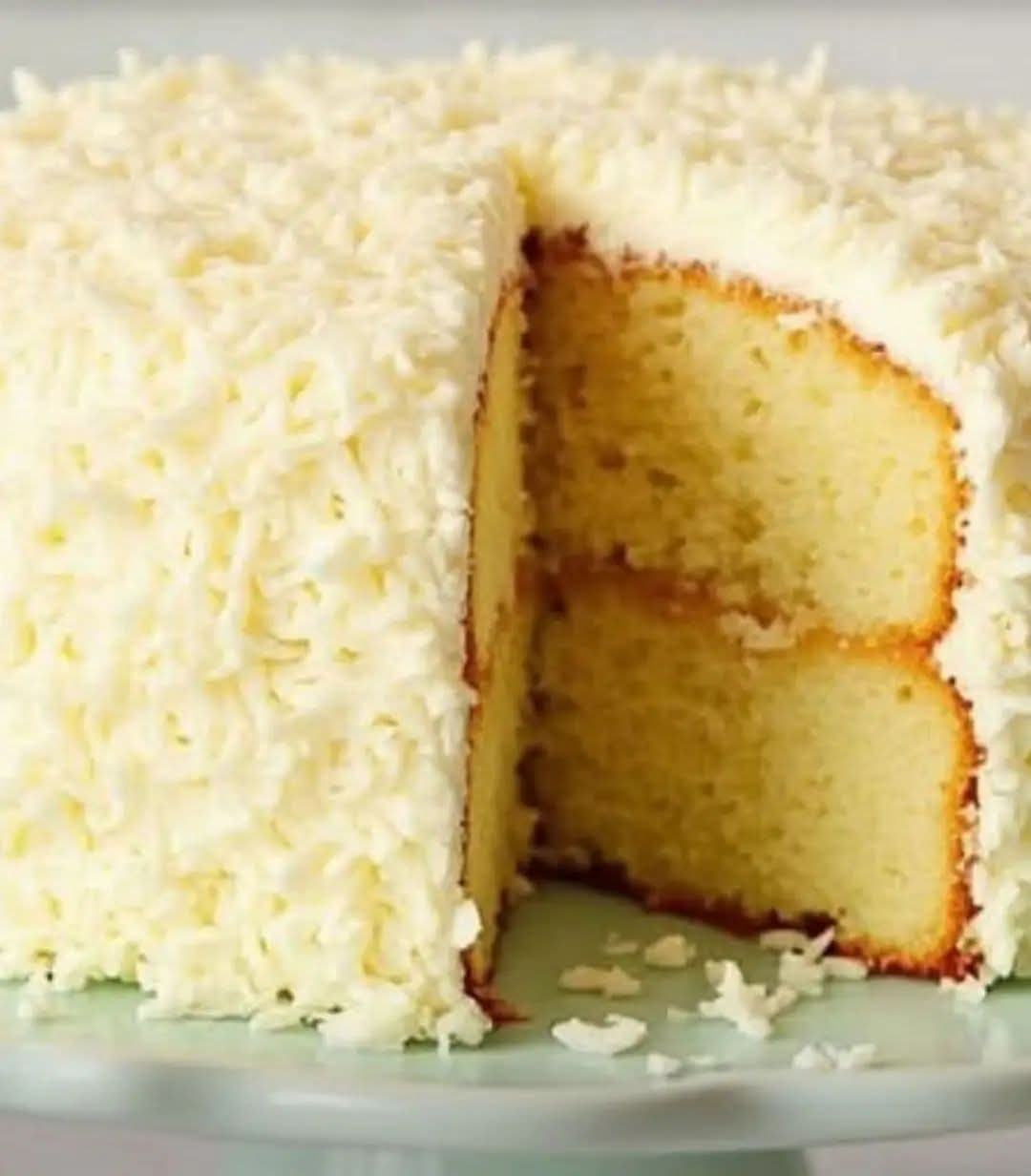
Here is a comprehensive guide to Coconut Cake, crafted as you requested, covering everything from its history to a detailed recipe and its cultural significance.
—
The Quintessential Coconut Cake: A Slice of Heaven
Introduction
There are cakes, and then there is Coconut Cake. It is a dessert that evokes images of celebratory spring tables, warm Southern hospitality, and the pure, unadulterated joy of a perfect bite. This is not merely a cake with a coconut flavor; it is a symphony of textures and tastes. Imagine biting into a slice of incredibly moist, tender cake crumb, its delicate sweetness acting as a canvas for the star of the show: coconut. Then, a cloud-like, silky frosting blankets the entire creation, generously showered with more toasted or sweetened coconut flakes.
This recipe is for the ultimate version of this classic. It’s a labor of love that yields a stunning, show-stopping dessert guaranteed to earn you the title of “legendary baker” among your friends and family. Whether for a birthday, a holiday, or simply to make an ordinary weekend extraordinary, this Coconut Cake is the answer.
The History & Lovers of Coconut Cake
History: The story of coconut cake is deeply intertwined with the history of the American South. Coconut itself was not native to the region but was imported from the Caribbean, making it an expensive and exotic ingredient in the 19th and early 20th centuries. As such, it was reserved for very special occasions.
The modern coconut cake rose to prominence with the invention of commercial coconut shredding and canning. The introduction of “Baker’s Angel Flake Coconut” in the late 1800s made the ingredient accessible to home bakers across the country. It quickly became a symbol of celebration, especially in the South, where it became the quintessential wedding and birthday cake. Its towering, snowy white layers were a symbol of purity and festivity, a tradition that continues to this day.
Lovers: The lovers of coconut cake are a devoted and passionate bunch. They are often traditionalists at heart, appreciating classic flavors and time-honored desserts. From grandmas in Georgia who have passed down their recipe for generations to modern foodies seeking the perfect balance of texture and flavor, coconut cake inspires fierce loyalty. It is the cake that people request for their last meal, the cake that sparks childhood memories, and the cake that often outsells all others at a bakery counter. Its lovers are anyone with a sweet tooth and a deep appreciation for pure, comforting, and celebratory flavors.
The Benefits (of Baking and Enjoying)
While we won’t pretend this is a health food, baking and enjoying a cake like this has its own set of “benefits”:
· Therapeutic Baking: The process of measuring, mixing, and creating something beautiful from simple ingredients is a proven stress reliever and a form of mindfulness.
· Social Connection: Food brings people together. Baking this cake is an act of love that fosters connection, celebration, and shared joy with the people you care about.
· Cultural Preservation: By making a classic recipe like this, you are participating in a long-standing culinary tradition, keeping a piece of cultural history alive.
· Pure, Unapologetic Pleasure: Sometimes, the greatest benefit is simply the profound joy of indulging in something delicious. It’s a treat for the soul.
The Formation (What Makes it Perfect)
A perfect coconut cake is defined by the harmony of its components:
1. The Crumb: It must be moist, tender, and fine-grained, with a structure strong enough to support the weight of the frosting. This is achieved by the perfect balance of butter, sugar, eggs, and buttermilk.
2. The Flavor: The coconut flavor should be present but not artificial. It comes from a combination of sources: coconut milk or cream in the batter, possibly coconut extract, and, most importantly, the texture and flavor of real coconut flakes in the filling and on the outside.
3. The Frosting: This is non-negotiable. A classic coconut cake demands a light, fluffy, and not-too-sweet frosting. Seven-minute frosting, ermine frosting (also known as boiled milk frosting), or a cream cheese frosting are the traditional choices. A thick, heavy buttercream would overwhelm the delicate cake.
4. The Texture: The contrast between the soft cake, the creamy frosting, and the slightly chewy or toasted coconut flakes is what makes every bite interesting and delightful.
—
The Ultimate Coconut Cake Recipe
Ingredients
For the Cake:
· 2 ½ cups (312g) all-purpose flour
· 2 ½ teaspoons baking powder
· ½ teaspoon baking soda
· ½ teaspoon salt
· ¾ cup (170g) unsalted butter, completely softened to room temperature
· 1 ¾ cups (350g) granulated sugar
· 3 large eggs, room temperature
· 1 ½ teaspoons vanilla extract
· 1 teaspoon coconut extract (optional, but recommended for a stronger flavor)
· 1 ½ cups (360ml) full-fat coconut milk (shake the can well before measuring)
For the Coconut Cream Cheese Frosting:
· 1 cup (226g) unsalted butter, slightly softened
· 16 oz (452g) full-fat block cream cheese, cold
· 5 cups (about 600g) powdered sugar
· 1 teaspoon coconut extract
· 1 teaspoon vanilla extract
· A pinch of salt
For the Filling & Garnish:
· 2 cups (about 160g) sweetened shredded coconut
· 1 cup (about 80g) unsweetened coconut flakes (for toasting and garnish)
—
Methods / Instructions
Step 1: Prepare (Mise en Place)
· Preheat your oven to 350°F (175°C). Grease and flour three 8-inch or two 9-inch round cake pans. Line the bottoms with parchment paper for easy release.
· In a medium bowl, whisk together the flour, baking powder, baking soda, and salt. Set aside.
· In a small bowl, stir the vanilla and coconut extracts into the coconut milk.
Step 2: Make the Cake Batter
· In a large bowl (or the bowl of a stand mixer fitted with the paddle attachment), beat the softened butter on medium speed until creamy, about 1 minute.
· Gradually add the granulated sugar and beat on medium-high speed until the mixture is light and fluffy, about 3-5 minutes. Scrape down the sides of the bowl as needed.
· Add the eggs one at a time, beating well after each addition until the yolk is fully incorporated.
· With the mixer on low speed, add the dry ingredients in three additions, alternating with the coconut milk mixture in two additions. Begin and end with the dry ingredients. (i.e., 1/3 flour, 1/2 milk, 1/3 flour, remaining milk, final 1/3 flour). Mix only until just combined after each addition. Do not overmix.
· Use a spatula to give the batter a final fold from the bottom of the bowl, ensuring everything is well incorporated.
Step 3: Bake
· Divide the batter evenly between the prepared pans and smooth the tops.
· Bake for 25-35 minutes, or until a toothpick inserted into the center comes out clean. The tops should be golden and spring back lightly when touched.
· Let the cakes cool in the pans on a wire rack for 10-15 minutes. Then, carefully turn them out onto the rack to cool completely. The cakes must be 100% cool before frosting, or the frosting will melt.
Step 4: Toast the Coconut
· While the cakes cool, spread the unsweetened coconut flakes on a baking sheet in a single layer.
· Toast in the 350°F (175°C) oven for 3-5 minutes, watching them VERY carefully. They burn quickly! Stir once halfway through. Toast until they are just turning golden and smell nutty. Remove from the oven and let cool completely.
Step 5: Make the Frosting
· In a large bowl, beat the slightly softened butter on medium speed until smooth and creamy, about 2 minutes.
· Add the cold cream cheese and beat on medium-high speed until the mixture is completely combined, smooth, and fluffy, about 2-3 minutes. Scrape the bowl well. (Using cold cream cheese helps prevent a runny frosting).
· Reduce the mixer speed to low and gradually add the powdered sugar, one cup at a time, mixing until incorporated. Once all the sugar is added, add the coconut extract, vanilla extract, and salt.
· Increase speed to medium-high and beat for another 1-2 minutes until the frosting is light, fluffy, and spreadable.
Step 6: Assemble the Cake
· Place one cake layer on your serving plate or cake stand. Spread an even layer of frosting on top. Sprinkle generously with about ½ cup of the sweetened shredded coconut.
· Place the second cake layer on top. Repeat the frosting and sweetened coconut sprinkle.
· Place the final cake layer on top (if using three layers). Apply a thin “crumb coat” of frosting all over the entire cake. This is a thin layer that traps any loose crumbs. Refrigerate for 15-20 minutes to set the crumb coat.
· Once the crumb coat is firm, apply the final, generous layer of frosting all over the top and sides of the cake. Use an offset spatula to create swirls or a smooth finish.
· Immediately, while the frosting is still soft, gently press the toasted unsweetened coconut flakes all over the sides and on top of the cake for a beautiful, elegant finish.
—
Nutrition (Approximate per slice, based on 16 slices)
· Calories: 650-750
· Fat: 38-45g
· Saturated Fat: 25-30g
· Carbohydrates: 75-85g
· Sugar: 55-65g
· Protein: 6-8g
(Please note: This is an estimate and will vary based on specific ingredients and portion size.)
Conclusion
Baking a coconut cake from scratch is an act of devotion. It takes time, patience, and a little bit of love. But as you stand back and admire your creation—the towering layers, the fluffy white frosting, the beautiful toasted coconut clinging to the sides—you’ll know it was all worth it. The first forkful, met with murmurs of delight from those you share it with, is the ultimate reward. This isn’t just a recipe; it’s an invitation to create a moment, a memory, and a new tradition. So, preheat your oven, gather your ingredients, and get ready to bake the best coconut cake of your life.