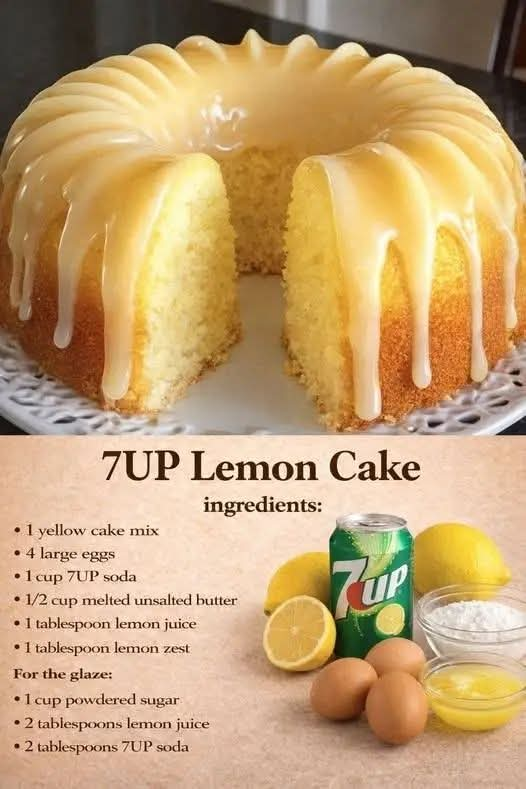
Here is a comprehensive guide to the classic 7UP Lemon Cake, featuring a detailed recipe, its fascinating history, and everything you need to know about this beloved dessert.
—
The Complete Guide to 7UP Lemon Cake: A Timeless Classic
Introduction
The 7UP Lemon Cake is more than just a dessert; it’s a slice of Americana. This cake is a nostalgic classic that has graced dinner tables, potlucks, and family gatherings for decades . What makes it so special is its unique ingredient: the lemon-lime soda, 7UP. The carbonation in the soda works its magic to create an incredibly moist, tender, and fine-grained crumb, while the citrus flavors perfectly complement the rich, buttery base of a traditional pound cake .
This recipe transforms simple ingredients into something truly spectacular. The result is a beautiful, golden-brown cake with a tangy-sweet lemon glaze that soaks into the warm cake, making every bite burst with flavor. Whether you’re a seasoned baker or trying it for the first time, this “don’t you lose it” recipe is a keeper that’s sure to become a favorite in your home.
The Story Behind the Cake
The history of 7UP cake is deeply intertwined with the story of the soda itself. 7UP was invented by Charles Leiper Grigg in St. Louis, Missouri, in 1929. Originally named “Bib-Label Lithiated Lemon-Lime Soda,” it was marketed as a health tonic and famously contained lithium citrate, a mood-stabilizing drug, until it was removed from the formula in 1948 .
The name “7UP” has been a subject of mystery for years. While many theories exist—from the drink having a pH level above 7 to containing seven ingredients—one popular story suggests the name was inspired by a cattle brand. As the story goes, Grigg saw a cattle brand that featured the number ‘7’ with the letter ‘U’ raised to its upper right side, which inspired the memorable trademark .
The recipe for 7UP cake rose to fame when the 7UP company included it in a promotional recipe booklet published in 1953 . It quickly became a popular novelty dessert, adored for its simplicity and the incredibly moist texture the soda provided. By the 1970s, it was a staple at “bunko club gatherings and church carry-ins,” cementing its status as a retro classic that home bakers continue to love today .
Ingredients
This recipe uses the core ingredients you provided, with a few essential additions for that classic 7UP Lemon Cake flavor.
For the Cake
· 1 cup (2 sticks) unsalted butter, softened – Provides richness and moisture.
· 3 cups granulated sugar – Sweetens the cake and helps create a tender crumb.
· 5 large eggs, at room temperature – Add structure and richness. Room-temperature eggs emulsify better, creating a smoother batter.
· 3 cups all-purpose flour – The structure of the cake.
· 3/4 cup 7UP (or other lemon-lime soda), at room temperature – The secret ingredient that makes the cake moist and light. Using it at room temperature helps it blend seamlessly .
· 2 tablespoons fresh lemon juice – Enhances the lemon flavor.
· 2 tablespoons lemon zest – Adds intense, fragrant lemon oil to the cake .
· 1 teaspoon vanilla extract – Rounds out the citrus flavors .
For the Lemon Glaze
· 2 cups powdered sugar – The base for the glaze, providing sweetness and body.
· 1/4 cup fresh lemon juice – Adds a tangy, tart contrast to the sweet cake.
· 2 tablespoons 7UP – Adds a little extra fizz and shine to the glaze .
Step-by-Step Instructions and Methods
Following these steps carefully will ensure your 7UP cake turns out perfectly moist and delicious.
Preparation (15 minutes):
1. Preheat and Prepare Pan: Preheat your oven to 325°F (165°C) . Generously grease and flour a 10-inch Bundt or tube pan. Ensuring every nook and cranny is coated will guarantee the cake releases cleanly after baking.
Making the Cake Batter (20 minutes):
1. Cream Butter and Sugar: In a large mixing bowl, use an electric mixer to cream the softened butter and granulated sugar together until the mixture is light, pale, and fluffy. This process incorporates air, which is crucial for a tender cake. This should take about 3-5 minutes .
2. Incorporate Eggs: Add the eggs one at a time, beating well after each addition. This gradual addition helps maintain the emulsion, preventing the batter from curdling.
3. Add Flavorings: Mix in the lemon zest, fresh lemon juice, and vanilla extract until they are evenly distributed .
4. Add Flour: Gradually add the flour to the batter, mixing on low speed just until combined. Do not overmix. Overdeveloping the gluten at this stage can result in a tough, dense cake.
5. Add the 7UP: Slowly pour in the 7UP and mix on low speed just until the batter becomes smooth. The batter will be thick and luxurious. It’s best if your 7UP is fresh and bubbly for the optimal texture .
Baking (75-85 minutes):
1. Pour and Bake: Pour the batter evenly into the prepared Bundt pan and smooth the top with a spatula.
2. Bake: Place the pan in the preheated oven and bake for 75 to 85 minutes . The baking time can vary depending on your oven, so start checking at the 70-minute mark. The cake is done when a long toothpick or skewer inserted into the center comes out clean or with just a few moist crumbs attached.
3. Initial Cooling: Once baked, remove the cake from the oven and place it on a wire rack. Allow it to cool in the pan for 10 to 15 minutes . This resting period allows the cake to set and firm up, making it easier to remove.
Making the Glaze and Finishing (10 minutes):
1. Make the Glaze: While the cake is cooling, prepare the lemon glaze. In a small bowl, whisk together the powdered sugar, fresh lemon juice, and 7UP until the mixture is completely smooth. Adjust the consistency by adding a little more sugar to thicken or a few drops of lemon juice to thin it out .
2. Glaze the Cake: Carefully invert the warm cake onto your serving platter. While the cake is still warm, drizzle the glaze evenly over the top, allowing it to cascade down the sides. The warmth of the cake will help the glaze soak in, creating a beautifully moist crust .
3. Set and Serve: Let the glaze set for about 10-15 minutes before slicing. This allows the glaze to firm up slightly, making for cleaner slices. Serve as is, or with fresh berries and a dollop of whipped cream .
Nutrition Information
This is a rich, indulgent dessert. The following nutrition information is an estimate for one slice of cake with glaze, based on a cake sliced into 12-16 servings.
Nutrient Approximate Amount Per Serving
Calories 450-550
Total Fat 18-22g
Saturated Fat 10-13g
Cholesterol 100-130mg
Sodium 150-250mg
Total Carbohydrate 70-85g
Dietary Fiber 0-1g
Total Sugars 50-65g
Protein 4-6g
Note: These values are estimates based on similar homemade recipes and commercial products . Actual nutritional content can vary based on specific ingredients, portion sizes, and preparation methods.
Benefits and Advantages of This Recipe
· Unmatched Moisture: The carbonation in the 7UP creates a uniquely tender and moist crumb that stays fresh for days.
· Easy to Make: Despite its impressive results, the recipe is straightforward and doesn’t require any complicated techniques.
· Bold, Bright Flavor: The combination of lemon zest, juice, and the lemon-lime soda provides a refreshing citrus flavor that isn’t overly tart.
· Perfect for Any Occasion: It’s elegant enough for a holiday dessert table yet simple enough for a casual family dinner .
· A Crowd-Pleaser: Its nostalgic charm and delicious taste make it a hit with people of all ages.
Serving Suggestions
This cake is delightful on its own, but you can elevate it with simple additions:
· With Berries: Serve each slice with a handful of fresh raspberries, blueberries, or strawberries. Their slight tartness and color complement the cake perfectly .
· With Whipped Cream or Ice Cream: A dollop of lightly sweetened whipped cream or a scoop of vanilla bean ice cream adds a lovely creamy contrast .
· As-is with Coffee or Tea: A simple slice of this cake alongside a cup of hot coffee or afternoon tea makes for a perfect, simple pleasure.
Why Bakers Love This Recipe (A Note from its Lovers)
“Don’t Lose This Recipe” is a title well-earned. Those who have baked it understand why it has stood the test of time. It evokes a sense of nostalgia, reminding many of their mother’s or grandmother’s kitchen . It’s the cake that people request for their birthdays and the one that disappears first at a bake sale. Bakers love its reliability—it works every time, producing a stunning, delicious cake with minimal fuss. It’s a beloved recipe passed down through generations, a true classic that continues to create sweet memories.
Conclusion
The 7UP Lemon Cake is a testament to the magic of simple, clever baking. With its rich history, incredibly moist texture, and bright, sunny flavor, it’s a recipe that truly deserves to be cherished and shared. By following this comprehensive guide, you’re not just baking a cake; you’re recreating a beloved piece culinary history. So, preheat your oven, grab a bottle of 7UP, and get ready to enjoy a timeless classic.