Absolutely! Let’s turn your mozzarella guide into a full, rich recipe write-up with all the elements you requested—history, method, formation tips, and a bit of a culinary love story around it. Here’s a comprehensive version:
Fresh Homemade Mozzarella Cheese – Classic & Quick Methods
Introduction
Few things capture the essence of fresh, creamy, and milky goodness like homemade mozzarella. Soft, smooth, and slightly tangy, this cheese transforms any dish—whether melted atop a pizza, layered in a Caprese salad, or enjoyed simply with a drizzle of olive oil. Making mozzarella at home isn’t just about ingredients; it’s a ritual of patience, gentle hands, and love for food.
Mozzarella originates from Southern Italy, traditionally made from water buffalo milk, giving it a uniquely rich flavor and springy texture. Over time, cow’s milk became more common, and today, mozzarella is a worldwide favorite, celebrated for its melting qualities and fresh taste.
Whether you follow the classic rennet method or the quick acid method, this recipe ensures you can enjoy fresh, homemade mozzarella anytime.
Ingredients
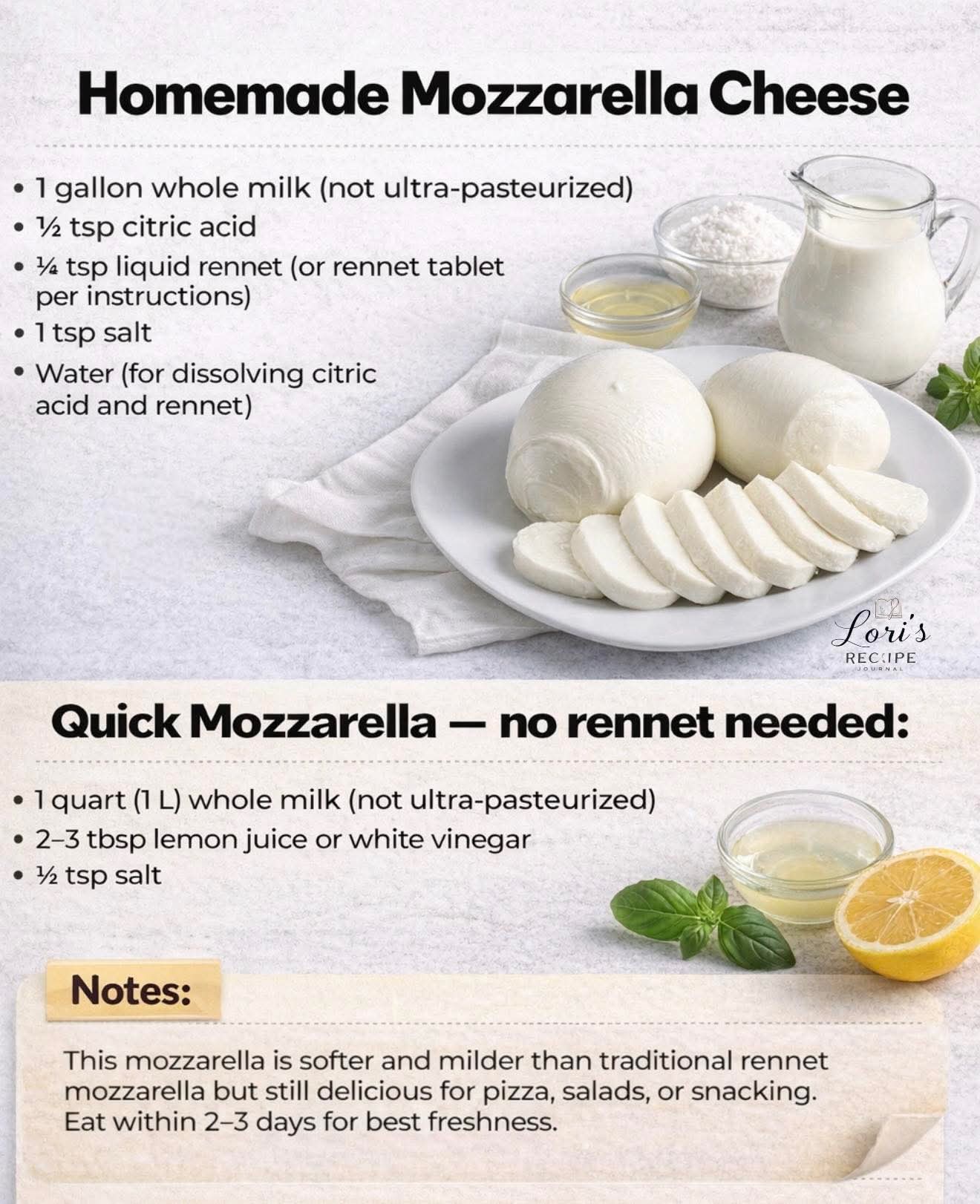
Classic Rennet Mozzarella (makes ~1 lb / 450 g)
- 1 gallon (3.8 L) whole milk (not ultra-pasteurized)
- 1 ½ tsp citric acid
- ¼ tsp liquid rennet (or rennet tablet per instructions)
- 1 tsp salt
- Water (for dissolving citric acid and rennet)
Quick & Easy Mozzarella (no rennet, makes ~8 oz / 225 g)
- 1 quart (1 L) whole milk (not ultra-pasteurized)
- 2–3 tbsp lemon juice or white vinegar
- ½ tsp salt
Instructions
Classic Mozzarella Method
1. Prepare the milk:
- Dissolve citric acid in ¼ cup water.
- Pour milk into a large pot and stir in the citric acid solution.
- Slowly heat the milk to 90°F (32°C), stirring gently to prevent scorching.
2. Add rennet:
- Dissolve rennet in ¼ cup water.
- Stir milk gently for 30 seconds, then stop.
- Cover and let sit 5–10 minutes. The milk should set and look like custard, forming curds.
3. Cut the curds:
- Using a long knife, cut the curds into 1-inch cubes.
- Let rest for 5 minutes.
4. Cook curds:
- Slowly heat to 105°F (40°C), stirring gently occasionally.
- Turn off heat and continue gentle stirring for a few minutes.
5. Separate curds and whey:
- Using a slotted spoon, transfer curds to a microwave-safe bowl or large strainer.
- Press gently to remove excess whey.
6. Heat and stretch:
- Microwave curds 30–60 seconds until warm (or dip in hot water ~175°F / 80°C).
- Sprinkle salt over curds.
- Stretch and fold like taffy until smooth, shiny, and elastic. Shape into balls.
7. Cool:
- Place mozzarella balls in ice water for a few minutes to set.
- Store in the fridge in lightly salted water or vacuum-sealed. Best eaten within a few days.
Quick & Easy Mozzarella Method
1. Heat the milk:
- Pour milk into a saucepan and heat slowly to ~190°F (88°C), just before boiling. Stir occasionally.
2. Add acid:
- Remove from heat. Stir in lemon juice or vinegar slowly.
- Let sit 5 minutes. Curds will form.
3. Separate curds and whey:
- Scoop curds into a colander lined with cheesecloth.
- Press gently to remove excess whey.
4. Microwave/stretch (optional but best):
- Microwave curds 30–60 seconds until warm and pliable.
- Sprinkle salt and stretch/fold like taffy until smooth and elastic.
5. Shape and cool:
- Form into balls.
- Cool in ice water for a few minutes.
Note: This mozzarella is softer and milder than rennet-made mozzarella but still perfect for pizza, salads, or snacking. Eat within 2–3 days.
Methods & Techniques
- Stretching the curds: This step is key for that signature mozzarella elasticity. Warm the curds to make them pliable, then fold and pull repeatedly. The technique is similar to kneading dough but gentler.
- Curd cooking: Gradual heating helps expel whey while keeping curds tender. Avoid rapid temperature changes.
- Salting: Salt is added after curds form to enhance flavor and improve preservation.
Formation Tips
- Use fresh, high-quality milk—avoid ultra-pasteurized milk, as it won’t set properly.
- For classic mozzarella, patience is critical. Let the milk rest undisturbed after adding rennet for a smooth curd.
- Ice water bath at the end stops cooking and firms the cheese, making it easier to handle.
History & Culinary Love
Mozzarella has been a beloved Italian cheese since at least the 12th century. Originally made from water buffalo milk in Campania, it was celebrated for its creamy texture and fresh flavor. Today, homemade mozzarella evokes nostalgia and joy—every pull of warm, elastic curds is a small act of culinary love. Cheese lovers around the world cherish this simple yet magical process, connecting kitchens across centuries.
Conclusion
Making mozzarella at home is more than following a recipe—it’s a sensory experience: the warm scent of milk, the soft texture of curds, the satisfying pull and stretch, and finally, the first bite of fresh, milky goodness. Whether you choose the classic rennet method or the quick acid method, homemade mozzarella adds freshness, flavor, and heart to any dish.
Lovers of Mozzarella
- Pizza enthusiasts: Soft mozzarella melts perfectly, creating gooey, golden layers.
- Salad aficionados: Fresh mozzarella enhances Caprese or mixed greens with creamy texture.
- Snack lovers: Bite-sized balls with olive oil, herbs, or roasted tomatoes are irresistible.
If you want, I can also make a visual step-by-step diagram showing how to stretch and form mozzarella, which is super handy for first-timers. It would be like a mini cheese-making guidebook!
Do you want me to make that?