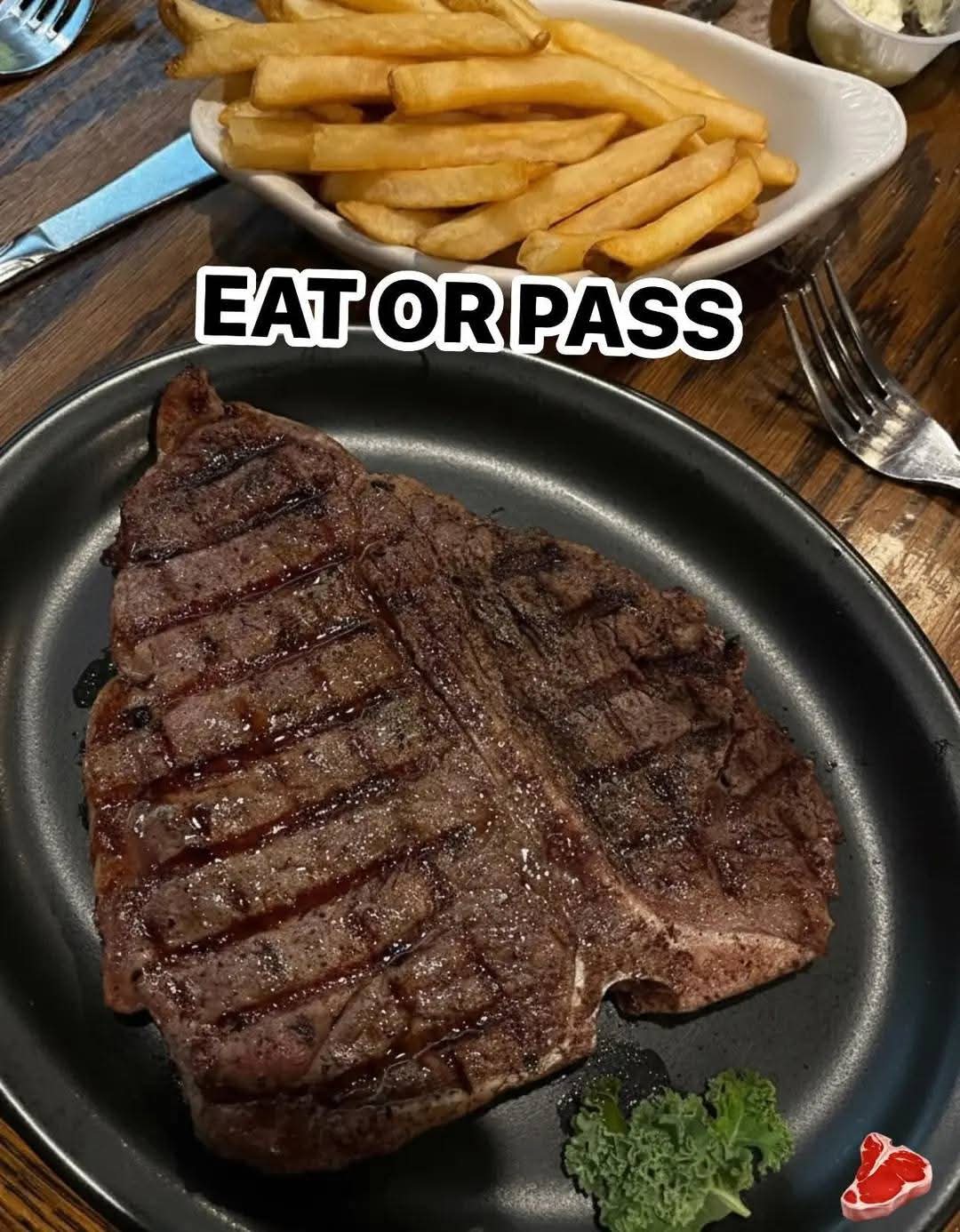
Here is a comprehensive guide to the T-bone steak, crafted to include all the elements you requested, from its rich history to a detailed cooking method and nutritional profile.
—
The Ultimate Guide to the T-Bone Steak: A Culinary Journey
Introduction
The T-bone steak is more than just a cut of meat; it is a carnivore’s celebration, a culinary icon that offers the best of both worlds on a single plate. Recognizable by its distinctive T-shaped bone, this steak is essentially two steaks in one, featuring the rich, beefy flavor of the New York Strip on one side and the tender, buttery texture of a piece of Tenderloin (filet mignon) on the other . This duality makes it a prized possession for grill masters and steak lovers alike. This guide will take you through everything you need to know about this magnificent cut, from its legendary history to a fail-proof recipe, ensuring you can create a restaurant-quality meal in your own kitchen.
The History of the T-Bone Steak
The story of the T-bone steak is as rich and layered as its flavor. While beef has been a symbol of status and sustenance for centuries, the T-bone as we know it has fascinating cultural touchstones, particularly in Europe.
The Legend of the Florentine Steak
One of the most famous preparations, the Bistecca alla Fiorentina, is steeped in legend. The lore connects it to the powerful Medici family of Florence, who would celebrate the feast of San Lorenzo (August 10th) by distributing and roasting large quantities of ox meat in the city’s squares for the population . The word “bistecca” itself is believed to be an Italianization of the English phrase “beef steak.” It is said that English merchants, present at these grand banquets, enthusiastically requested their familiar “beef steak,” and the name, and the love for the cut, stuck . Whether or not the legend is entirely accurate, it highlights the long-standing association of this particular cut with celebration and quality.
From European Nobility to American Tables
More broadly, in medieval Europe, beef was considered a food for the nobility, often reserved for special occasions and flavored with prized spices like pepper . The T-bone steak, with its two premium muscles, would have certainly been a cut for the upper classes. As Europeans traveled and settled in the Americas, they brought their butchery techniques and culinary preferences. The T-bone became a staple in the United States, particularly with the rise of the cattle industry and the culture of the American steakhouse. The term “porterhouse,” a larger version of the T-bone with a bigger tenderloin section, began appearing in American newspapers as early as the 1840s, cementing the cut’s place in the nation’s culinary identity .
The Anatomy and Formation of a T-Bone Steak
The formation of a T-bone steak is a lesson in butchery. It is cut from the short loin, a primal section of the beef animal located just behind the ribs . When the butcher saws through a lumbar vertebra, they create the characteristic “T” shape. This bone is the key to the steak’s identity, separating two distinct and highly desirable muscles:
· The Strip Steak (Top Loin): On the larger side of the bone lies a portion of the strip loin. This muscle is known for its robust, beefy flavor and a satisfying, firm texture.
· The Tenderloin: On the smaller side of the bone is a section of the tenderloin. This muscle is incredibly tender because it does very little work. It has a milder flavor and a famously buttery, melt-in-your-mouth texture .
To be officially classified as a T-bone by the USDA, the tenderloin must be at least 0.5 inches wide at its widest point. If the tenderloin section is larger than 1.25 inches, the steak is classified as a Porterhouse .
The T-Bone Steak Recipe
This recipe focuses on a classic pan-searing method, finished with butter and aromatics to create a gorgeous crust and a perfectly cooked interior.
Ingredients
· 1 large T-bone steak (about 1–1.5 inches thick, 24-32 oz): The star of the show. Aim for a well-marbled steak for the best flavor.
· 1 tbsp olive oil: For searing, due to its high smoke point.
· 1 tbsp unsalted butter: Adds richness and helps create a brown butter baste.
· 2 cloves garlic, smashed: To infuse the butter with aromatic flavor.
· Fresh rosemary or thyme sprigs (optional): For an additional layer of herbaceousness.
· Flaky sea salt (such as Maldon): For seasoning and a final textural garnish.
· Coarsely ground black pepper: For seasoning.
Methods and Instructions
1. Preparation – The Most Important Step:
· Remove the steak from the refrigerator 45 minutes to 1 hour before cooking. Place it on a wire rack set over a baking sheet. This allows it to come to room temperature, ensuring more even cooking .
· Pat the steak completely dry with paper towels. Moisture is the enemy of a good sear.
· About 30 minutes before cooking, generously season both sides and the edges of the steak with salt. This allows the salt to begin penetrating the meat. Reserve the pepper for right before it hits the pan, as it can burn and turn bitter during a long sear.
2. The Cooking Process – The Reverse Sear or Direct Sear:
While the user’s initial ingredients suggest a classic direct sear, we will incorporate the two-temperature philosophy for the best results . For a 1.5-inch steak, a modified direct sear with a butter baste works perfectly. You can also use the two-zone method below.
· Heat the Pan: Place a heavy-bottomed pan (preferably cast iron) over high heat for several minutes until it is smoking hot. Add the high-smoke-point oil (like avocado or vegetable oil), swirling to coat the pan.
· The Sear: Place the steak in the pan, laying it away from you to avoid splatter. Press it down gently to ensure full contact. Sear for 3-4 minutes without moving it, until a deep, brown crust forms.
· Flip and Baste: Flip the steak. Add the butter, smashed garlic, and herbs to the pan. Immediately tilt the pan slightly and use a large spoon to continuously scoop up the foaming butter and drizzle it over the steak. This basting action flavors the meat and helps cook it from the top. Continue for another 3-4 minutes for medium-rare.
· Check for Doneness: The most reliable method is to use an instant-read meat thermometer. For medium-rare, you are aiming for 125-130°F (52-54°C) . Remember, the tenderloin side will cook slightly faster than the strip side .
· Rest: Transfer the steak to a cutting board, placing the seared side up. Tent it loosely with foil and let it rest for 10 minutes. This is non-negotiable; it allows the juices to redistribute throughout the meat, ensuring every bite is succulent.
3. Serving:
· After resting, place the steak on a clean cutting board. If you wish, you can slice the two muscles off the bone and then cut them across the grain into thick slices .
· Finish with a final sprinkle of flaky sea salt and a crack of fresh black pepper. Serve immediately, perhaps with a simple side salad or grilled vegetables.
Nutrition Information
A T-bone steak is a nutrient-dense food, packed with protein and essential vitamins and minerals. The values below are based on a 3-ounce (85g) serving of cooked, lean T-bone steak with the fat trimmed .
Nutrient Amount % Daily Value (DV)*
Calories 180 9%
Protein 23g 46%
Total Fat 9g 12%
Saturated Fat 3.5g 18%
Monounsaturated Fat 3.9g –
Cholesterol 70mg 23%
Sodium 55mg 2%
Iron 2.99mg 17%
Zinc 3.87mg 35%
Vitamin B12 1.64mcg 68%
Niacin (Vitamin B3) 5.13mg 32%
Vitamin B6 0.63mg 37%
\*Percent Daily Values are based on a 2,000-calorie diet. This cut is also an excellent source of phosphorus and selenium .
The Benefits of Cooking and Enjoying T-Bone Steak
· Culinary Experience: Cooking a T-bone is a rewarding hands-on experience. Mastering the sear and baste provides a fundamental cooking skill applicable to many other dishes.
· Exceptional Flavor and Texture: The combination of the strip’s robust flavor and the tenderloin’s tenderness offers a diverse tasting experience in a single serving, making it a luxurious meal .
· High-Quality Protein: It provides a significant amount of complete protein, essential for muscle building and repair.
· Rich in Essential Nutrients: As shown in the nutrition table, it’s a powerhouse of B-vitamins (crucial for energy metabolism), iron (for healthy blood), and zinc (for immune function).
Lovers of the T-Bone Steak
The T-bone is for those who appreciate the theater and tradition of a great steak. Its lovers are:
· Traditionalists: Those who respect the history of butchery and want their steak “on the bone,” believing the bone adds flavor.
· Adventurous Eaters: People who enjoy the contrast of textures and flavors—from the firm bite of the strip to the fork-tender filet.
· Grill Masters and Home Cooks: It’s a cut that challenges and rewards the cook, a true test of skill that delivers immense satisfaction.
· Celebrators: From the Medici feasts to modern birthdays and anniversaries, the T-bone is a steak for sharing and for special occasions.
Conclusion
The T-bone steak is a masterpiece of bovine anatomy and a centerpiece of culinary tradition. It tells a story that spans from the noble banquets of Renaissance Florence to the sizzling grills of modern American backyards. By understanding its formation—the marriage of strip and tenderloin separated by the iconic T-shaped bone—you can appreciate its unique value. Armed with the proper technique of room-tempering, high-heat searing, butter basting, and essential resting, you can unlock its full potential. The result is more than just a meal; it’s a delicious, nutrient-rich experience to be savored. So, fire up the pan or the grill, and pay homage to one of the world’s greatest cuts of beef.