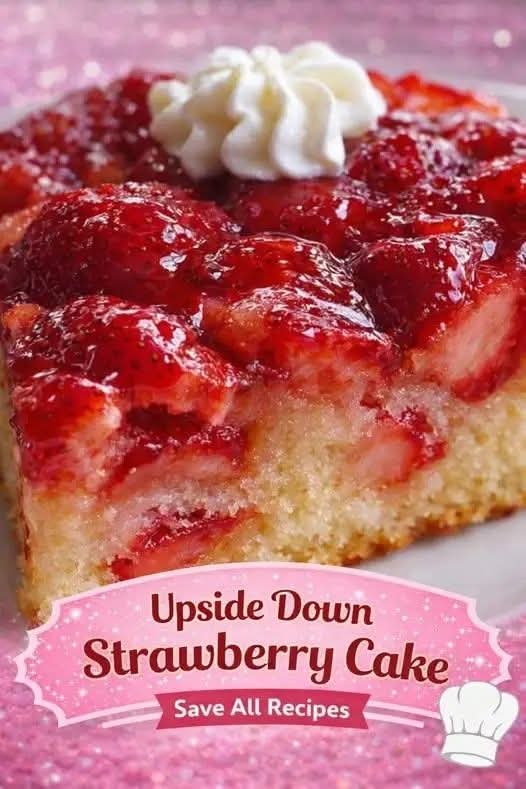
Here is a comprehensive guide to creating a stunning Upside-Down Strawberry Cake, complete with a detailed introduction, history, ingredient breakdown, step-by-step instructions, nutritional information, and more.
The Ultimate Guide to Upside-Down Strawberry Cake
Introduction
The Upside-Down Strawberry Cake is a luscious, nostalgic dessert that masterfully marries the vibrant sweetness of fresh strawberries with the tender richness of a buttery vanilla cake—served in glorious reverse. Unlike traditional layer cakes that hide their fruit within, this showstopping treat begins its journey caramelized and fruit-forward. Ripe strawberries are arranged artfully in the bottom of a buttered and sugared pan, then blanketed with a light, moist cake batter. As it bakes, the fruit tenderizes in a layer of butter and sugar, creating a delicate caramelized flavor and a glossy, ruby-red topping . After baking, the cake is inverted to reveal a beautiful mosaic of berries crowning a golden, tender crumb . It’s rustic yet elegant, simple to prepare yet deeply impressive—perfect for spring brunches, summer gatherings, or any moment that calls for a little edible poetry .
The History of Upside-Down Cake
The upside-down cake traces its roots to early American cuisine, with techniques dating as far back as the Middle Ages . It emerged as a clever, economical solution for home bakers, particularly during times when kitchen tools were limited. Before the widespread use of electric mixers and nonstick pans, the upside-down method, often baked in a cast-iron skillet, eliminated the need for delicate cake removal or complicated frosting .
While variations of fruit-topped cakes existed for centuries, the dessert gained massive popularity in the 1920s. In 1925, the Hawaiian Pineapple Company (now Dole) sponsored a national recipe contest to promote canned pineapple. Of the 60,000 submissions, about 2,500 were for a “Pineapple Upside-Down Cake.” The company used the contest’s success in aggressive advertising campaigns, cementing the dessert’s place in American culinary history .
The cake’s popularity during the Great Depression can also be attributed to its practicality—it was a great way to use up overripe fruit and required minimal, simple ingredients . While pineapple became the iconic standard, regional and seasonal variations flourished, with home cooks adapting the format for peaches, apricots, and eventually, strawberries as berry availability improved with refrigerated transport in the mid-20th century .
Today’s Upside-Down Strawberry Cake honors that legacy, blending European caramelization techniques (similar to a French Tarte Tatin) with American pantry practicality and a modern appreciation for fresh, local fruit .
Ingredient Breakdown
Every element in this cake serves a precise purpose. Here’s why each one matters :
For the Strawberry Topping
· Unsalted Butter (4 tbsp or ¼ cup): Provides rich flavor and aids in the caramelization of the sugar, creating a luxurious, glossy glaze as it melts and emulsifies with the strawberry juices during baking.
· Brown Sugar (¾ cup, packed): The foundation of the caramelized layer. When heated with butter, it dissolves into a viscous, amber-hued syrup. Its molasses content adds a deeper, more complex flavor than white sugar, which complements the fruit’s brightness .
· Fresh Strawberries (2 cups, hulled and sliced): The star. Choose ripe, fragrant, medium-firm berries. Underripe ones lack sweetness, while overripe ones release too much water and can make the topping soggy. Slice them uniformly for even cooking and visual harmony .
· Lemon Juice (1 tsp, optional): Adds a touch of acidity to balance the sweetness of the brown sugar and brighten the flavor of the strawberries .
For the Cake Batter
· All-Purpose Flour (1½ cups): Provides the structure for the cake.
· Baking Powder (1½ tsp): The primary leavening agent that gives the cake its rise.
· Salt (¼ tsp): Enhances the overall flavor of the cake and balances the sweetness.
· Unsalted Butter (½ cup, softened): When creamed with sugar, it traps air for leavening and delivers an incomparably tender crumb and rich mouthfeel .
· Granulated Sugar (¾ cup): Sweetens the cake and helps tenderize the crumb by interfering with gluten formation.
· Large Eggs (2): Act as emulsifiers, binders, and provide structure. Room-temperature eggs incorporate air more efficiently during creaming, yielding greater volume .
· Vanilla Extract (1 tsp): Adds warm, floral undertones that enhance the fruit’s flavor .
· Milk (½ cup): Adds moisture and fat. For an even more tender crumb, you can substitute buttermilk .
Step-by-Step Recipe and Method
This recipe synthesizes the best techniques from multiple sources to ensure a perfect, showstopping cake every time .
Prep Time: 20 minutes
Bake Time: 40-45 minutes
Total Time: ~1 hour
Servings: 8-10
Ingredients
Strawberry Topping
· ¼ cup (4 tbsp) unsalted butter
· ½ cup packed brown sugar (or ¾ cup for a thicker layer)
· 2 cups fresh strawberries, hulled and halved (or sliced ¼-inch thick)
· 1 teaspoon lemon juice (optional)
Cake Batter
· 1½ cups all-purpose flour
· 1½ teaspoons baking powder
· ¼ teaspoon salt
· ½ cup (1 stick) unsalted butter, softened
· ¾ cup granulated sugar
· 2 large eggs, at room temperature
· 1 teaspoon vanilla extract
· ½ cup milk (or buttermilk), at room temperature
Instructions
1. Prepare the Pan and Topping
Preheat your oven to 350°F (175°C). Place the ¼ cup of butter in a 9-inch round cake pan (or a well-seasoned cast-iron skillet) and put it in the oven to melt. Once melted, remove the pan and sprinkle the brown sugar evenly over the melted butter . Arrange the strawberry halves or slices in a single layer, cut-side down, on top of the sugar. If the berries are of different sizes, arrange them artistically, starting from the outside and working your way in. Drizzle with lemon juice if using .
2. Make the Cake Batter
In a medium bowl, whisk together the flour, baking powder, and salt .
In a separate large bowl, use an electric mixer to cream the softened butter and granulated sugar until light and fluffy, about 3-4 minutes. This step is crucial for a tender cake .
Beat in the eggs one at a time, ensuring each is fully incorporated before adding the next. Mix in the vanilla extract .
Gradually add the dry ingredients to the wet ingredients, alternating with the milk. Begin and end with the flour mixture, mixing on low speed just until combined after each addition. Be careful not to overmix .
3. Assemble and Bake
Gently spoon the cake batter over the arranged strawberries. Use a spatula to carefully spread it into an even layer, making sure to cover all the fruit without disturbing the strawberry layer .
Bake for 40-45 minutes, or until the top is golden brown and a toothpick inserted into the center of the cake (not through a strawberry) comes out clean .
4. The Flip: Revealing the Cake
This is the most critical step. Let the cake cool in the pan on a wire rack for exactly 10-15 minutes. Cooling it too long will cause the caramelized sugar to harden and stick to the pan; flipping it too soon might cause it to collapse .
Run a thin knife around the edge of the pan to loosen the cake. Place a large serving plate or platter face-down over the pan. Wearing oven mitts, grip both the pan and the plate firmly and quickly invert them in one confident motion. Lift the pan straight up. If any strawberries stick to the pan, gently remove them and reposition them on the cake .
Let the cake cool for at least another 10-15 minutes before serving to allow the glaze to settle .
Serving Suggestions and Variations
· Serving Ideas: This cake is delicious on its own but truly sublime served warm with a dollop of lightly sweetened whipped cream, a scoop of vanilla ice cream, or a drizzle of leftover strawberry syrup from the pan .
· Flavor Variations:
· Strawberry Lemon: Add 1 tablespoon of grated lemon zest to the cake batter for a citrusy brightness .
· Herb-Infused: Sprinkle finely chopped fresh basil or mint over the strawberries before adding the batter for an elegant, sophisticated flavor .
· Mixed Berry: Replace one-third of the strawberries with fresh raspberries, blueberries, or blackberries .
· Gluten-Free & Dairy-Free: As seen in modern adaptations, you can substitute the all-purpose flour with a blend of almond, coconut, and tapioca flour, and use coconut oil and coconut milk to create a version suitable for specific dietary needs .
Health and Nutritional Information
While Upside-Down Strawberry Cake is undoubtedly a treat to be enjoyed, it does offer some nutritional benefits, primarily from its star ingredient.
Estimated Nutrition (per serving, based on 10 servings): A slice of this cake contains approximately 330-370 calories. It provides about 4-5g of protein, 15-18g of fat, and 45-50g of carbohydrates, including around 30g of sugar .
Key Benefits:
· Vitamin C: Strawberries are an excellent source of vitamin C, a powerful antioxidant essential for immune system function and collagen production. A single serving can provide nearly 30% of your daily value .
· Antioxidants: Strawberries are packed with polyphenols and phytonutrients, which help fight inflammation in the body and support heart health .
· Manganese: This trace mineral, found in strawberries, plays a role in collagen production, which is important for healthy skin and joints .
Note: For an added health boost, some modern recipes incorporate collagen protein powder into the batter to support joints, bones, and skin health without altering the flavor .
Why Bakers Love This Cake
Bakers of all skill levels have a deep affection for this dessert. Here’s why it has such a devoted following:
· Visual Drama: It creates a stunning, professional-looking dessert with minimal effort. The jewel-toned strawberry topping is a guaranteed showstopper .
· Perfect for Any Occasion: It’s versatile enough for a casual family dinner, a spring brunch, or a festive summer party .
· Nostalgic Comfort: For many, it evokes fond memories of classic American baking, offering a comforting and familiar flavor profile .
· No Fussiness: Unlike cakes that require meticulous frosting, this one is beautifully “self-frosting,” making it a low-stress option for bakers .
Conclusion
The Upside-Down Strawberry Cake is more than just a dessert; it’s a celebration of seasonal fruit, a nod to clever culinary history, and a testament to the magic of simple transformations. With its vibrant, caramelized topping and moist, tender crumb, this cake is guaranteed to impress your friends and family . It’s a perfect blend of fresh ingredients, straightforward techniques, and spectacular results. So, gather some ripe strawberries and treat yourself to this delightful, upside-down experience—you won’t regret it