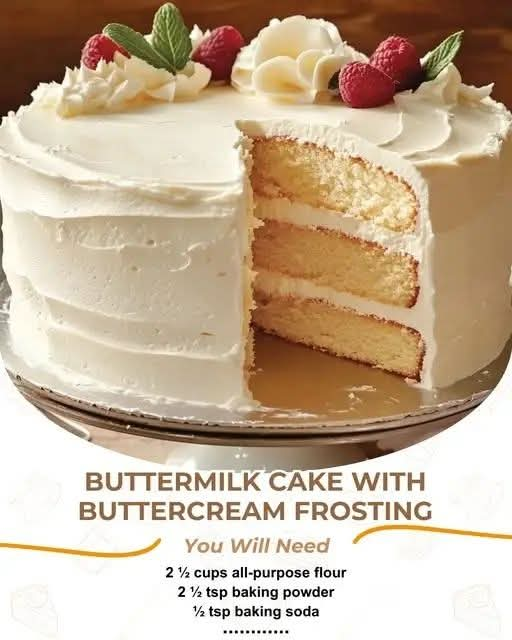
Of course! Here is a comprehensive guide to making a classic Buttermilk Cake with Buttercream Frosting, expanded to include all the elements you’ve requested.
A Slice of Nostalgia: The Classic Buttermilk Cake with Buttercream Frosting
Introduction
There is a reason certain desserts stand the test of time. The classic Buttermilk Cake with Buttercream Frosting is one such creation—a dessert that embodies comfort, celebration, and the simple joy of homemade baking. Picture a cake with a crumb so tender it practically melts on your tongue, its sweetness beautifully balanced by the subtle, pleasant tang of buttermilk. Now, imagine that cake enveloped in a cloud of rich, silky buttercream frosting. This isn’t just a dessert; it’s an experience. It’s the cake that graces birthday parties, the centerpiece of Sunday family dinners, and the thoughtful treat that turns an ordinary afternoon into a special occasion . Its versatility is part of its charm—reliable enough for a novice baker yet impressive enough for a seasoned pastry enthusiast, this cake earns its place as a timeless favorite in kitchens around the world .
A Rich History
The story of the buttermilk cake is deeply intertwined with American culinary history, particularly in the South. Buttermilk, the tangy liquid left behind after churning butter, was a staple in farmhouses—a valuable byproduct that was never wasted. Resourceful home bakers discovered that this acidic liquid did more than just add flavor. When combined with the rising power of baking soda (a leavening agent that became widely available to home cooks in the mid-19th century), it created a chemical reaction that produced an incredibly light and tender crumb . This discovery was a revelation, transforming simple cakes from dense, pound-style loaves into the lofty, delicate layers we know and love today. During the Great Depression, buttermilk cakes gained even more popularity as they provided a way to create a moist, flavorful, and celebratory dessert using humble, inexpensive ingredients . This recipe is a direct descendant of that rich heritage, a testament to the ingenuity of generations of bakers who turned a simple byproduct into a cornerstone of American baking.
The Magic of the Ingredients
For the Buttermilk Cake:
· 2 ½ cups (310g) all-purpose flour: Provides the structure for the cake.
· 2 ½ teaspoons baking powder: A primary leavening agent that helps the cake rise.
· ½ teaspoon baking soda: Reacts with the acid in the buttermilk to create an extra-light and tender texture .
· ½ teaspoon salt: Enhances the flavors of all the other ingredients.
· 1 cup (226g) unsalted butter, softened: The foundation of richness and flavor. Using unsalted butter allows you to control the salt level precisely .
· 1 ¾ cups (350g) granulated sugar: Adds sweetness and, when creamed with butter, incorporates air for a light texture.
· 4 large eggs, at room temperature: Provide structure and stability. Room-temperature eggs emulsify into the batter more easily, creating a smoother, more uniform crumb .
· 2 teaspoons pure vanilla extract: The backbone of flavor, adding warmth and depth.
· 1 cup (240ml) buttermilk, at room temperature: The true star of the show. Its acidity tenderizes the gluten, ensuring a moist cake, while its flavor provides a delightful tang that balances the sweetness .
For the Buttercream Frosting:
· 1 cup (226g) unsalted butter, softened: The base of the frosting, whipped to create a light and creamy texture.
· 4 cups (500g) powdered sugar, sifted: Provides sweetness and structure. Sifting is crucial to prevent lumps and ensure a silky-smooth frosting .
· 2 teaspoons pure vanilla extract: For that classic, sweet vanilla flavor.
· 2–3 tablespoons heavy cream or milk: Used to adjust the frosting to the perfect spreading consistency.
· A pinch of salt: Balances the sweetness and enhances the buttery flavor .
Step-by-Step Instructions and Methods
Preparation (Prep Time: 20 minutes)
1. Preheat and Prepare Pans: Position a rack in the center of the oven and preheat to 350°F (175°C). Generously grease two 9-inch round cake pans. For best results, line the bottoms with parchment paper rounds, grease the paper, and dust the pans with flour, tapping out the excess . This “triple preparation” guarantees your cakes will release perfectly.
2. Mix Dry Ingredients: In a medium bowl, whisk together the all-purpose flour, baking powder, baking soda, and salt. This ensures the leavening agents are evenly distributed throughout the flour .
Baking the Cake (Cook Time: 30 minutes)
1. Cream Butter and Sugar: In a large mixing bowl, use a stand or hand mixer to beat the softened butter and granulated sugar on medium-high speed until the mixture is pale, light, and fluffy. This crucial step takes about 3-5 minutes and incorporates air that will help the cake rise .
2. Add Eggs and Vanilla: Add the eggs one at a time, beating well after each addition and scraping down the sides of the bowl as needed. This gradual incorporation helps create a stable emulsion. Stir in the vanilla extract .
3. Combine Wet and Dry Ingredients: With the mixer on low speed, add the dry flour mixture in three parts, alternating with the buttermilk in two parts. Begin and end with the flour mixture . Mix only until the ingredients are just combined after each addition. Overmixing at this stage will develop the gluten in the flour, leading to a tough, dense cake instead of a tender one .
4. Bake: Divide the batter evenly between the two prepared pans. Gently tap the pans on the counter a few times to release any large air bubbles. Bake for 25–30 minutes, or until a toothpick inserted into the center of the cakes comes out clean or with just a few moist crumbs attached .
5. Cool: Let the cakes cool in their pans on a wire rack for about 10-20 minutes. Then, run a knife around the edges to loosen them and carefully turn them out onto the rack. Remove the parchment paper and allow the layers to cool completely to room temperature before frosting . This patience is vital, as any warmth will cause the frosting to melt and slide off.
Making the Frosting and Assembling the Cake
1. Make the Buttercream Frosting: In a large bowl, beat the softened butter with a mixer until it is creamy and smooth. Gradually add the sifted powdered sugar, one cup at a time, beating well on medium speed. Add the vanilla extract and a pinch of salt. Pour in the heavy cream or milk, one tablespoon at a time, until the frosting reaches a light, fluffy, and spreadable consistency. For the best texture, beat for an additional 3-5 minutes .
2. Assemble and Frost: Place one completely cooled cake layer on your serving plate. Spread a generous amount (about ¾ cup) of frosting evenly over the top. Place the second layer on top, ensuring it’s level. Apply a thin “crumb coat” of frosting all over the top and sides of the cake. This thin layer traps any loose crumbs, creating a clean base for the final coat. Refrigerate the cake for about 15-20 minutes to set the crumb coat. Finally, frost the cake with the remaining buttercream, using an offset spatula for a smooth, beautiful finish .
The Irresistible Benefits of Baking This Cake
· Unmatched Flavor and Texture: The buttermilk creates a cake that is exceptionally moist with a fine, tender crumb and a complex flavor profile that perfectly balances sweet and tangy . The buttercream provides a rich, creamy counterpoint.
· Simplicity and Versatility: It uses basic, pantry-staple ingredients. The batter can be baked as a sheet cake for a casual dessert, as cupcakes for a party, or as a classic layer cake for a formal celebration .
· A Foolproof Foundation for Creativity: This cake is a perfect canvas for your culinary imagination. You can easily add lemon zest, fold in chocolate chips or fresh berries, or fill the layers with fruit jam or caramel .
· A Connection to Tradition: Baking this cake is more than just following a recipe; it’s participating in a rich culinary tradition, connecting with generations of home bakers who found joy in creating something special from simple ingredients .
Perfect Pairings and Serving Suggestions
This cake is delightful on its own, but a few thoughtful pairings can elevate it to new heights.
· Beverages: A cup of freshly brewed coffee or a pot of Earl Grey tea provides a wonderful contrast to the cake’s sweetness. A cold glass of milk is a classic, comforting choice, while a glass of sparkling cider or even a light Prosecco can make it feel extra special for a celebration .
· Accompaniments: Serve slices with a handful of fresh berries, a drizzle of berry coulis, or a dollop of lightly sweetened whipped cream. A scoop of vanilla bean ice cream transforms it into an indulgent sundae .
Conclusion: A Recipe to Treasure
In a world of ever-changing dessert trends, the Buttermilk Cake with Buttercream Frosting stands as a testament to the enduring power of a classic. It is a cake that delivers on every level: a perfect, moist crumb, a beautifully balanced flavor, and a luxurious, creamy finish. It is simple enough to bake on a whim yet elegant enough to be the star of any special occasion . This recipe is more than just a set of instructions; it is an invitation to create joy, to fill your kitchen with the warm, comforting aroma of baking, and to share a truly wonderful dessert with the people you love. Mastering this cake is a rewarding experience that will earn you a reputation for exceptional baking and provide a go-to recipe you’ll turn to again and again . Slice, serve, and savor every soft, buttery bite.