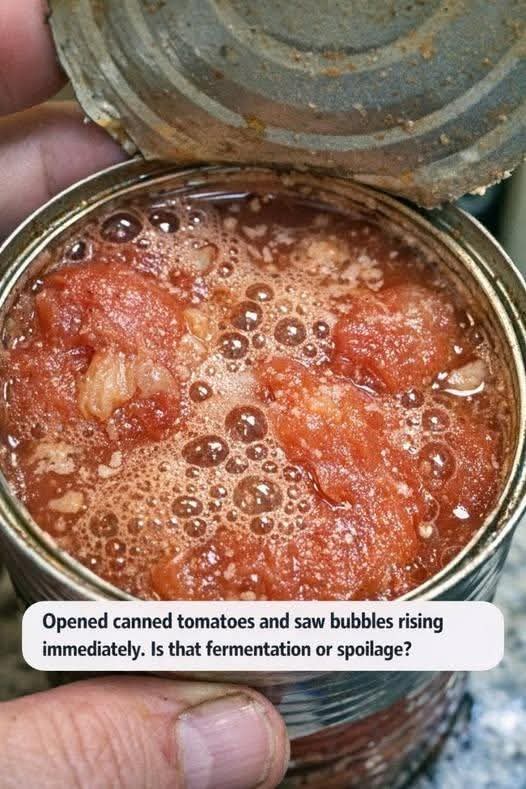
🥫 Bubbles in Opened Canned Tomatoes — Fermentation or Spoilage?
🧾 Introduction
Opening a can of tomatoes and immediately seeing bubbles rise can be surprising—and a bit worrying. Is it harmless trapped air, natural fermentation, or a sign the food has gone bad? Understanding what’s happening helps you avoid foodborne illness and make safe choices in the kitchen.
🧪 What Causes Bubbles in Canned Tomatoes?
When you open a can, bubbles can form for a few reasons:
- Trapped air release: Normal in properly sealed cans
- Temperature change: Gas expands when warmed
- Natural acidity reaction: Tomatoes are acidic and can release gases
- Microbial activity: Bacteria or yeast producing gas (this is the risky one)
⚠️ Fermentation vs. Spoilage
✔️ Fermentation (Rare in sealed cans)
- Occurs when beneficial microbes break down sugars
- Produces gas (bubbles), slight sour smell
- Usually controlled in homemade or intentionally fermented foods
- Not expected in commercial canned tomatoes
❌ Spoilage (More likely if suspicious signs appear)
- Caused by harmful bacteria or contamination
- Produces gas, off smells, discoloration
- May include dangerous toxins (e.g., botulism in extreme cases)
👉 Important: Commercial canned foods are sterilized—so fermentation should NOT normally happen. If it does, something is wrong.
👀 Signs Your Canned Tomatoes Are Unsafe
Check for these red flags:
- Can was bulging or dented
- Loud hissing or spraying when opened
- Immediate strong bubbling like carbonation
- Sour, metallic, or foul odor
- Unusual color (dark, cloudy, or moldy)
If you notice any of these → DO NOT TASTE OR USE
🧾 “Ingredients” of Safe vs Unsafe Canned Tomatoes
✅ Safe Can Indicators
- Intact seal
- Normal tomato smell
- No excessive bubbling
- Bright red color
❌ Unsafe Indicators
- Gas buildup
- Strange smell
- Foam or fizz
- Damaged can
🔬 Methods to Check Safety
- Visual Inspection
Look for foam, discoloration, or mold - Smell Test
Tomatoes should smell fresh and slightly acidic—not sour or rotten - Sound Check
A slight “psst” is okay; aggressive fizzing is not - When in Doubt — Throw it Out
Never risk tasting questionable canned food
🏺 History of Canned Food Safety
Canning dates back to the early 1800s when it was developed to preserve food for armies. Over time, strict industrial sterilization methods were introduced to prevent microbial growth. Modern canned foods are designed to be shelf-stable and safe, meaning bubbling from fermentation should not occur under normal conditions.
⚙️ Formation of Gas in Spoiled Cans
Spoilage organisms (like bacteria or yeast) can:
- Feed on sugars in tomatoes
- Produce gases such as carbon dioxide
- Build pressure inside the can
- Cause bubbling when opened
This is a clear warning sign of contamination.
❤️ Lovers of Canned Tomatoes (and Safety!)
Home cooks, chefs, and food lovers rely on canned tomatoes for:
- Quick sauces 🍝
- Soups 🍲
- Baking (you love making cakes—imagine using safe ingredients only!)
Keeping ingredients safe ensures your delicious creations—like your favorite Death by Chocolate Dump Cake—stay enjoyable and risk-free.
🧾 Conclusion
If you opened canned tomatoes and saw immediate bubbling, treat it with caution:
👉 Small bubbles = possibly harmless air
👉 Strong fizzing + odor = likely spoilage
Rule of thumb:
⚠️ If anything seems off, don’t use it.
If you want, I can also show you how to safely store leftover canned tomatoes or turn them into a quick recipe 🍅✨