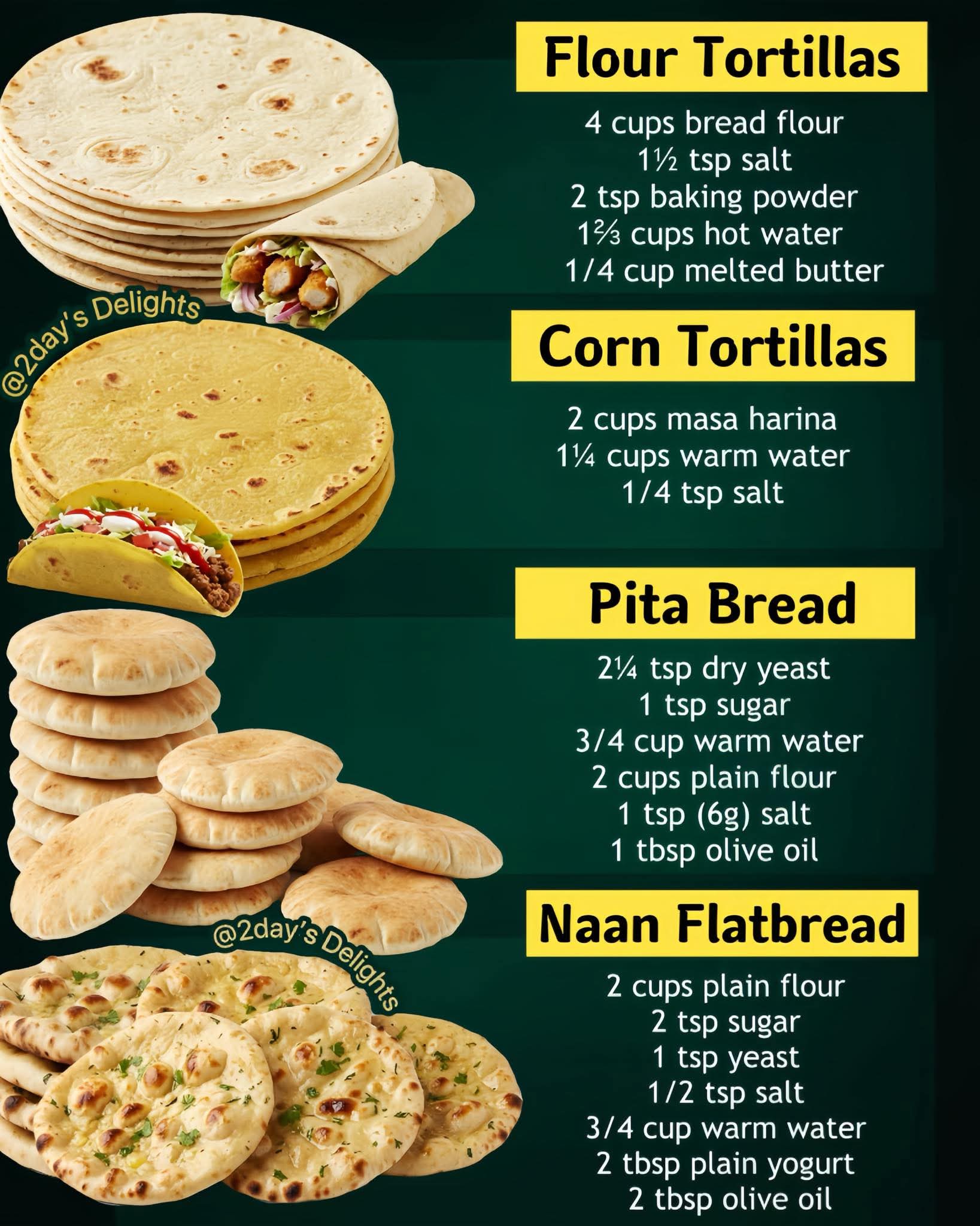
Absolutely — here’s a full, long-form, share-ready recipe article that turns your everyday breads into a warm kitchen story. I’ll keep it rich, structured, and scroll-worthy 🍞✨
—
Soft, Warm, and Fresh from Your Kitchen
Everyday Breads Made with Care
There’s something deeply comforting about bread made at home. The feel of dough beneath your hands, the gentle sizzle as it hits a hot pan, the steam rising when you stack warm rounds under a towel — this is food at its most human. Across cultures and centuries, flatbreads have fed families, carried flavors, and brought people together. Today, we bring four beloved everyday breads into one kitchen: Flour Tortillas, Corn Tortillas, Pita Bread, and Naan Flatbread — simple ingredients, timeless methods, and endless love.
—
1. Flour Tortillas
Introduction
Soft, flexible, and buttery, flour tortillas are a staple in many homes. Perfect for wraps, tacos, quesadillas, or simply torn and dipped, these tortillas are all about warmth and comfort.
Ingredients
4 cups (480g) bread flour
1½ tsp (9g) salt
2 tsp (8g) baking powder
1⅔ cups (400ml) hot water
¼ cup (60g) unsalted butter, melted
Instructions
1. In a large bowl, mix flour, baking powder, and salt.
2. Add hot water and melted butter. Mix until a dough forms.
3. Knead until smooth and elastic (about 5 minutes). If sticky, add flour 1 tablespoon at a time.
4. Divide into 12 equal balls. Flatten slightly, dust with flour, cover, and rest 15–20 minutes.
5. Roll each ball into an 8-inch (20cm) circle.
6. Cook on a dry skillet over medium-high heat for about 1 minute per side, until golden spots appear.
7. Stack and cover with a towel to keep warm.
Method & Technique
Hot water relaxes the gluten, while butter adds tenderness. Resting the dough ensures easy rolling and soft tortillas.
History & Formation
Flour tortillas originated in northern Mexico, where wheat thrived more than corn. Over time, they became a daily bread — simple, filling, and adaptable.
Who Loves This Bread
Wrap lovers 🌯
Busy families
Anyone who loves soft, foldable bread
—
2. Corn Tortillas
Introduction
Corn tortillas are rustic, earthy, and deeply traditional. With just three ingredients, they showcase the power of simplicity and heritage.
Ingredients
2 cups (240g) masa harina
1¼ cups (300ml) warm water
¼ tsp (1.5g) salt
Instructions
1. Mix masa harina and salt in a bowl.
2. Gradually add warm water until dough feels like soft playdough.
3. Divide into 10–12 balls and keep covered.
4. Press or roll into thin rounds.
5. Cook on a dry skillet over medium-high heat for 40–60 seconds per side.
6. Stack and wrap to steam and soften.
Method & Technique
Moisture control is key. If edges crack, add a little more water. Keep cooked tortillas covered to trap steam.
History & Formation
Corn tortillas date back thousands of years to Mesoamerican civilizations. Nixtamalized corn (masa) was a revolutionary process that made corn nutritious and digestible.
Who Loves This Bread
Traditional food lovers 🌽
Taco purists
Gluten-free kitchens
—
3. Pita Bread
Introduction
Pita is famous for its magical pocket — soft inside, lightly crisp outside. It’s perfect for stuffing, dipping, or tearing and sharing.
Ingredients
2¼ tsp (7g) active dry yeast
1 tsp (4g) sugar
¾ cup (180ml) warm water (100°F / 38°C)
2 cups (240g) all-purpose flour
1 tsp (6g) salt
1 tbsp (15ml) olive oil
Instructions
1. Activate yeast with warm water and sugar (5–10 minutes).
2. Mix flour and salt. Add yeast mixture and olive oil.
3. Knead 5–7 minutes until smooth.
4. Let rise 1 hour, until doubled.
5. Divide into 6–8 balls; roll into ¼-inch (6mm) circles.
6. Cook on a very hot skillet 1–2 minutes per side until puffed.
7. Wrap immediately to keep soft.
Method & Technique
High heat creates steam inside the dough, causing the signature pocket to form.
History & Formation
Pita is one of the world’s oldest breads, originating in the Middle East over 4,000 years ago — a daily bread for dipping, scooping, and sharing.
Who Loves This Bread
Hummus and dip fans 🥙
Sandwich lovers
Mediterranean food enthusiasts
—
4. Naan Flatbread
Introduction
Soft, pillowy, and slightly chewy, naan feels indulgent and celebratory. Yogurt enriches the dough, giving it depth and tenderness.
Ingredients
2 cups (240g) all-purpose flour
2 tsp (8g) sugar
1 tsp (3g) yeast
½ tsp (3g) salt
¾ cup (180ml) warm water
2 tbsp (30g) plain yogurt
2 tbsp (30ml) olive oil or melted butter
Optional
Melted butter or garlic butter
Chopped cilantro
Instructions
1. Mix flour, sugar, yeast, and salt.
2. Add warm water, yogurt, and oil. Knead 5–7 minutes until smooth.
3. Cover and let rise 1 hour.
4. Divide into 6–8 pieces; roll into ¼-inch (6mm) ovals.
5. Cook on a hot skillet: 1–2 minutes first side, 30–60 seconds second side.
6. Brush with butter and herbs while hot.
Method & Technique
Yogurt adds softness; high heat mimics the traditional tandoor oven.
History & Formation
Naan originated in South Asia and Persia, traditionally baked in clay ovens. It was once reserved for royalty — now it’s loved worldwide.
Who Loves This Bread
Curry lovers 🍛
Comfort-food seekers
Garlic-butter fans
—
Conclusion
From ancient corn fields to sizzling skillets, these everyday breads tell stories of culture, survival, and love. They’re not just recipes — they’re rituals. Once you master them, your kitchen becomes a bakery, your table becomes a gathering place, and every meal feels complete.
Warm bread. Simple ingredients. Timeless joy.
Bake, cook, share — and let bread bring people together 🤍🍞