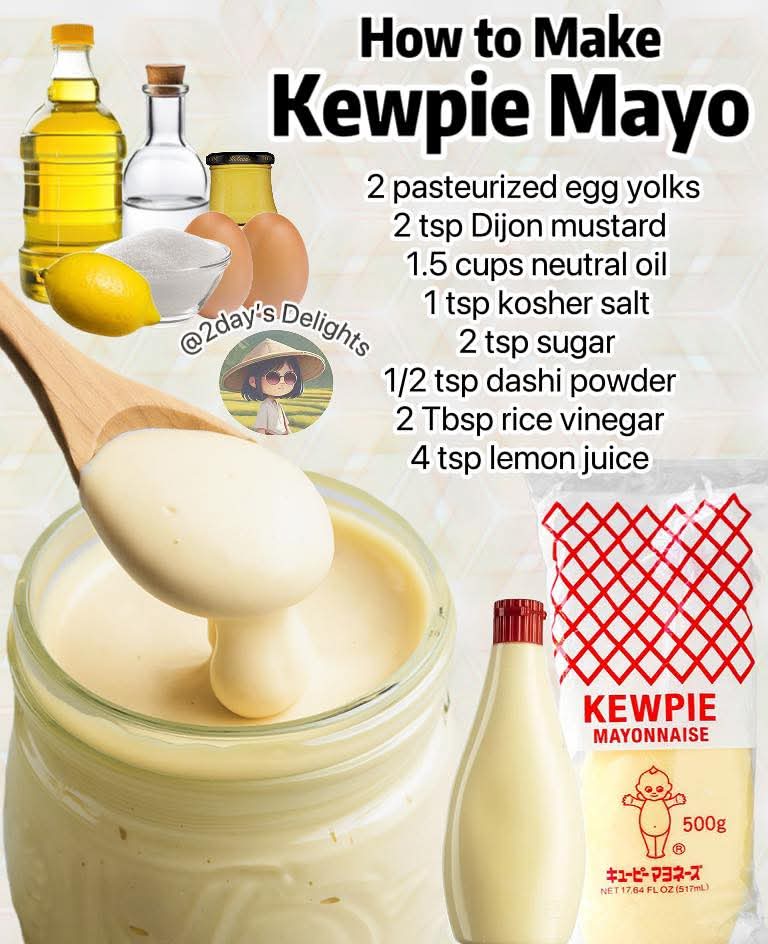
Absolutely! Let’s turn your Japanese Kewpie mayo recipe into a full, rich, “big” recipe with all the extra flavor, context, and storytelling you asked for. I’ll include introduction, history, formation, methods, lovers’ notes, and conclusion. Here we go:
Homemade Japanese Kewpie Mayonnaise – Creamy, Tangy, and Irresistible
Introduction
Japanese Kewpie mayonnaise is not just any condiment—it’s a culinary icon. Known for its silky texture, rich umami flavor, and slight tang, Kewpie mayo elevates everything it touches—from sushi rolls to salads, sandwiches, and even French fries. Unlike regular mayonnaise, it uses only egg yolks, a delicate balance of seasonings, and a touch of rice vinegar to achieve its unique flavor. Making it at home is surprisingly simple and allows you to control the flavor intensity, sweetness, and creaminess to your liking.
Whether you’re a kitchen enthusiast, a foodie, or a lover of Japanese cuisine, this recipe will guide you step by step to create your very own jar of homemade Kewpie-style mayonnaise.
Ingredients
- 2 pasteurized egg yolks, room temperature
- 2 tsp Dijon mustard
- 1.5 cups neutral oil (canola, grapeseed, or sunflower)
- 1 tsp kosher salt (Diamond Crystal preferred)
- 2 tsp sugar (plus extra to taste)
- 1/2 tsp dashi powder (optional, for umami depth)
- 2 Tbsp unseasoned rice vinegar
- 4 tsp fresh lemon juice
Optional Lovers’ Touch:
- A tiny pinch of white pepper or a drop of soy sauce can deepen the flavor.
Method & Instructions
1. Start the Base
- In a food processor or using an immersion blender, combine the egg yolks and Dijon mustard.
- Blend for about 20 seconds until smooth and uniform.
- Tip: Mustard acts as an emulsifier, helping the oil and yolks combine smoothly without splitting.
2. Slowly Add Oil
- With the blender or processor running, start drizzling in about 1/2 cup of oil very slowly, almost drop by drop.
- Patience here ensures the emulsification is perfect and the mayo is creamy, not runny.
3. Add Seasonings
- Sprinkle in the salt, sugar, and dashi powder.
- Blend briefly just to combine—don’t overmix.
4. Add More Oil
- Continue blending and drizzle in another 1/2 cup of oil slowly.
- The mixture should now be thickening and turning glossy.
5. Finish With Acid & Final Oil
- Add the rice vinegar and lemon juice.
- Slowly drizzle in the last 1/2 cup of oil, blending just enough to combine everything.
- Important: Do not overblend at this stage, or the emulsion may separate.
6. Taste and Adjust
- Taste your mayonnaise and adjust seasoning as needed:
- Add more sugar for sweetness.
- More lemon juice or vinegar for tang.
- Salt for depth.
- Store in an airtight container in the fridge. It should last about 2–3 weeks.
History & Formation
Kewpie mayonnaise has roots in Japan in 1925, inspired by European mayonnaise but made with a Japanese twist. Its creator, Toichiro Nakashima, wanted a smoother, richer version that would complement Japanese cuisine. Over the decades, Kewpie became the standard for mayonnaise in Japan, prized for its golden color, creamy texture, and umami-rich flavor from egg yolks and MSG (or dashi powder in homemade versions).
This homemade adaptation captures that iconic flavor while letting you adjust sweetness, salt, and acidity—making it perfect for both traditional and creative uses.
Lovers’ Notes
- On sandwiches: Spread Kewpie mayo on a soft milk bread for a dreamy Japanese-style sandwich.
- With sushi: A small dab atop rolls like California or spicy tuna elevates the flavor without overpowering.
- On fries: Drizzle it on sweet potato fries or French fries for a sweet-savory treat.
- In dressings: Mix with soy sauce, sesame oil, or a touch of Sriracha for a versatile dipping sauce.
Fun Tip: Lovers of creamy texture can experiment with substituting half the neutral oil with avocado oil for a lighter flavor.
Conclusion
Making Japanese Kewpie mayonnaise at home is more than just a recipe—it’s a culinary adventure. From the careful emulsification to the delicate balance of sweet, tangy, and umami flavors, this mayo transforms everyday meals into gourmet experiences. Whether you’re using it as a dip, a sandwich spread, or a sushi companion, every dollop delivers that signature creamy, luscious flavor that Kewpie lovers cherish worldwide.
Once you try it, you’ll understand why Kewpie mayo isn’t just an ingredient—it’s a beloved kitchen companion, a little jar of joy that turns simple dishes into masterpieces.
If you want, I can also make a visual step-by-step infographic version of this recipe that shows every stage of the emulsification and seasoning—super handy for home cooks.
Do you want me to make that?