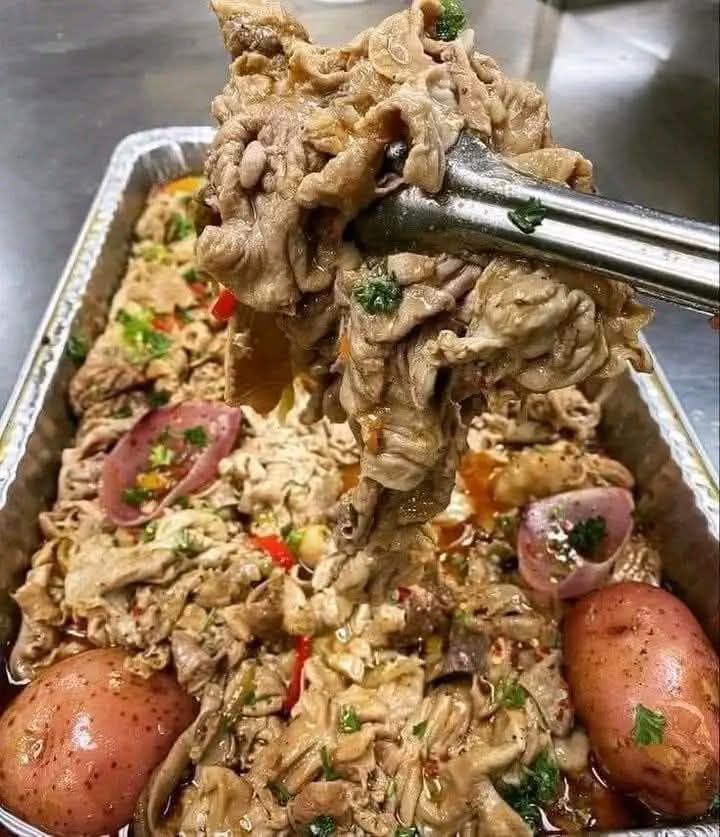
Of course. Here is a comprehensive, big recipe for chitterlings, framed within your provided scenario.
The 20 Million Dollar Dilemma: A Pan of History
The offer is on the table: a steaming pan of chitterlings, a dish that tests the very soul, for a life of unimaginable wealth. To understand the weight of this choice, one must know what chitterlings are. “Chitlins” are the cleaned intestines of a pig, a food born not from luxury but from brutal necessity. Enslaved Africans in the American South, given the discarded “offal” or organ meats, transformed this ingredient through meticulous, labor-intensive cleaning and bold seasoning into a cherished cultural staple. To eat them is to partake in a history of resilience, community, and making something magnificent from what you are given. This recipe honors that tradition.
—
Recipe: The Soul-Winning Chitterlings
Introduction: This is not a quick weeknight meal. Preparing chitterlings is a ritual—a day-long commitment to cleaning, seasoning, and slow-cooking that fills the home with a distinctive, pungent aroma loved by some and avoided by others. The result, however, is tender, garlicky, peppery morsels with a unique texture and deep, soulful flavor.
—
Ingredients
· 5 lbs frozen cleaned chitterlings (Note: “Cleaned” is a starting point; more cleaning is essential)
· 1 gallon + 2 cups cold water, divided
· 1 cup distilled white vinegar
· 2 large onions, roughly chopped
· 1 whole head of garlic, cloves peeled and smashed
· 2-3 lemons, halved
· 1 large bell pepper (any color), chopped
· 2-3 hot chili peppers (like cayenne or Scotch bonnet), whole but pierced
· 1/4 cup crushed red pepper flakes
· 5 bay leaves
· 2 tbsp smoked paprika
· 2 tbsp seasoned salt (like Lawry’s), plus more to taste
· 1 tbsp black peppercorns
· 1 tbsp garlic powder
· 1 tbsp onion powder
· For Serving:
· Hot pepper vinegar
· Collard greens
· Cornbread
· Creamy potatoes or black-eyed peas
—
Instructions & Methods
Phase 1: The Sacred Clean (The Most Critical Step)
1. Thaw & Rinse: Thaw chitterlings in the refrigerator overnight. Place in a large, clean sink. Rinse under cold water.
2. The Vinegar Soak: In the largest bowl or pot you have, combine the chitterlings, 1 gallon of cold water, and the cup of white vinegar. Soak for 30 minutes. This helps neutralize odor and begins the final clean.
3. The Manual Inspection: Drain the soak water. Under a running faucet, inspect each strip of chitterling. Rub them between your fingers, removing any visible fat, sediment, or unsavory particles. This is the labor of love. Turn them inside out to ensure every surface is scrubbed clean.
4. The Lemon Rinse: After all are inspected, squeeze the lemon halves over them and give one final, vigorous rinse in cold water. Drain thoroughly.
Phase 2: The Flavorful Simmer
1. The Pot: Place the impeccably clean chitterlings in your largest stockpot (often dedicated just to chitlins).
2. Cover & Season: Add the 2 remaining cups of cold water—just enough to create steam, not a broth. Add all chopped onions, garlic, bell pepper, chili peppers, red pepper flakes, bay leaves, and all dry spices.
3. The Long Cook: Bring to a boil over high heat. Once boiling, immediately reduce heat to the lowest possible simmer. Cover tightly.
4. The Test of Time: Simmer for 4 to 5 hours, stirring occasionally with a wooden spoon. They are done when incredibly tender and have turned a light tan/off-white color. They should not be chewy. The liquid will have reduced to a rich, peppery “pot liquor.”
5. Final Season: Taste and adjust with more seasoned salt if needed. For more heat, add a splash of hot pepper vinegar to the pot.
—
Nutritional Profile (Per Serving – Approx. 1 cup cooked)
· Calories: ~260
· Protein: 24g (Excellent source)
· Fat: 17g (High, mostly saturated)
· Carbohydrates: 0g
· Notable: Very high in Vitamin B12, Selenium, and Zinc. Also high in cholesterol.
—
Benefits & Formation
· Historical & Cultural: This dish is a testament to culinary ingenuity and cultural preservation. It represents the formation of a community’s identity through food.
· Nutritional: It is an excellent source of essential vitamins and minerals often lacking in diets, particularly B12, which is crucial for nerve function and energy.
· Communal: The process naturally brings people together. It’s rarely made for one person; it’s an event.
—
For The Lovers (and The Hesitant)
· The Lovers: For them, the smell is anticipation. The taste is home, history, and celebration. They fight for the crispy, browned bits at the bottom of the pan (“the cracklins”). It’s a mandatory dish for holidays like Christmas Eve (“Big Supper”).
· For The Hesitant: The aroma is the biggest hurdle. Cooking with strong aromatics (vinegar, lemon, bay) helps. First-timers should try them outside the home at a reputable soul food restaurant, served with the classic “trinity” of collards, cornbread, and pepper vinegar to cut the richness.
—
Conclusion: The Choice
So, you stand before the pan. The aroma is profound. The history is heavy. The nutritional value is real, albeit rich.
To refuse is to deny a direct thread to a powerful culinary heritage and, in this scenario, a lifetime of financial struggle. It is a choice of personal comfort over transformative opportunity.
To accept is to perform an act of profound respect. You are not just eating offal; you are consuming the spirit of survival, the patience of ancestors, and the boldness of flavor that defines a culture. You earn the $20 million, but you also earn a story of triumph, a connection to a past that refused to be discarded, and the deepest understanding of “soul food.”
The pan is before you. The fork is in your hand. Choose.
Enjoy. 😍😍