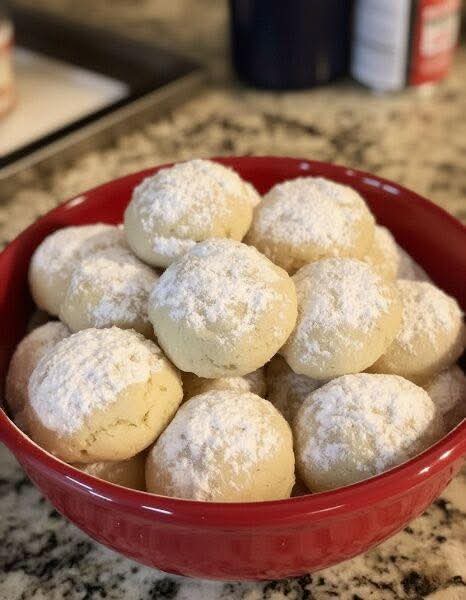
Here’s a full, rich recipe write-up for Snowball Cookies (a.k.a. Russian Tea Cakes or Mexican Wedding Cookies) — complete with introduction, history, benefits, ingredients, detailed instructions, variations, nutrition, and a warm conclusion for cookie lovers.
❄️ Snowball Cookies Recipe
✨ Introduction
Snowball cookies are a timeless holiday favorite, also known as Russian Tea Cakes or Mexican Wedding Cookies. Their delicate, buttery crumb, subtle vanilla flavor, and melt-in-your-mouth powdered sugar coating make them a festive treat for Christmas, weddings, and special gatherings. These cookies are simple, elegant, and nostalgic — evoking memories of snowy days and warm kitchens.
🕰️ History
Snowball cookies have a fascinating global history. Believed to have originated in Europe, versions of these cookies were found in Russian tea culture (hence “Russian Tea Cakes”). When Spanish colonists brought almond-based shortbread-style cookies to Mexico, they evolved into “Mexican Wedding Cookies.” By the mid-20th century, they became a staple in American holiday baking under the charming name “Snowball Cookies.” Their universal appeal lies in their minimal ingredients and timeless flavor.
💎 Benefits
- Simple ingredients: Uses pantry staples like butter, flour, and sugar.
- Festive look: The powdered sugar coating resembles snow — perfect for holidays.
- Make-ahead friendly: These cookies store well, improving in flavor over time.
- Nutritious touch: Often made with walnuts, pecans, or almonds for healthy fats and protein.
- Versatile: Can be adapted with different nuts, extracts, or even cocoa.
📝 Ingredients
- 1 cup unsalted butter, room temperature (real butter for best flavor)
- 1 ½ cups confectioners’ sugar, divided (½ cup for dough, 1 cup for coating)
- 2 teaspoons vanilla extract
- 2 ¼ cups all-purpose flour
- 1 cup finely chopped nuts (walnuts, pecans, or almonds)
- ¼ teaspoon salt
👩🍳 Instructions & Method
Step 1: Prepare the Dough
- In a large mixing bowl, cream the butter with ½ cup confectioners’ sugar until light and fluffy.
- Add vanilla extract and mix until combined.
- Gradually add flour and salt, mixing just until incorporated.
- Stir in the finely chopped nuts.
Step 2: Chill the Dough
- Cover the dough and refrigerate for at least 30 minutes to firm up.
Step 3: Shape and Bake
- Preheat oven to 350°F (175°C).
- Roll dough into 1-inch balls and place on an ungreased baking sheet, spacing them slightly apart.
- Bake for 12–15 minutes, or until the bottoms are lightly golden (tops should remain pale).
Step 4: The Snow Effect
- While cookies are still warm, roll them in confectioners’ sugar.
- Place on a cooling rack.
- Once fully cooled, roll them in sugar again for a thick snowy coating.
🍫 Variations (Formation Methods)
- Chocolate Snowballs: Add 2 tablespoons cocoa powder to dough.
- Spiced Snowballs: Mix in cinnamon, nutmeg, or cardamom for warmth.
- Orange or Lemon Twist: Add zest to brighten flavor.
- Nut-Free Option: Replace nuts with mini chocolate chips.
🧾 Nutrition (per cookie, approx. 24 servings)
- Calories: 110
- Fat: 8g
- Carbohydrates: 10g
- Protein: 1.5g
- Sugar: 4g
- Fiber: 0.5g
❤️ Cookie Lovers’ Notes
Snowball cookies are more than a dessert — they’re a tradition. Families pass them down through generations, children love the sweet dusting of sugar, and bakers cherish their simple elegance. Whether enjoyed with tea, coffee, or a holiday toast, these cookies connect us to warmth, family, and celebration.
🎀 Conclusion
Snowball cookies are a treasure of world baking traditions — buttery, nutty, and blanketed in powdered sugar like a winter wonderland. Easy to bake, delightful to share, and impossible to resist, they remain a cookie lover’s classic.
✨ Bake a batch, share them with family and friends, and watch the smiles grow as the “snow” melts on their tongues.
Would you like me to also create a “holiday story-style version” of this recipe (like a warm family cookbook entry), or keep it in this structured format for all your recipes?