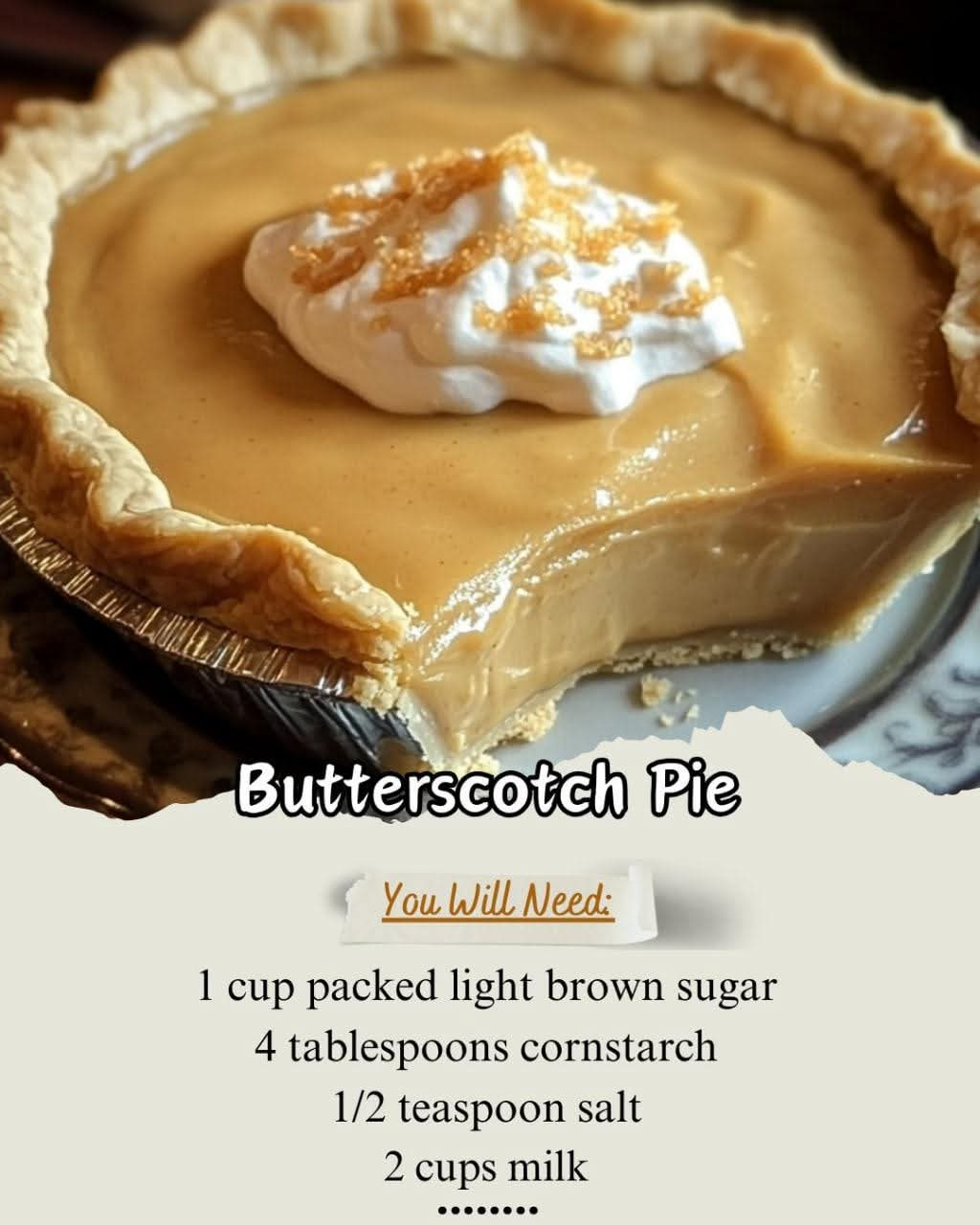
Here’s a full, detailed Butterscotch Pie recipe write-up with everything you requested — introduction, history, ingredients, methods, lovers, and a conclusion:
🥧 Butterscotch Pie Recipe
📖 Introduction
Butterscotch Pie is a classic American dessert that has warmed hearts for generations. With its silky-smooth custard filling infused with caramelized brown sugar, this pie captures the perfect balance of sweetness and nostalgia. Nestled in a flaky baked crust and topped with golden edges, it’s a treat that feels both homely and elegant. This pie often reminds people of their childhood, Sunday suppers, or grandmother’s kitchen — a true comfort dessert.
🛒 Ingredients
- 1 cup packed light brown sugar
- 4 tablespoons cornstarch
- 1/2 teaspoon salt
- 2 cups milk
- 2 large egg yolks, beaten
- 1 tablespoon butter
- 1 teaspoon vanilla extract
- 1 (9-inch) pie crust, pre-baked
Optional for serving: whipped cream or meringue topping.
👩🍳 Instructions
- Prepare the base mixture:
In the top of a double boiler, combine brown sugar, cornstarch, salt, and milk. Stir continuously to prevent lumps. - Cook the filling:
Heat gently and cook until the mixture begins to thicken, about 20 minutes. Constant stirring is key to a smooth texture. - Incorporate egg yolks:
Whisk in the beaten egg yolks slowly. Continue cooking and stirring until the filling is thick and glossy. - Add flavor:
Remove the mixture from heat and stir in butter and vanilla extract. This step brings out the rich butterscotch flavor. - Assemble the pie:
Pour the hot filling into the prepared baked pie crust. - Bake briefly:
Preheat oven to 400°F (200°C). Bake the filled pie for 5 minutes, just until the top begins to brown. - Cool and set:
Let the pie cool to room temperature, then refrigerate for at least 2 hours before slicing.
🥄 Methods
- Double Boiler Method: Ensures gentle heating, preventing curdling or burning of the milk mixture.
- Thickening with Cornstarch: Creates a smooth, custard-like texture without overpowering sweetness.
- Egg Tempering: Prevents scrambled eggs by gradually adding hot liquid into yolks before mixing back into the pudding.
- Oven Setting: A quick bake helps the filling set while enhancing the golden-brown finish.
🏛️ History & Formation
Butterscotch as a flavor dates back to 19th-century England, originally used in candies made from brown sugar and butter. The term “scotch” referred to the process of scoring the candy into pieces before it hardened. Over time, the rich caramelized flavor found its way into puddings, sauces, and pies.
The Butterscotch Pie became especially popular in the American South and Midwest during the early 20th century, where home cooks relied on pantry staples like sugar, cornstarch, and eggs to create comforting desserts. Its formation as a custard pie reflects a time when families transformed simple ingredients into luxurious treats.
❤️ For the Lovers of Butterscotch Pie
- Comfort Seekers: Those who love nostalgic, homey desserts with a hint of grandma’s kitchen magic.
- Custard Enthusiasts: Fans of silky textures and deep flavors.
- Pie Lovers: A must-have addition to any holiday pie table alongside pumpkin and pecan.
- Sweet Tooth Admirers: Perfect for people who crave a caramel-like dessert without being overly rich.
✅ Conclusion
Butterscotch Pie is more than a dessert — it’s a slice of history and love baked into a flaky crust. Its velvety filling, infused with caramelized brown sugar, makes it a timeless treat. Whether served after Sunday dinner, at Thanksgiving gatherings, or simply as a weekday indulgence, this pie has the power to comfort and impress.
For lovers of custard pies and sweet traditions, Butterscotch Pie will forever remain a cherished classic. 🥧✨
Would you like me to also add a meringue topping version (like some traditional Southern recipes use) so you have both variations?