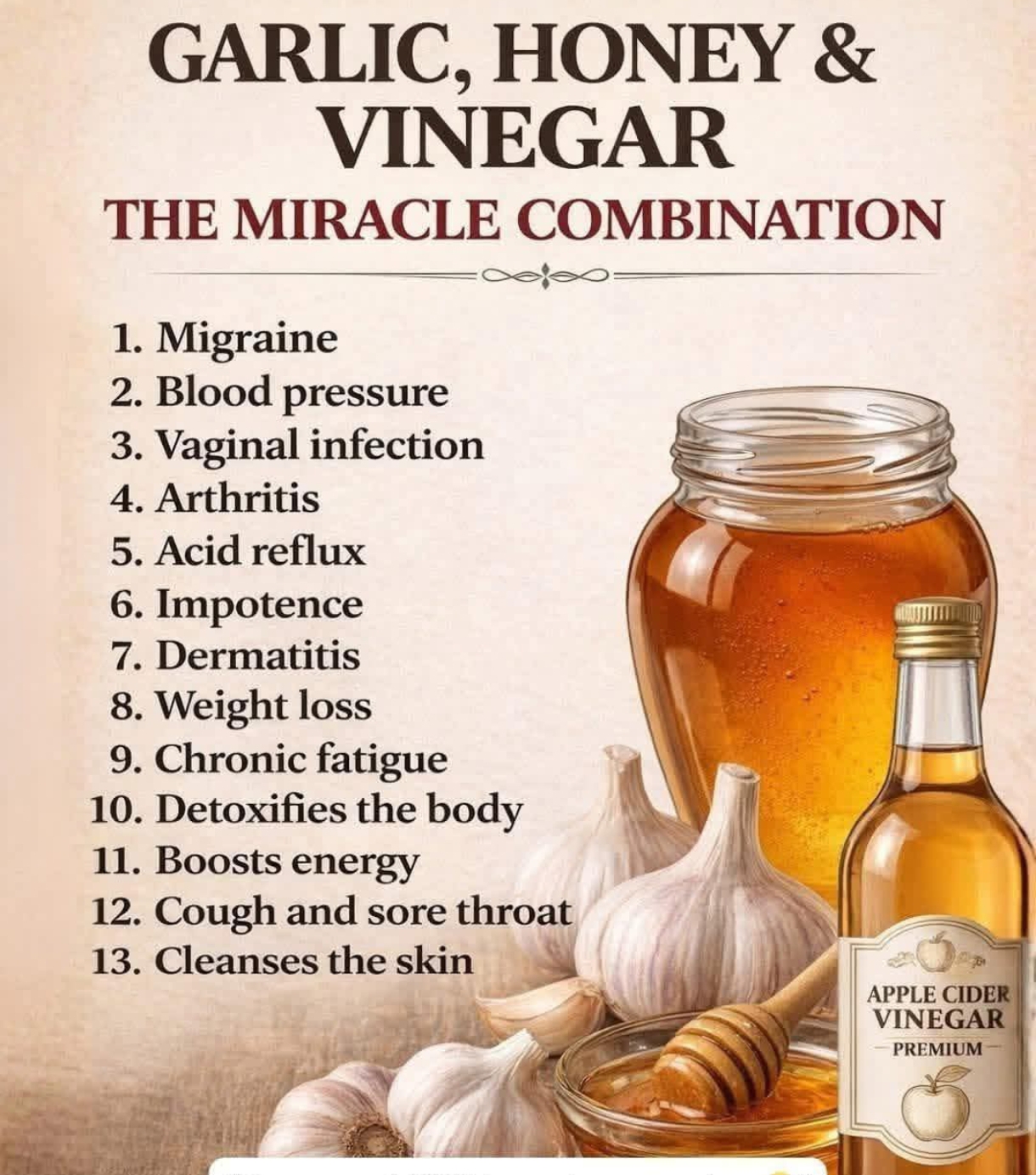
🧄🍯🍶 Garlic, Honey & Vinegar Elixir (Traditional Wellness Tonic)
🌿 Introduction
Garlic, honey, and vinegar have been used for centuries in traditional kitchens and folk wellness practices across many cultures. When combined, they create a powerful sweet–sour–pungent blend often called a natural tonic or immune-support elixir. The garlic brings a strong aromatic bite, honey adds smooth sweetness, and vinegar provides tang and preservation. Together, they form a mixture that is used in food, marinades, and old home remedies.
This recipe is not just about flavor—it’s about history, tradition, and the way simple ingredients were used for both nourishment and natural preservation.
🧾 Ingredients
- 10–12 garlic cloves (fresh, peeled and lightly crushed)
- 1 cup raw honey
- 1 cup apple cider vinegar (with “mother” if possible)
- Optional additions:
- 1 tsp grated ginger (for warmth)
- 1 pinch chili flakes (for heat)
- 1 tbsp lemon juice (for brightness)
👩🍳 Instructions
🥄 Step 1: Prepare the Garlic
Peel the garlic cloves and lightly crush them using the side of a knife. This helps release allicin, the natural compound responsible for garlic’s strong aroma and flavor.
🥄 Step 2: Layer the Ingredients
In a clean glass jar, add garlic cloves first, then pour in honey and apple cider vinegar. Stir gently with a clean spoon or shake lightly if the jar is sealed.
🥄 Step 3: Infusion Process
Seal the jar tightly and store it in a cool, dark place for 5–7 days. Shake once daily to help the ingredients blend and ferment slightly.
🥄 Step 4: Strain or Keep Whole
After a week, you can strain the mixture or keep the garlic inside for a stronger flavor over time.
🔬 Methods (How It Works)
- Maceration Method: Garlic slowly releases its oils into honey and vinegar.
- Infusion Method: The liquid absorbs garlic compounds over time.
- Natural Preservation: Honey and vinegar both act as preservatives, extending shelf life.
- Fermentation Effect (mild): If left longer, the mixture develops deeper, more complex flavors.
📜 History & Traditional Use
This combination has roots in ancient Mediterranean, Middle Eastern, and European folk practices. Garlic was prized by Egyptians, Greeks, and Romans for strength and vitality. Honey was considered sacred and healing in many ancient cultures, while vinegar was one of the earliest known preservatives.
In old home traditions, people often mixed garlic, honey, and vinegar as a winter tonic or added it to meals for extra flavor and strength during cold seasons.
🧬 Formation (What Happens Inside the Jar)
Over time:
- Garlic softens and releases sulfur compounds
- Honey thickens and infuses with garlic essence
- Vinegar balances acidity and extracts plant compounds
- The mixture becomes smoother, slightly syrupy, and deeply aromatic
The result is a layered natural extract with sweet, sour, and savory notes blending into one powerful infusion.
🍽️ How to Use
- 1 teaspoon daily as a wellness tonic
- Mixed into salad dressings
- Drizzled over roasted vegetables
- Used as a marinade for chicken or fish
- Stirred into warm water as a drink (mild version)
💕 “Lovers” Section (Garlic Honey Vinegar Romance 💫)
This mixture is often called a “love potion of the kitchen” because its flavors balance each other like partners:
- Garlic = bold and passionate
- Honey = sweet and comforting
- Vinegar = sharp and exciting
Together, they create a harmony of contrasts—just like lovers who are different but perfectly matched. It’s a blend that reminds us that strong relationships, like strong recipes, need balance, patience, and time to develop.
🧡 Conclusion
Garlic, honey, and vinegar may seem simple, but together they form a timeless combination of flavor, tradition, and natural wisdom. Whether used as a tonic, a dressing, or a marinade, this mixture carries centuries of culinary heritage in every drop.
💬 Final Lovers Thought
Like love itself, this recipe is stronger after time—slowly blending, softening, and becoming something richer than its individual parts.