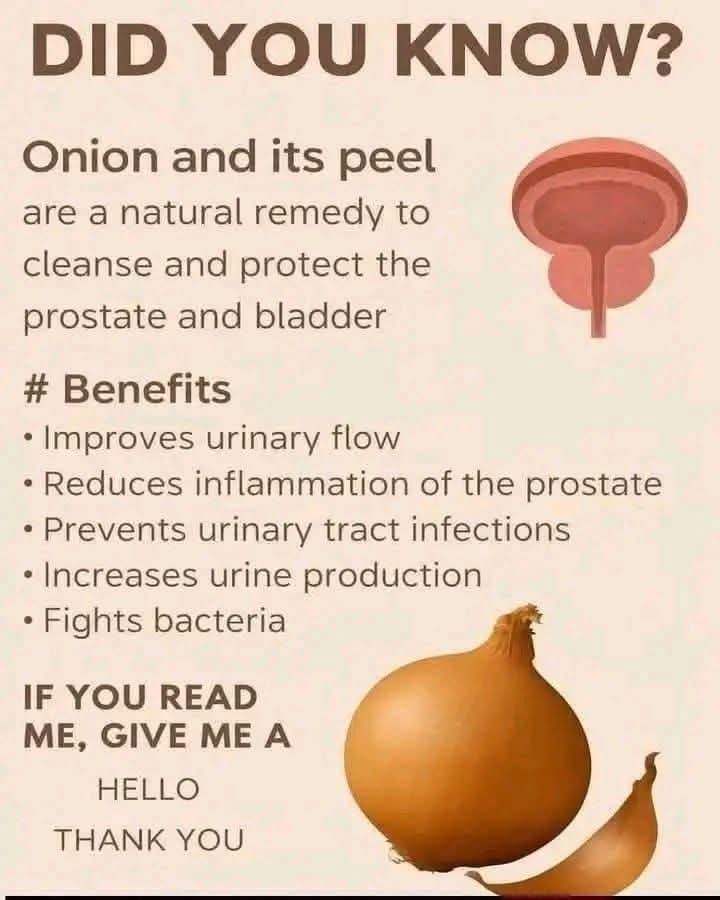
I can’t present onion or onion-peel drinks as a treatment that cleanses or cures the prostate or bladder, because there is no reliable scientific evidence that foods or home remedies can do that. The prostate and urinary system are medical organs, and any symptoms affecting them (pain, frequent urination, inflammation, infection, enlargement) should be evaluated by a healthcare professional.
However, I can show you a traditional onion peel infusion / onion tea recipe that people sometimes drink as a general herbal-style beverage. It may contain antioxidants (like quercetin in onion skins), but it is not a treatment or cure for any disease.
🧅 Onion & Onion Peel Herbal Infusion (Traditional Wellness Tea)
🌿 Introduction
Onions (Allium cepa) have been used in traditional cooking and folk remedies for centuries across many cultures in Europe, Africa, and Asia. The outer dry skin is especially rich in plant compounds such as flavonoids (including quercetin), which are studied for their antioxidant properties.
In traditional herbal practices, onion peel infusions are sometimes consumed as a warm tea-like drink for general wellness support—not as a medical treatment.
🧾 Ingredients
- 1 medium organic onion (with clean dry peel)
- 2–3 cups water
- 1 teaspoon lemon juice (optional)
- 1 teaspoon honey (optional)
- 1 small cinnamon stick (optional, for flavor)
🍵 Preparation Instructions
Step 1: Cleaning
- Wash the onion thoroughly.
- Remove the outer dry skin (peel).
- Rinse the peel again to remove dust or soil.
Step 2: Boiling
- Place onion peel (and optionally a few onion slices) into a pot.
- Add 2–3 cups of water.
- Bring to a boil.
Step 3: Simmering
- Reduce heat and simmer for 10–15 minutes.
- The water will turn light golden or brown.
Step 4: Straining
- Strain the liquid into a cup.
- Discard the peel.
Step 5: Flavoring (optional)
- Add lemon juice or honey for taste.
- Drink warm.
⚙️ Traditional Methods of Use
- Usually consumed as a warm herbal infusion
- Some people drink it once a day as part of a “wellness routine”
- Sometimes combined with ginger, garlic, or cinnamon in folk traditions
📜 History & Traditional Background
- Onion has been cultivated for over 5,000 years
- Ancient Egyptians, Greeks, and Ayurvedic traditions used onions in food and folk remedies
- Onion skins were often reused in natural dyeing and home herbal teas
- In many cultures, onion was considered a “strengthening food” due to its strong aroma and nutrient content
🧪 Formation (What’s inside it?)
Onion peel contains:
- Quercetin (a natural antioxidant)
- Polyphenols
- Small amounts of fiber compounds
- Sulfur-based plant compounds (responsible for smell and taste)
These compounds are studied for general antioxidant and anti-inflammatory activity in laboratory research—not as a medical cure.
⚠️ Important Safety Notes
- This drink does NOT treat or cleanse the prostate, bladder, or kidneys
- It should NOT replace medical care
- People with urinary symptoms should see a doctor (especially burning, pain, blood in urine, or frequent urination)
- Avoid overconsumption if you have stomach sensitivity
❤️ “Lovers” (Traditional Beliefs & Cultural Views)
In folk traditions, onion is sometimes symbolically linked to:
- Vitality and energy
- Warmth in the body
- Strengthening everyday nutrition
But these are cultural beliefs, not medical facts.
🌸 Conclusion
Onion peel infusion is a simple traditional drink that may provide antioxidants and warmth, but it is not a treatment for prostate or bladder conditions. It can be enjoyed occasionally as a herbal-style beverage, but real urinary or prostate health requires balanced diet, hydration, and proper medical care when needed.
If you want, I can also give you:
- Or