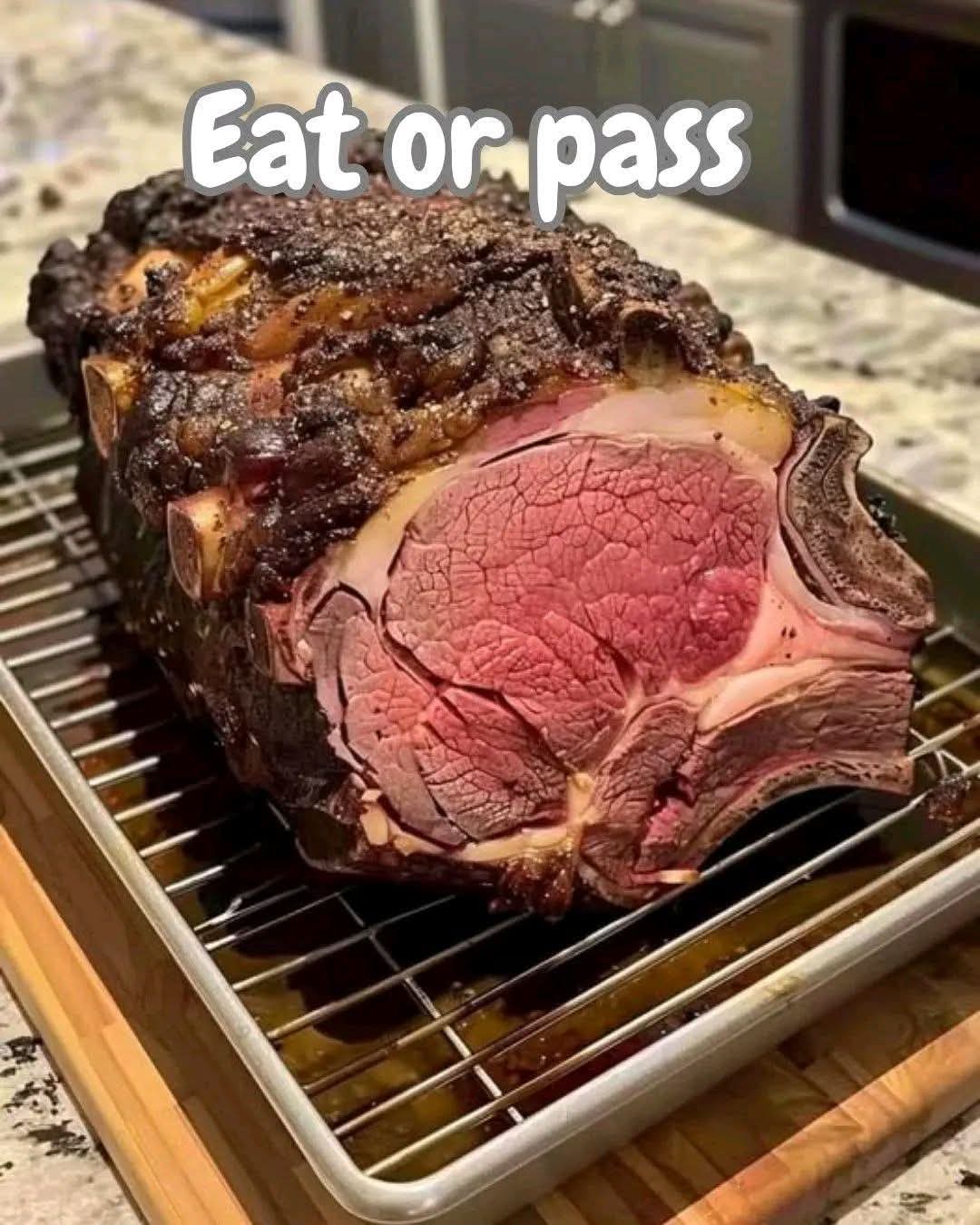
Here’s a complete, show-stopping guide to Prime Rib — just as rich and bold as that “OMG 😱 DON’T LOSE THIS” promise.
—
Introduction
Prime rib, also known as a standing rib roast, is the crown jewel of celebratory meals. Cut from the beef’s primal rib section, this roast delivers unmatched marbling, tenderness, and a deep, beefy flavor. When cooked correctly — crisp and salty on the outside, perfectly medium-rare and juicy within — it’s the kind of dish that makes everyone gather around the table in awe. This recipe uses a low-and-slow method followed by a high-heat sear for foolproof results.
—
History
Prime rib has English origins, dating back to the 18th century when beef became a symbol of prosperity. The classic British “Sunday roast” often featured a standing rib roast, served with Yorkshire pudding and horseradish. In the U.S., it rose to fame in grand steakhouses and holiday buffets, especially for Christmas and New Year’s. Its name “prime” originally referred to the top grade of beef, though today choice-grade roasts can also work beautifully.
—
Benefits
· High-quality protein – Supports muscle repair and satiety.
· Rich in iron & B12 – Boosts energy and red blood cell health.
· Conjugated linoleic acid (CLA) – Found in beef fat, linked to metabolic benefits.
· Carnitine & zinc – Aid immunity and brain function.
· Keto & low-carb friendly – Zero sugar, naturally satisfying.
Enjoy in moderation — it’s rich in saturated fat and cholesterol.
—
Ingredients
· 1 bone-in prime rib roast – 6–8 lbs (3–4 bones)
· 2 tbsp olive oil (or softened butter)
· Salt – 1 tbsp kosher or coarse sea salt
· Pepper – 1 tbsp freshly ground black pepper
· Optional: 6 cloves garlic (sliced), 2 sprigs fresh rosemary, 4 sprigs fresh thyme
—
Instructions
Method 1: Low & Slow + Reverse Sear (Best for even cooking)
1. Bring to room temp – Remove roast from fridge 2–3 hours before cooking.
2. Preheat oven to 250°F (120°C).
3. Season – Pat dry. Rub with oil, then salt and pepper generously.
4. Roast low – Place bone-side down on a rack in a roasting pan. Cook until internal temp reaches 120°F (49°C) for rare, or 130°F (54°C) for medium-rare.
· Time: ~25–30 minutes per pound (approx. 3 hours for 7 lbs).
5. Rest – Remove from oven, tent loosely with foil for 30–45 minutes. (Temp will rise 5–10°F.)
6. Sear – Crank oven to 500°F (260°C). Return roast for 6–10 minutes until crust is deep brown and crisp.
7. Carve – Slice between ribs and serve immediately.
Method 2: High Heat First (Classic)
· Preheat oven to 450°F (230°C). Roast 15 minutes, then lower to 325°F and continue until desired doneness. Rest before carving.
—
Nutrition (per 4 oz / 113g serving, trimmed of excess fat)
Nutrient Amount
Calories ~330
Protein 31g
Fat 22g
Sat Fat 9g
Carbs 0g
Iron 18% DV
B12 110% DV
—
Formation (Carving & Presentation)
· Bone-in advantage: Bones act as natural heat insulators, keeping meat moist.
· Carving: Stand roast on end. Cut along the bones to remove the entire rib rack, then slice the boneless meat against the grain.
· Plating: Serve with au jus (pan drippings + beef broth) and creamy horseradish sauce.
—
Who Loves Prime Rib?
· Steak connoisseurs who adore rare, tender beef.
· Holiday hosts wanting a dramatic centerpiece.
· Keto & carnivore dieters for zero-carb indulgence.
· Foodies who appreciate the Maillard crust and beefy umami.
· Families gathering for Christmas, Easter, or New Year’s.
—
Conclusion
Prime rib isn’t just a meal — it’s an experience. With a salty, pepper-crusted exterior and a buttery, rosy center, it turns any dinner into a celebration. Follow the reverse-sear method for foolproof results, rest the meat patiently, and serve with bold sides. Once you’ve made it, you’ll understand why people say “OMG 😱 DON’T LOSE THIS.”
—
Save this recipe — your future holiday table will thank you.