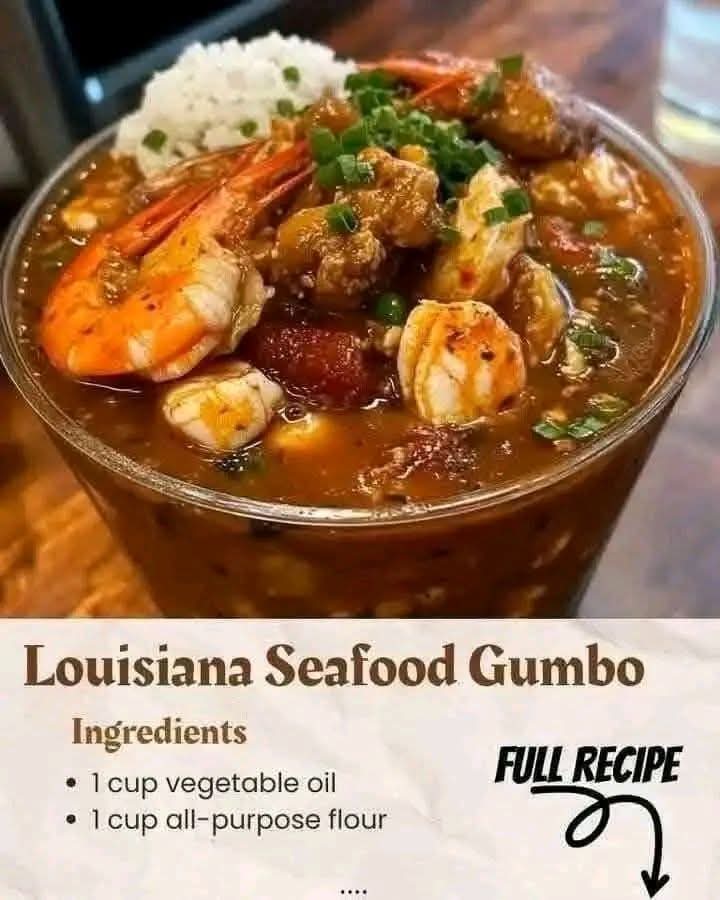
Louisiana Seafood Gumbo: A Culinary Journey Through the Bayou
Introduction
Gumbo is more than just a stew—it is the official state cuisine of Louisiana and a living monument to the cultural melting pot that defines American history. Imagine a dark, aromatic pot simmering on a cool autumn evening, filled with plump shrimp, sweet crab, and smoky sausage, all suspended in a rich, velvety broth. This is Louisiana Seafood Gumbo, a dish that tells the story of French aristocrats, Spanish colonists, West African slaves, and Native American tribes who all contributed a single page to the same cookbook.
Unlike a standard soup, gumbo is defined by its “Holy Trinity” of vegetables (onion, celery, bell pepper) and its signature thickener: the elusive, chocolate-colored roux. This recipe guide will walk you through every element of creating an authentic seafood gumbo, from the history of its creation to the science of the perfect roux, nutritional benefits, and serving traditions.
—
The History of Gumbo
The origins of gumbo are as complex and layered as the dish itself. Emerging in Louisiana during the 18th century, gumbo is a true “melting pot” creation born from necessity and adaptation .
· The Name: The word “gumbo” is derived from the West African word for okra, “ki ngombo.” Enslaved Africans brought okra seeds to the New World and introduced the practice of using the vegetable to thicken soups .
· The Thickening Agents: While Africans contributed okra, the Choctaw Native Americans introduced “filé” (fee-lay)—ground sassafras leaves—which adds thickness and a distinct earthy, root-beer-like flavor .
· The Base: The French contributed the “roux” (a cooked mixture of flour and fat), though in Louisiana it was evolved into a much darker, nuttier version than its European cousin. The Spanish added peppers and tomatoes to the regional lexicon .
· Evolution: German settlers introduced sausage (specifically Andouille), solidifying the meat component often found alongside seafood. The first recorded mention of gumbo appeared in the early 19th century, and by 1901, The Picayune’s Creole Cookbook documented dozens of variations .
—
Methods and Formation: The Science of the Roux
The “formation” of gumbo relies on three distinct thickening methods, though modern Louisiana cooking often blends them:
1. The Roux (The Foundation): A mixture of fat and flour cooked slowly until it reaches the color of dark chocolate or peanut butter. This provides the deep, nutty flavor and body.
2. Okra (The Vegetable Thickener): When chopped and cooked, okra releases a gelatinous substance (mucilage) that naturally thickens the stew.
3. Filé Powder (The Finish):) Ground sassafras leaves added off the heat at the very end to thicken and season.
—
Benefits of Louisiana Seafood Gumbo
While gumbo is a comfort food, it offers several nutritional advantages, especially when loaded with the Gulf’s bounty.
· High-Quality Protein: Shrimp, crab, and fish are lean sources of protein essential for muscle repair .
· Omega-3 Fatty Acids: Seafood is rich in omega-3s, which support heart and brain health .
· Vegetable Density: The “Holy Trinity” (onions, celery, bell peppers) plus okra and tomatoes provide significant fiber, Vitamins A, C, and K, and antioxidants.
· Metabolism Boost: Cayenne pepper and Creole spices contain capsaicin, which can temporarily boost metabolism.
Note on Health: Gumbo can be high in sodium and fat depending on the roux preparation and stock used. Using low-sodium broth and moderate oil can mitigate this .
—
Nutrition Facts (Estimated)
Based on a standard serving of Seafood Gumbo (1.5 cups with 1/2 cup rice) :
Nutrient Amount % Daily Value (Est.)
Calories ~310-350 15-17%
Total Fat 12g 15%
Saturated Fat 1.5g 8%
Cholesterol 110mg 37%
Sodium 850mg 37%
Total Carbs 24g 9%
Fiber 3g 11%
Protein 20g 40%
—
The Lovers of Gumbo
Gumbo is loved by a diverse crowd. In Louisiana, “Gumbo Lovers” are serious enthusiasts—there is even a “Gumbo Police” at the World Championship Gumbo Cook-Off in New Iberia who monitor the authenticity of the roux-making process . It is the star of family gatherings (known as boucheries), football Sundays, and Christmas Eve dinners.
—
The Big Recipe: Louisiana Seafood Gumbo
This recipe yields a rich, dark roux-based gumbo packed with shrimp, crab, and the smoky kick of Andouille sausage, serving approximately 8-10 people.
Ingredients
For the Roux (The Heart):
· 1 cup vegetable oil (or canola oil)
· 1 cup all-purpose flour
The Holy Trinity & Aromatics:
· 1 ½ cups chopped yellow onion
· 1 cup chopped green bell pepper
· 1 cup chopped celery
· 3 tbsp minced garlic
· 1 cup fresh or frozen okra, sliced into ½-inch rounds
The Liquids & Seasonings:
· 1 ½ cups dark beer (like Abita Amber or Shiner Bock) optional but recommended
· 8 cups seafood stock (shrimp stock is best)
· 2 bay leaves
· 1 tbsp Creole or Cajun seasoning (like Tony Chachere’s)
· 1 tsp smoked paprika
· 2 tbsp Worcestershire sauce
· 1 tbsp Filé powder (add at the end)
· Salt and white pepper to taste
The Seafood & Meats:
· ½ lb Andouille sausage, sliced into ¼-inch rounds
· 1 lb large shrimp (16-20 count), peeled and deveined (shells reserved for stock)
· 1 lb lump crab meat (or claw meat for flavor)
· ½ lb red snapper or white fish fillets, cut into chunks optional
For Serving:
· 4 cups cooked white rice (long grain)
· ¼ cup chopped fresh parsley or green onions
Instructions
Step 1: The Shrimp Stock (Formation)
Do not skip this. In a pot, combine the reserved shrimp shells with 8 cups of water. Simmer for 20 minutes. Strain, discarding shells. This takes 5 minutes and elevates the dish by 100%.
Step 2: The Dark Roux (The Method)
This requires constant attention.
1. In a large, heavy-bottomed Dutch oven (cast iron is best), combine the oil and flour over medium heat.
2. Whisk constantly. Do not stop, or it will burn.
3. In about 15-20 minutes, the mixture will turn from white, to blonde, to peanut butter, and finally to the color of milk chocolate or copper .
4. Once it reaches “chocolate,” immediately add the chopped onions, celery, and bell pepper. The sizzle will stop the cooking process. Stir for 5 minutes until the veggies soften.
Step 3: Building the Gumbo
1. Add the garlic and okra. Sauté for 2 minutes.
2. If using beer: Pour in the beer now, scraping the bottom of the pot to deglaze (lift the fond/brown bits).
3. Slowly whisk in the prepared seafood stock and bay leaves.
4. Bring to a boil, then reduce heat to low. Simmer uncovered for 1 hour. Stir occasionally, skimming any oil that rises to the top.
Step 4: The Proteins
1. While the base simmers, in a separate pan, brown the Andouille sausage slices until crispy. Drain and add them to the gumbo pot.
2. After the hour is up, taste the broth. Add Creole seasoning, smoked paprika, Worcestershire, salt, and pepper.
3. Increase heat to medium. Add the raw shrimp and fish chunks. Cook for 4 minutes.
4. Gently fold in the crab meat (to keep lumps intact). Cook for 2 more minutes until shrimp is pink and curled.
Step 5: The Finish
1. Remove the pot from the heat.
2. Stir in the Filé powder. Warning: Do not boil filé, or it will become stringy and ropy.
—
Conclusion
Louisiana Seafood Gumbo is not a meal that rushes. It demands patience—the slow stir of a dark roux, the gentle simmer of the stock, the final dusting of filé. Yet, it rewards the cook with a bowl that is deeply flavorful, historically rich, and profoundly satisfying. Whether you serve it over a scoop of potato salad (a Cajun twist) or classic white rice, this is the taste of Louisiana in a bowl.
—
Lovers (Revisited) & Serving Methods
The “lovers” of gumbo are diverse. Cajun lovers prefer a darker roux with no tomatoes and lots of game or sausage. Creole lovers (New Orleans style) often include tomatoes and a lighter roux with more shrimp and oysters .
Methods of Eating:
· Classic: Gumbo served in a shallow bowl over rice.
· Cajun “Rice and Gravy”: A scoop of potato salad placed directly into the gumbo instead of rice.
· Side: Always served with a crusty French bread for dipping (sopping).