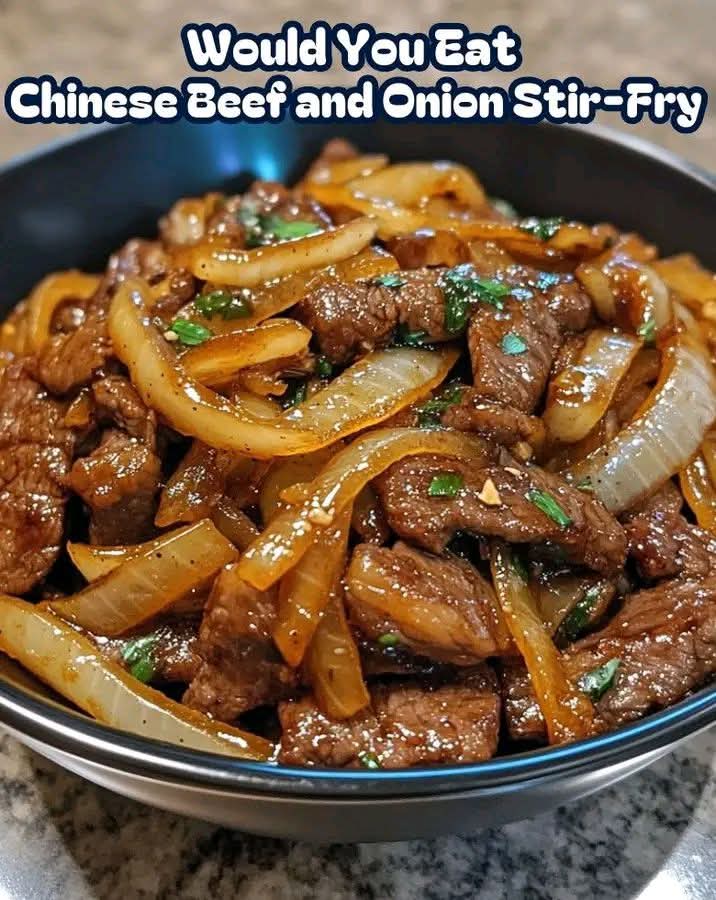
Here’s a complete, in-depth guide to Chinese Beef and Onion Stir-Fry—from history to nutrition, plus the full recipe.
—
Introduction
Chinese Beef and Onion Stir-Fry is a classic dish found in many Chinese households and takeout menus. It’s beloved for its simplicity, speed, and deep savory flavor. The combination of tender beef, sweet caramelized onions, and a glossy umami-rich sauce makes it a perfect weeknight meal. Unlike heavier, sauce-laden Americanized Chinese dishes, this stir-fry lets the quality of the beef and the wok’s high heat shine.
—
History
Stir-frying originated during the Han Dynasty (206 BC – 220 AD) as a method to cook food quickly over high heat, conserving scarce fuel. Beef and onion stir-fry became popular in the 20th century when onions (originally imported via the Silk Road) became widely available in China. It’s now a staple in Cantonese and Northern Chinese cuisine, often served with rice or noodles.
—
Benefits
· High in protein – Supports muscle repair and satiety.
· Rich in iron – Flank steak provides heme iron for energy.
· Quick cooking – Preserves nutrients in onions (vitamin C, quercetin).
· Low in carbs – Easily made keto-friendly (skip sugar).
· No deep frying – Healthier than battered dishes.
—
Nutrition (per serving, ~4 servings)
Nutrient Amount
Calories ~350
Protein 32g
Fat 18g
Carbs 12g
Fiber 2g
Sodium 780mg
—
Ingredients
For the beef & marinade:
· 1 lb (450g) flank steak (or sirloin), thinly sliced against the grain
· 1 tbsp light soy sauce
· 1 tsp dark soy sauce (for color)
· 1 tsp cornstarch
· ½ tsp baking soda (velveting trick)
· 1 tsp vegetable oil
· 1 tsp Shaoxing wine (or dry sherry)
For the stir-fry:
· 1 large onion (yellow or white), sliced into ½-inch wedges
· 3 green onions, chopped (whites & greens separated)
· 2 cloves garlic, minced
· 1 tsp ginger, minced
For the sauce:
· 2 tbsp light soy sauce
· 1 tbsp oyster sauce
· 1 tsp sugar (or honey)
· 1 tsp cornstarch mixed with 2 tbsp water (slurry)
· ¼ cup beef broth or water
Other:
· 3 tbsp vegetable or peanut oil (for wok)
· Steamed rice or noodles for serving
—
Methods & Instructions
Step 1 – Prepare the beef
1. Slice flank steak against the grain into thin strips (⅛-inch thick).
2. In a bowl, combine beef with light soy, dark soy, cornstarch, baking soda, 1 tsp oil, and Shaoxing wine.
3. Marinate for 15–20 minutes (not longer – baking soda can over-tenderize).
Step 2 – Mix the sauce
In a small bowl, whisk together light soy sauce, oyster sauce, sugar, slurry, and beef broth.
Step 3 – Velveting (optional but recommended)
Heat 2 tbsp oil in a wok over high heat until smoking. Add beef in a single layer. Sear for 1 minute without stirring, then stir-fry for 1 more minute until 70% cooked. Remove beef and set aside.
Step 4 – Cook aromatics & onion
Add remaining 1 tbsp oil to wok. Toss in onion wedges and stir-fry on high for 2 minutes until edges are translucent. Add garlic, ginger, and green onion whites – stir for 30 seconds.
Step 5 – Combine
Return beef to wok. Pour in sauce mixture. Stir-fry for 1 minute until sauce thickens and coats everything. Toss in green onion tops.
Step 6 – Serve
Transfer to a plate. Serve immediately over steamed jasmine rice or lo mein noodles.
—
Formation (Texture & Flavor Profile)
· Texture: Tender beef (thanks to velveting) with crisp-tender onions that have softened but still have bite.
· Flavor: Savory (soy + oyster sauce), slightly sweet (onions + sugar), with a hint of nuttiness from wok hei (breath of the wok).
· Appearance: Glossy brown sauce, white onion petals, green scallion specks.
—
Who Loves This Dish?
· Home cooks – Ready in under 20 minutes.
· Meat lovers – Satisfying beef portion.
· Busy parents – One wok, minimal cleanup.
· Keto/low-carb dieters – Skip sugar, serve with cauliflower rice.
· Chinese cuisine enthusiasts – Authentic, not takeout-style gloppy.
—
Methods (Cooking Techniques Used)
1. Velveting – Baking soda + cornstarch marinade keeps beef tender under high heat.
2. High-heat stir-frying – Wok must be smoking hot to sear, not steam.
3. Batch cooking – Beef cooked separately to avoid overcrowding (which causes stewing).
4. Slurry thickening – Cornstarch slurry added at the end for a light, clingy sauce.
—
Conclusion
Chinese Beef and Onion Stir-Fry is the perfect example of elegant simplicity. With just a handful of ingredients and a hot wok, you can create a dish that’s more flavorful, healthier, and faster than takeout. Master the velveting technique, and you’ll have a go-to recipe for busy nights that never disappoints. Give it a try – your chopsticks are waiting. 🥢
—
Would I eat it? Absolutely. In fact, I’d make it tonight.