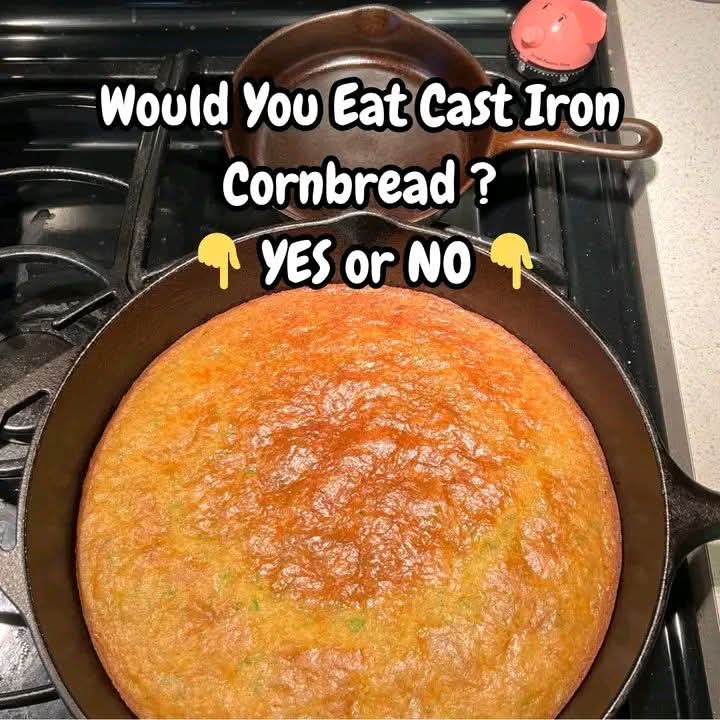
Here is the complete, comprehensive guide to Southern Cast Iron Cornbread—unsweetened, crisp-crusted, and steeped in tradition.
—
Introduction
In the American South, cornbread is not a muffin-like snack; it’s a savory staple. Unlike its Northern or “Yankee” cousin (which is often sweet and cakey), true Southern cornbread is unsweetened, crumbly, and robust. It exists to serve a purpose: to soak up “pot liquor” (the spiced broth from cooked collard greens), to be crumbled into a bowl of pinto beans, or to sop up fried catfish gravy.
The defining feature is its legendary “crackle crust” —a deep brown, crunchy, almost fried exterior achieved only by heating a cast iron skillet until smoking hot before adding the batter. This recipe honors the old way: no sugar, no flour-heavy ratios, just cornmeal, fat, and fire.
—
History
Cornbread originated with Native Americans, who ground dried corn into meal and mixed it with water and salt to cook over hot stones. European settlers adapted the method, adding buttermilk, eggs, and fat. The cast iron skillet—a prized possession often passed down for generations—became the ideal vessel because it retains and distributes heat evenly.
During the Civil War and Great Depression, Southern cornbread remained unsweetened because sugar was a costly luxury. Adding sugar to cornbread was historically seen as a Northern habit (or a “mistake,” as many Southerners still joke). The preheated skillet method ensures a crispy crust that mimics frying, making every bite a textural experience.
—
Benefits
1. Digestive Health – Cornmeal is a whole grain providing fiber, which supports gut health.
2. Energy Boost – Rich in complex carbohydrates for sustained energy.
3. Iron Source – Cooking in cast iron naturally leaches small amounts of dietary iron into the bread.
4. Lower Sugar – Unlike sweetened cornbread or cake, this version has zero added sugar.
5. Versatile – Works as a side, breakfast base (with honey or gravy), or crumbled as stuffing.
—
Ingredients
Ingredient Amount Notes
Yellow or white cornmeal 2 cups Stone-ground preferred; fine or medium grind
All-purpose flour ¼ cup Optional; traditionalists omit, but it lightens crumb
Baking powder 1 tbsp For lift
Baking soda ½ tsp Reacts with buttermilk
Salt 1 tsp Kosher or sea salt
Buttermilk 1 ½ cups Full-fat; room temperature
Eggs 2 large Room temperature, lightly beaten
Bacon drippings or lard ¼ cup For skillet + batter; vegetable oil works but less flavor
Unsalted butter (optional) 2 tbsp For greasing after baking
—
Equipment
· 10-inch cast iron skillet (well-seasoned)
· Large mixing bowl
· Medium mixing bowl
· Whisk
· Rubber spatula
· Oven mitts (handle will be screaming hot)
—
Methods & Instructions
Step 1: Preheat Oven & Skillet
Place your cast iron skillet on the center oven rack. Preheat to 425°F (220°C) . Let the skillet heat for at least 10–15 minutes once the oven reaches temperature. It must be ripping hot.
Step 2: Mix Dry Ingredients
In a large bowl, whisk together cornmeal, flour (if using), baking powder, baking soda, and salt.
Step 3: Mix Wet Ingredients
In a medium bowl, whisk buttermilk and eggs until smooth.
Step 4: Combine
Pour the wet mixture into the dry mixture. Stir with a spatula just until combined—do not overmix (a few lumps are fine). Fold in 2 tablespoons of your fat (bacon drippings or oil).
Step 5: Add Fat to Skillet
Carefully remove the screaming-hot skillet from the oven. Add the remaining 2 tablespoons of fat. Tilt the skillet to coat the bottom and halfway up the sides. The fat should shimmer and barely smoke.
Step 6: Add Batter
Pour batter directly into the hot fat. It should sizzle immediately—this is the crackle crust starting. Spread evenly with a spatula.
Step 7: Bake
Return skillet to oven. Bake for 20–25 minutes until:
· Edges are deep golden brown and pull away from skillet.
· Top is set and cracked.
· A toothpick inserted in center comes out clean.
Step 8: Finish & Cool
Remove from oven. Let cool in skillet for 5 minutes. If desired, rub a pat of butter over the top. Flip onto a cutting board (crust-side up) or serve directly from skillet.
—
Formation of the “Crackle Crust”
The crackle crust forms due to thermal shock. When cold batter hits a 425°F skillet coated in hot fat, the outer layer of cornmeal begins frying instantly. The high heat also activates baking powder rapidly, creating steam that pushes the batter upward while the bottom and edges solidify into a crisp, brown shell. As the bread cools, the crust contracts slightly, producing the signature crackling sound (hence the name).
—
Nutrition (Per Slice, ~1/8 of recipe)
Nutrient Amount
Calories ~210
Protein 5g
Carbohydrates 24g
Fiber 2g
Sugar 2g (naturally from buttermilk)
Fat 10g
Saturated Fat 3.5g
Sodium 380mg
Iron 1.2mg
Values vary based on fat type and flour addition.
—
Lovers of This Cornbread
This recipe is beloved by:
· Southern home cooks – Passed down from grandmothers.
· Cast iron collectors – As a skillet’s “test drive.”
· Bean & greens eaters – The perfect textural counterpoint.
· Farm-to-table chefs – Served with sorghum butter or ham gravy.
· History buffs – Who appreciate depression-era, sugar-free cooking.
—
Conclusion
Southern Cast Iron Cornbread is more than a recipe—it’s a ritual. The sizzle of batter hitting hot bacon fat, the crackle of a perfect crust, and the satisfaction of breaking into a golden wedge beside a bowl of beans or collards. It’s humble, savory, and unapologetically itself. No sugar. No fuss. Just cornmeal, buttermilk, and a hot skillet. Master this, and you’ve mastered a cornerstone of Southern cooking.
—
Final note: If someone asks for sugar, hand them a slice of cake instead. Real Southern cornbread doesn’t need it.