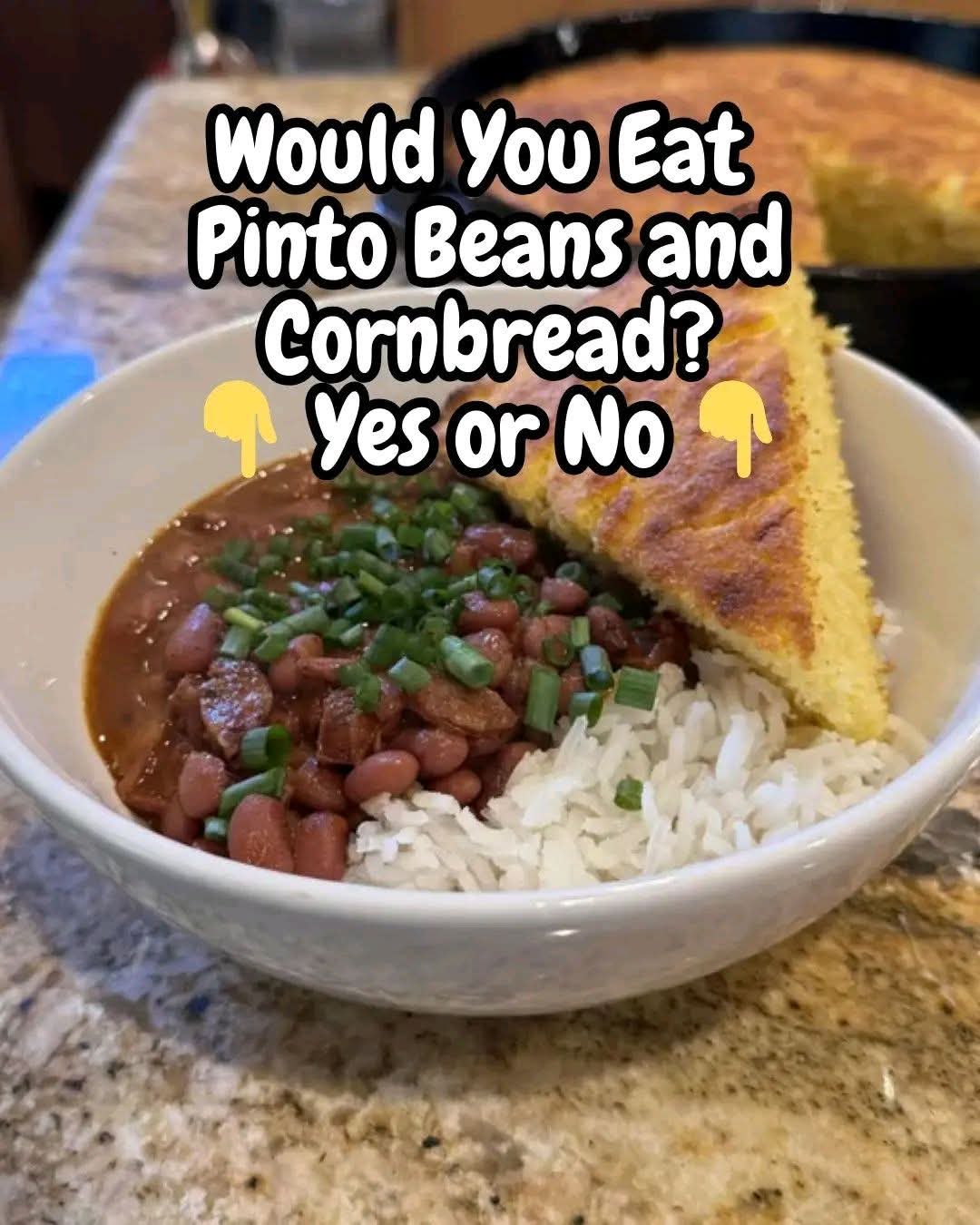
Here is a comprehensive guide to making authentic Southern Pinto Beans and Cornbread.
—
The History and Heart of Pinto Beans and Cornbread
Pinto Beans and Cornbread is far more than a simple meal; it is a culinary cornerstone of the American South and Appalachia. To understand the dish is to understand a story of survival, frugality, and family. Its roots trace back to the “Three Sisters” agricultural system of Native Americans—specifically the Cherokee—who planted corn, beans, and squash together because they supported each other’s growth . When European settlers arrived, they adopted these techniques, and the combination of corn and legumes became a dietary staple for those pushing into the rugged frontier .
For generations in places like West Virginia and Kentucky, this meal was simply called “soup beans.” It was the primary source of protein for poor farming families who relied on a sack of dried beans and some cornmeal to make it through the winter . Because the terrain was difficult for raising cattle, pork—specifically the humble ham hock or side meat—became the standard seasoning. As one cultural historian noted, “Beans and cornbread are all the amino acids your body needs. So it’s basically the nutritionally perfect food” . Today, it remains a symbol of hospitality, “a taste of home,” and proof that the most cherished traditions are often the simplest.
Why This Combination Works (Nutrition & Benefits)
Beyond its rich history, this dish is a powerhouse of nutrition. Together, pinto beans and cornbread form a complete protein. While beans are high in lysine but low in methionine, corn is low in lysine but high in methionine. When eaten together, they provide all the essential amino acids your body needs, similar to meat but at a fraction of the cost .
· Pinto Beans: Loaded with fiber (helping digestion and cholesterol), complex carbohydrates (steady energy), iron, and magnesium.
· Cornbread: Provides carbohydrates for immediate energy and, when made with buttermilk and cast iron, adds calcium and a small amount of absorbable iron.
—
The Big Recipe: Slow-Simmered Pinto Beans & Skillet Cornbread
This recipe yields 8 to 10 hearty servings. It utilizes the slow cooker method for the beans, which allows the flavors to meld deeply without watching a pot all day, paired with a classic, crispy-skinned Southern buttermilk cornbread baked in a cast-iron skillet.
Ingredients
For the Pinto Beans (The “Soup”):
· 1 lb (about 2 cups) dried pinto beans
· 6–8 cups water (plus more for soaking)
· 1 smoked ham hock, ham bone, or 4 oz chunk of salt pork (essential for smoky depth)
· 1 small yellow onion, chopped roughly
· 2 cloves garlic, minced
· 1 tsp black pepper
· Salt (do not add until the end, or the beans will stay tough)
For the Southern Buttermilk Cornbread:
· 2 cups yellow cornmeal (preferably stone-ground)
· 1/2 cup all-purpose flour (omit for more traditional, dense cornbread)
· 1 tsp baking powder
· 1/2 tsp baking soda
· 1 tsp salt
· 2 large eggs (room temperature)
· 1 3/4 cups buttermilk (room temperature)
· 1/4 cup bacon grease or vegetable oil (plus extra for the skillet)
Methods & Instructions
Part 1: The “Quick Soak” (or Overnight)
Look through the dried beans to remove any small rocks or broken beans. Rinse thoroughly.
· Overnight Method: Cover beans with cold water by 2 inches and let sit for 8 hours.
· Quick Method: Place beans in a pot with water. Bring to a rolling boil for 2 minutes. Turn off the heat, cover, and let sit for 1-2 hours .
Drain and rinse the beans after soaking.
Part 2: Cooking the Pinto Beans
1. Combine: Place the soaked beans into a large pot or slow cooker. Add 6 cups of fresh water, the ham hock, chopped onion, garlic, and black pepper.
2. Cook:
· Slow Cooker: Cover and cook on LOW for 8-10 hours or HIGH for 4-5 hours .
· Stovetop: Bring to a boil, then reduce heat to low, cover with lid slightly ajar, and simmer for 2-3 hours.
3. Mash (Optional but Recommended): Once the beans are tender, remove the ham hock. Pull the meat off the bone and return the meat to the pot. Use a potato masher or the back of a spoon to mash about 1/4 of the beans against the side of the pot. This creates the creamy, “soupy” texture.
4. Season: Now add salt to taste. Adding salt earlier prevents the beans from softening .
Part 3: The Cast-Iron Cornbread
Preheat oven to 425°F (220°C). Place a 10-inch cast-iron skillet inside to heat up while you mix the batter.
1. Mix Dry: In a large bowl, whisk cornmeal, flour, baking powder, baking soda, and salt.
2. Mix Wet: In a separate bowl, beat the eggs, then whisk in the buttermilk and melted bacon grease/oil.
3. Combine: Pour the wet ingredients into the dry. Stir until just combined (a few lumps are fine; over-mixing makes tough bread) .
4. Hot Pan: Carefully remove the scorching hot skillet from the oven. Add 1 tbsp of butter or oil to the pan and swirl to coat (it should sizzle). Pour the batter into the hot skillet—you should hear a distinct sizzle, which creates the legendary crispy crust.
5. Bake: Return to the oven and bake for 20–25 minutes until the top is golden brown and a toothpick comes out clean.
How to Serve (The Lovers’ Ritual)
There is a right way to eat this. Crumble a slice of cornbread directly into the bowl of beans, allowing it to soak up the “pot likker” (the broth). Top with chopped raw onions or a spoonful of chow-chow (a tangy pickled relish) for acidity .
Component Key Technique Pro-Tip
Pinto Beans Never salt until tender Add a smoked ham hock for authentic depth
Cornbread Preheat the skillet until smoking hot Use buttermilk for a tender, tangy crumb
Storage & “The Next Day”
Beans and cornbread taste even better the next day. Store beans in their liquid in an airtight container for up to 4 days. The cornbread is best stored at room temperature wrapped in foil. Leftover beans can be refried with lard for tacos, or thinned with broth for a quick bean soup.
Conclusion
Pinto Beans and Cornbread is the taste of resilience. It is a meal that requires patience—beans must be soaked and simmered for hours—but rewards you with a depth of flavor that modern fast food cannot replicate. Whether you are serving a crowd on a Monday night like the Appalachian families do, or simply looking for a nutritious, budget-friendly meal, this dish offers a warm embrace . It is not just food; it is history on a plate, proving that the best things in life really are simple.