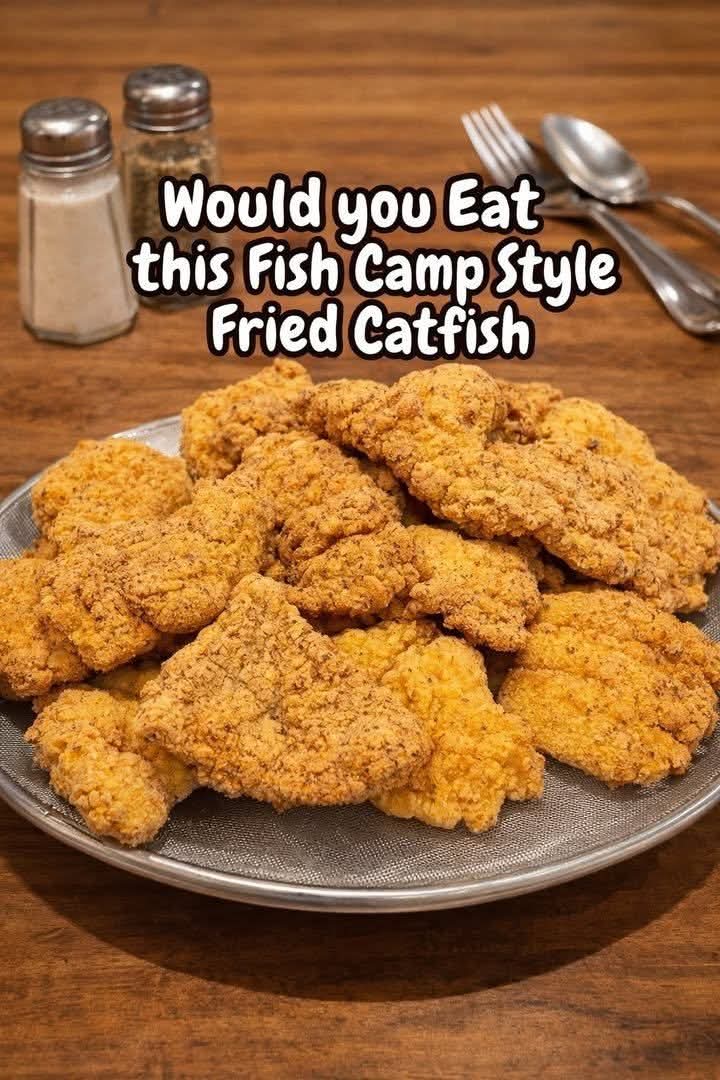
Absolutely! Let’s turn your Fish Camp Style Fried Catfish into a full, rich recipe experience with all the storytelling, history, and culinary love it deserves.
Fish Camp Style Fried Catfish
Introduction
There’s something magical about the simple, rustic flavors of fried catfish. Picture this: a quiet afternoon at a southern fish camp, the smell of sizzling catfish filling the air, the golden crust crunching under your fork, and the tender, flaky fish inside melting in your mouth. This dish is comfort on a plate, a taste of southern tradition, and a celebration of the simple pleasures of life by the water. Fish Camp Style Fried Catfish combines the crispy, flavorful exterior of cornmeal-fried fish with a subtle seasoning that makes every bite unforgettable.
Ingredients
For the Fish:
- 1 lb catfish fillets, cleaned and patted dry
- 1 cup yellow cornmeal
- 1/2 cup all-purpose flour
- 1 teaspoon salt
- 1 teaspoon black pepper
- 1 teaspoon paprika
- 1/2 teaspoon garlic powder
- 1/2 teaspoon onion powder
- 1/2 teaspoon cayenne pepper (optional, for a little kick)
- 1 cup buttermilk
For Frying:
- Vegetable oil (enough to fill a deep skillet about 1–2 inches)
Optional for Serving:
- Lemon wedges
- Tartar sauce
- Coleslaw or hush puppies
Instructions & Methods
1. Prepare the Catfish
- Pat the catfish fillets dry with paper towels. Dry fillets hold the coating better and fry more evenly.
- Pour the buttermilk into a shallow bowl and dip each fillet, coating it completely. Let them sit in the buttermilk for 5–10 minutes; this tenderizes the fish and helps the cornmeal mixture stick.
2. Make the Coating
- In a separate shallow dish, combine the cornmeal, flour, salt, black pepper, paprika, garlic powder, onion powder, and cayenne pepper. Mix thoroughly.
- Dredge each buttermilk-coated fillet in the cornmeal mixture, pressing lightly so the coating adheres well. Shake off any excess.
3. Heat the Oil
- In a large skillet or cast-iron pan, pour enough vegetable oil to reach about 1–2 inches in depth. Heat over medium-high heat until shimmering (around 350°F if using a thermometer).
- To test, sprinkle a pinch of cornmeal in the oil—if it sizzles immediately, it’s ready.
4. Fry the Catfish
- Carefully place the coated fillets into the hot oil. Don’t overcrowd the pan; fry in batches if necessary.
- Fry each fillet for 3–5 minutes per side, depending on thickness, until golden brown and crispy. The internal temperature should reach 145°F, and the fish should flake easily with a fork.
- Remove the fillets and place them on a wire rack or paper towels to drain excess oil.
5. Serve & Enjoy
- Serve immediately while hot, with lemon wedges, tartar sauce, or your favorite sides. Classic accompaniments include coleslaw, hush puppies, and fried green tomatoes.
History & Formation
Catfish has been a staple of Southern cuisine for centuries, often caught fresh from rivers and lakes near fish camps. The technique of dredging fish in cornmeal before frying is deeply rooted in Southern cooking, originating from early settlers who valued cornmeal for its availability and crisping qualities. Fish camp communities became gathering spots where families shared meals, stories, and traditions. Over time, “fish camp style” became synonymous with rustic, simple, and perfectly seasoned fried catfish.
The formation of this dish is a balance of texture and flavor—the buttermilk tenderizes and adds a slight tang, while the cornmeal flour mixture creates a golden, crunchy crust that seals in the fish’s natural moisture.
Lovers of This Dish
This style of fried catfish is beloved by those who cherish Southern comfort food, family gatherings by the water, and the simple joy of frying fish over an open flame. Food lovers who appreciate rustic, hands-on cooking methods, and anyone who enjoys crispy, seasoned fish will find this recipe irresistible.
Conclusion
Fish Camp Style Fried Catfish isn’t just a meal—it’s an experience. Each bite delivers the crispy crunch of tradition and the tender flakiness of freshly caught fish. Perfect for family dinners, backyard gatherings, or a solo indulgence, this recipe brings the warmth of Southern fish camps right into your kitchen. Serve it with love, and you’ll understand why catfish has been celebrated for generations.
If you want, I can also make a “Pro Tips & Variations” section with ways to make the crust extra crispy, add smoky flavors, or even oven-bake it for a lighter version—like a secret chef’s guide to catfish lovers.
Do you want me to do that?