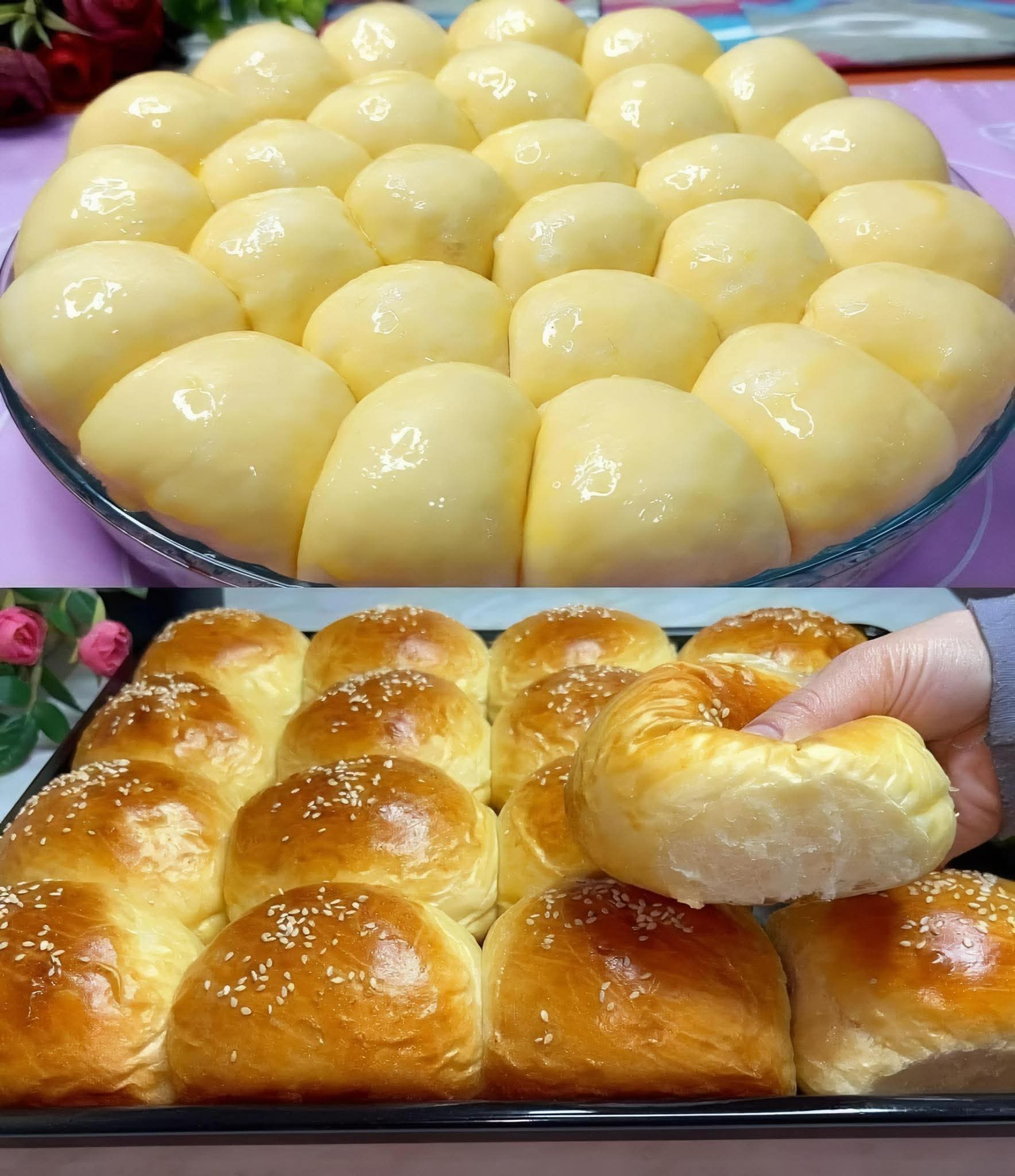
Here is a complete and detailed recipe for Milk Brioche Rolls, expanded to include everything you asked for—history, benefits, nutrition, and more.
—
The Ultimate Milk Brioche Rolls
Introduction
Brioche is the crown jewel of French viennoiserie, a bread so rich and tender it straddles the line between pastry and loaf. Originating in Normandy, France, around the 17th century, the name “brioche” is believed to derive from the Old French verb brier, meaning “to knead.” What sets brioche apart is its high enrichment—eggs, butter, and milk—creating a feather-light crumb, a deeply golden crust, and a flavor that is simultaneously savory and sweet.
These Milk Brioche Rolls take the classic formula and add the gentle sweetness of whole milk, resulting in a roll that is softer, more tender, and stays fresh longer than traditional brioche. Perfect for everything from gourmet burgers to morning coffee with jam, these rolls are the epitome of comfort and elegance.
—
History
Brioche has a storied past. It is said to have been introduced to France by the Normans, though some culinary historians trace its roots to a similar Romanian or Polish bread. The famous (and likely apocryphal) quote “Let them eat cake” (Qu’ils mangent de la brioche) attributed to Marie Antoinette confuses the issue—in 18th-century France, brioche was considered a luxury bread due to its high butter and egg content, making it a symbol of wealth. Today, it is beloved worldwide for its versatility and luxurious texture.
—
Ingredients
To make approximately 12 rolls:
· 4 cups (500g) all-purpose flour – Provides structure while keeping the crumb tender.
· 2 large eggs, at room temperature – Adds richness, color, and helps with lift.
· 1 cup (240ml) whole milk, heated to about 110°F (43°C) – The star ingredient; adds subtle sweetness, a tender crumb, and activates the yeast.
· 1/3 cup (75g) granulated sugar – For a hint of sweetness and to feed the yeast.
· 2 ¼ teaspoons (1 packet / 7g) active dry yeast – The leavening agent that gives the rolls their airy structure.
· ½ cup (113g) unsalted butter, softened, cut into cubes – The heart of brioche; adds flavor, richness, and that signature tender texture.
· 1 teaspoon salt – Balances the sweetness and strengthens the gluten structure.
· Egg wash: 1 egg + 1 tablespoon milk – For a glossy, golden-brown finish.
—
Methods & Instructions
Step 1: Activate the Yeast
In the bowl of a stand mixer, combine the warm milk (110°F) and the sugar. Sprinkle the yeast over the top and let it sit for 5–10 minutes until it becomes frothy and bubbly. This ensures your yeast is alive and active.
Step 2: Form the Dough
Add the room-temperature eggs and 2 cups of the flour to the yeast mixture. Mix with a dough hook on low speed until a shaggy mass forms. Gradually add the remaining flour and the salt. Knead on medium-low for 5 minutes until the dough starts to come together.
Step 3: Incorporate the Butter
With the mixer running, add the softened butter one cube at a time, waiting until each piece is fully incorporated before adding the next. This process is crucial—it should take about 5–7 minutes. The dough will look like a sticky mess, but it will eventually become smooth, elastic, and glossy. Scrape down the sides as needed.
Step 4: First Rise (Bulk Fermentation)
Transfer the dough to a lightly oiled bowl. Cover with plastic wrap and let it rise in a warm, draft-free place for 1.5 to 2 hours, or until doubled in size. For best flavor, you can then refrigerate the dough for 4 hours or overnight. Chilling makes the dough easier to handle and deepens the flavor.
Step 5: Shape the Rolls
Punch down the chilled dough and turn it out onto a lightly floured surface. Divide it into 12 equal pieces (about 70–80g each). Shape each piece into a tight, smooth ball by pulling the edges into the center and rolling against the counter.
Step 6: Second Rise
Place the dough balls in a greased 9×13-inch baking dish or on a parchment-lined baking sheet, spacing them about 1 inch apart. Cover loosely with plastic wrap and let them rise again for 1 to 1.5 hours, until puffy and almost doubled.
Step 7: Bake
Preheat your oven to 375°F (190°C). Gently brush the tops with the egg wash. Bake for 18–22 minutes, until the rolls are deep golden brown and an instant-read thermometer inserted into the center reads 190°F (88°C).
Step 8: Cool
Let the rolls cool in the pan for 5 minutes, then transfer to a wire rack. Cooling is essential—cutting into them hot will release the steam and compromise the tender crumb.
—
Formation (The Science)
The magic of brioche lies in its gluten structure and fat integration. Unlike lean breads, where gluten forms a tight network, the high fat content from butter coats gluten strands, preventing them from over-bonding. This creates a “short” gluten structure—the secret to that melt-in-your-mouth tenderness. The milk adds lactose (a sugar) that caramelizes beautifully during baking, giving the crust its characteristic color, while the milk proteins contribute to a softer crumb.
—
Benefits
1. Rich in Energy: With eggs, milk, and butter, these rolls provide a substantial source of carbohydrates and fats, making them a satisfying breakfast or pre-workout fuel.
2. Versatility: They are the ultimate crossover food. Serve them savory (with butter and sea salt, or as a burger bun) or sweet (with jam, honey, or as French toast).
3. Longer Freshness: The high fat and milk content help these rolls stay soft and fresh for 2–3 days longer than standard dinner rolls.
4. Calcium Boost: Using whole milk adds a good dose of calcium for bone health.
—
Nutrition (Per Roll, Approximate)
· Calories: 280–310
· Fat: 12g
· Saturated Fat: 7g
· Carbohydrates: 38g
· Protein: 7g
· Sugar: 6g
Note: Nutritional values vary based on exact ingredient brands and roll size.
—
Lovers
Brioche is universally adored. Bakers love it for the satisfying challenge of mastering an enriched dough. Chefs prize it for its structural integrity—it’s sturdy enough to hold a juicy burger yet tender enough to be a delicate tea sandwich. Families love it as a special weekend breakfast. From the streets of Paris to modern bakeries in Tokyo, brioche has a cult following among anyone who appreciates the intersection of bread and luxury.
—
Conclusion
Making Milk Brioche Rolls is more than a recipe; it is a lesson in patience and reward. The process—from the frothy yeast to the slow incorporation of butter, and the two rises—yields a product that smells like heaven and tastes like pure comfort. Whether you are preserving your place in a recipe group or simply preserving a family baking tradition, these rolls are a testament to the beauty of simple ingredients elevated by technique.
Thank you for staying active. Now go enjoy the fruits of your labor—these rolls are your reward.
—
Stay active for more recipes. Happy baking! 🥐✨